Mount Tabor

December 5, 2014

In the days when the judges ruled we read of Deborah, the only woman judge, whom God used to deliver Israel from the Canaanites headquartered at Hazor. Barak led Israel’s army. The ensuing battle took place in the vicinity of Mt. Tabor. The biblical text reads:

She used to sit under the palm tree of Deborah between Ramah and Bethel in the hill country of Ephraim; and the sons of Israel came up to her for judgment. Now she sent and summoned Barak the son of Abinoam from Kedesh-naphtali, and said to him, “Behold, the LORD, the God of Israel, has commanded, ‘Go and march to Mount Tabor, and take with you ten thousand men from the sons of Naphtali and from the sons of Zebulun'” (Judges 4:5-6).
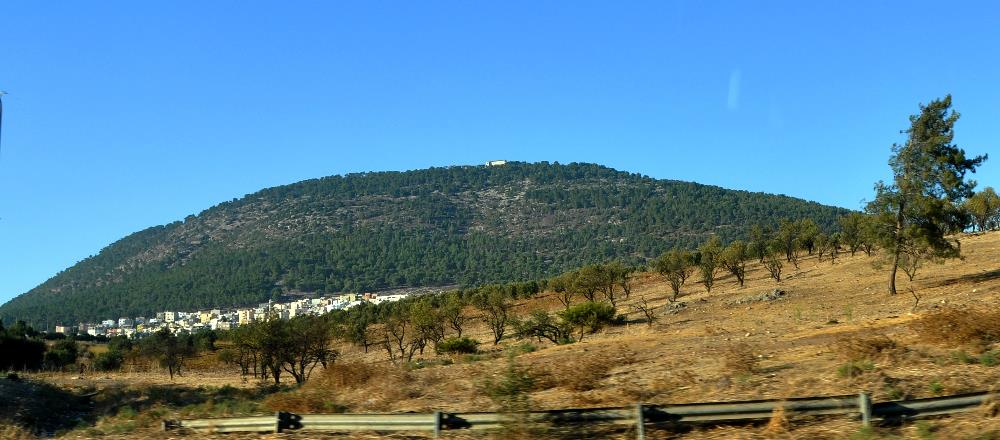
Mt. Tabor in Israel. Photo by Leon Mauldin.

Mt. Tabor in Israel. Photo by Leon Mauldin.

Holman Illustrated Bible Dictionary has this info re: Mt. Tabor:

Mountain in the valley of Jezreel. About six miles east of Nazareth, it has played an important role in Israel’s history since the period of the conquest. It served as a boundary point for the tribes of Naphtali, Issachar, and Zebulun (Josh. 19:12, 22), where the tribes worshiped early (Deut. 33:18–19). Barak gathered an army at Tabor to defend against Sisera (Judg. 4:6). Apparently, it was the site of false worship (Hos. 5:1). Tradition holds that Tabor was the site of Jesus’ transfiguration (Mark 9:2), although no evidence exists to validate the claim.

Note the last statement in the above quotation, that no evidence exists that Mt. Tabor was the site of the transfiguration. Contextually the location of Mt. Hermon is to be preferred (Matt. 17:1), as it is situated in the vicinity of Caesarea Philippi where Jesus and the disciples were in Mt. 16.


Asclepian Adjacent to Pool of Bethesda

November 20, 2014

The god Asclepius, the healing god, was widely worshiped in biblical times, especially in Grecian and Roman periods. The Asclepian at Pergamum in Asia Minor was world famous. We’ve previously posted, click here and here on that one.

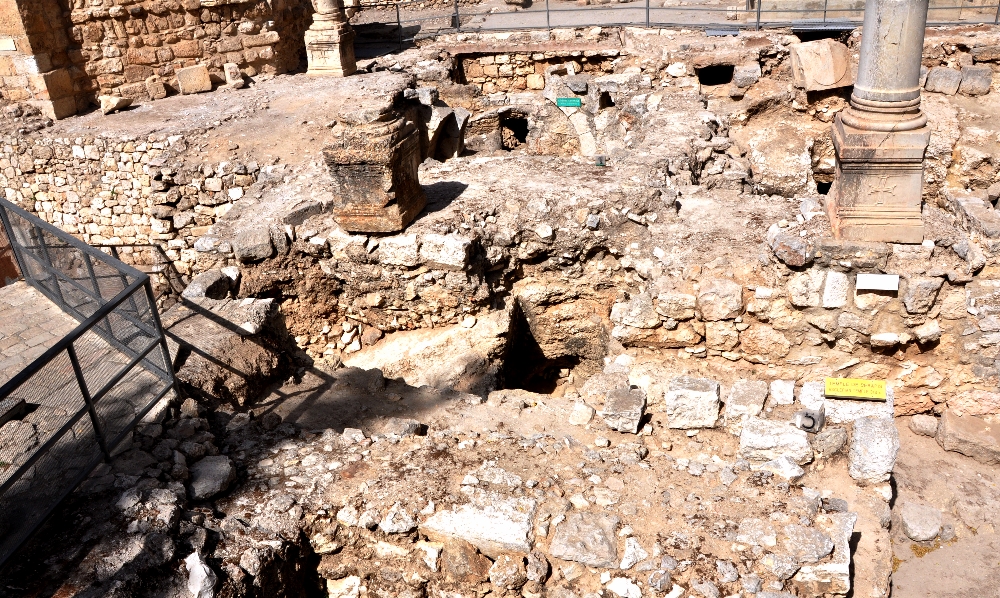
It may surprise you to know that there was a healing center devoted to this god in Jerusalem, just 100+ yards north of the Herodian temple adjacent to the pool of Bethesda.

Temple to the healing god  Asclepius at Pool of Bethesda. Photo by Leon Mauldin.

Temple to the healing god Asclepius at Pool of Bethesda. Photo by Leon Mauldin.

This temple dates back to Roman times, but after the ministry of Jesus.

We’ve posted on Bethesda here and here.

Asclepius is also associated with the Egyptian god Serapis (see here and here), Serapis having become one of the most popular deities in the Roman Empire. The yellow placard in photo the above photo in Jerusalem names both identifies this site as “Temple de Serapis” as well as “Asclepian Temple.”

Serapis, Egyptian god of healing, assimilated by Romans. Photo by Leon Mauldin. Metro Museum NY.

Serapis, Egyptian god of healing, assimilated by Romans. Photo by Leon Mauldin. Metro Museum NY.

Paul would write the Corinthians, “For even if there are so-called gods whether in heaven or on earth, as indeed there are many gods and many lords, yet for us there is but one God, the Father, from whom are all things and we exist for Him; and one Lord, Jesus Christ, by whom are all things, and we exist through Him” (1 Cor. 8:5-6).

Click images for larger view.


En Route to the Pool of Bethesda, Lavigerie

November 18, 2014

On the north end of Jerusalem one can see the ruins of the pool(s) of Bethesda, mentioned in John 5 as the location where Jesus healed a lame man. That was one of seven miracles recorded by divine selection in the Gospel of John to provide reasons for believing in Jesus, evidences for faith in Him as the Christ, the Son of God (John 20:30-31).

While my group was visiting Israel last year, I photographed a statue of Lavigerie, located close by the pools.

Lavigerie in Jerusalem, near Pool of Bethesda. Photo by Leon Mauldin.

Lavigerie in Jerusalem, near Pool of Bethesda. Photo by Leon Mauldin.

I will acknowledge that the name Charles Martial Allemand Lavigerie is not one I was familiar with. But sometimes you shoot (photograph!) first and ask questions later.

The Dictionary of African Christian Biography relates this info regarding Lavigerie (1825-1892):

Cardinal Archbishop of Algiers and Carthage, Primate of Africa, missionary founder and anti-slavery campaigner, was born near Bayonne in the Basque region of southern France. After his schooling, he studied theology at Saint Sulpice in Paris. In 1854, after priestly ordination and further studies, he was appointed professor of church history in the university of the Sorbonne, Paris. In 1860, as director of the work for oriental schools, he travelled to Lebanon and Syria to administer relief to Christians there, following the massacre by the Druses. . .

In 1863 he was appointed Bishop of Nancy, France and was placed in line for the important archiepiscopal see of Lyons. However, he declined this prestigious appointment, and asked instead for the colonial see of Algiers, to which he was appointed archbishop in 1867. Algeria had become a French colony in 1830, and under Napoleon III was designated an “Arab Kingdom.” . . .

From 1878 his missionaries established themselves in the Great Lakes region of Eastern Africa and, after his death, in the French territories of West Africa. Created a Cardinal in 1882, Lavigerie revived the ancient see of Carthage, with the title Primate of Africa, when the French annexed Tunisia. Throughout 1888 Lavigerie conducted a personal campaign against slavery in the capitals of Europe. In this campaign he made known the heart-rending experiences of slavery witnessed by his missionaries in equatorial Africa. The campaign resulted in the anti-slavery conferences of Brussels and Paris. . .

Click image for larger view.


Jerusalem’s Eastern Wall

November 17, 2014

In ancient times, city walls were essential for defense and security. An unwalled city was defenseless.

The concept of a city without walls is used metaphorically in Proverbs 25:28: “Whoever has no rule over his own spirit Is like a city broken down, without walls.”

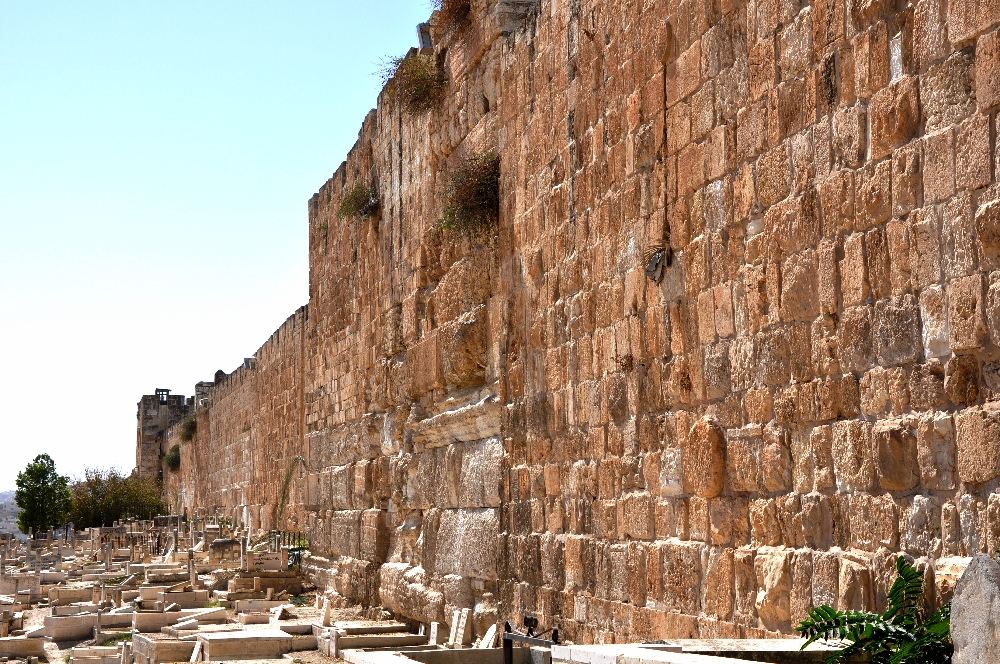
Here is a view of Jerusalem’s eastern old city wall, as you look to the south.

Jerusalem's Eastern Wall. Photo by Leon Mauldin.

Jerusalem’s Eastern Wall. Photo by Leon Mauldin.

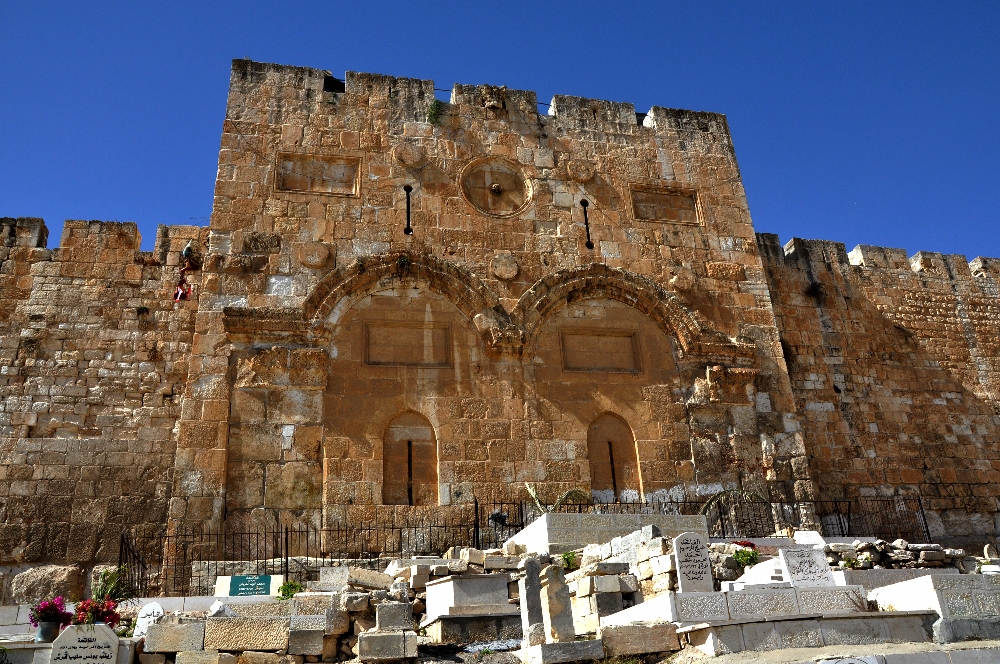
A close up of Jerusalem’s Eastern Gate:

Eastern Gate  in Jerusalem. Photo by Leon Mauldin.

Eastern Gate in Jerusalem. Photo by Leon Mauldin.

Today a Muslim cemetery is located at the front of the gate.

Click image for larger view.


Ruth the Moabitess

November 15, 2014

After studying the book of Judges, especially with the material recorded in chapters 17-21, the book of Ruth is so refreshing, like a breath of fresh air! This 4 chapter book tells how Elimelech, Naomi, and their two sons left Bethlehem in time of famine for the fields of Moab, sojourning there for ten years. The sons married women of Moab, Ruth and Orpah. Elimelech and both sons died. When Naomi determined to return to Bethlehem, Ruth made the choice to go with her. She said,

Entreat me not to leave you, Or to turn back from following after you; For wherever you go, I will go; And wherever you lodge, I will lodge; Your people shall be my people, And your God, my God. Where you die, I will die, And there will I be buried. The LORD do so to me, and more also, If anything but death parts you and me (Ruth 1:16-17).

The text narrates how Ruth met and married Boaz, describing Ruth as a hard worker, showing kindness to her mother-in-law, and known throughout the town as a virtuous woman, and depicting Boaz as equally magnanimous, walking in the fear of the LORD. But the real reason Ruth is in the Bible does not become apparent until the closing verses. Starting with Judah’s son Perez as his beginning point, the writer informs us:

Now this is the genealogy of Perez: Perez fathered Hezron. 19 Hezron fathered Ram, who fathered Amminadab.  Amminadab fathered Nahshon, who fathered Salmon. Salmon fathered Boaz, who fathered Obed.  And Obed fathered Jesse, who fathered David (Ruth 4:18-22).

Ruth is thus seen in the lineage of the Messiah! Her story is one link in the chain of God’s Old Testament promise to bring Christ into the world to accomplish His great redemptive work. Matthew begins his gospel record with the genealogy of Christ, including Ruth: “Salmon was the father of Boaz by Rahab, Boaz was the father of Obed by Ruth, and Obed the father of Jesse” (1:5).

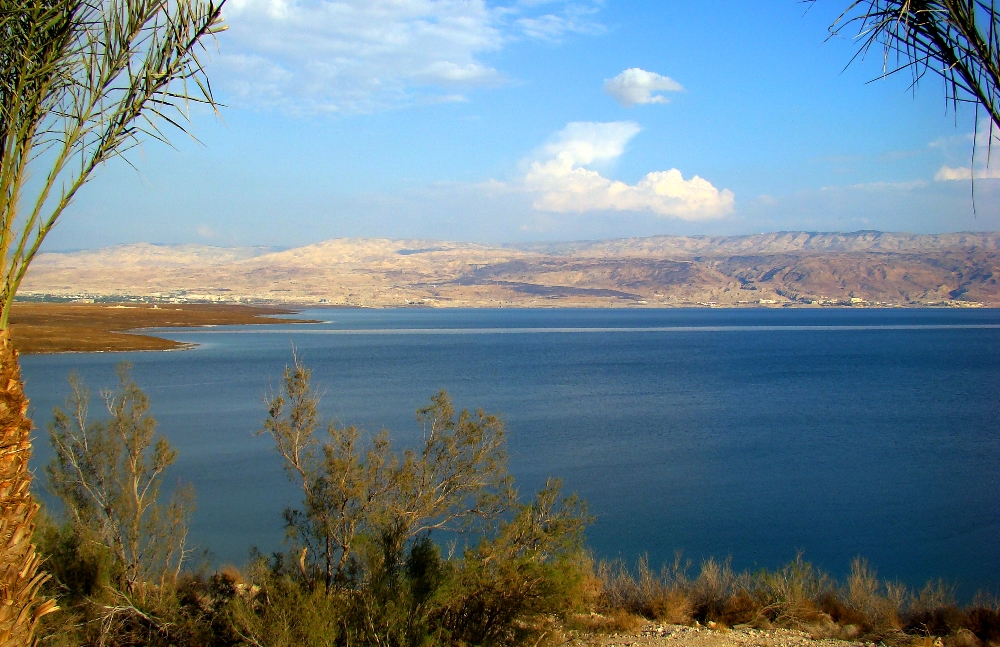
Our photo, taken on the NW shore of the Dead Sea, looks across to the mountains of Moab, Ruth’s home.

View across Dead Sea, mountains of Moab in distance. Photo by Leon Mauldin.

View across Dead Sea, mountains of Moab in distance. Photo by Leon Mauldin.

OT Moab is today the territory of Jordan.

Click image for larger view.


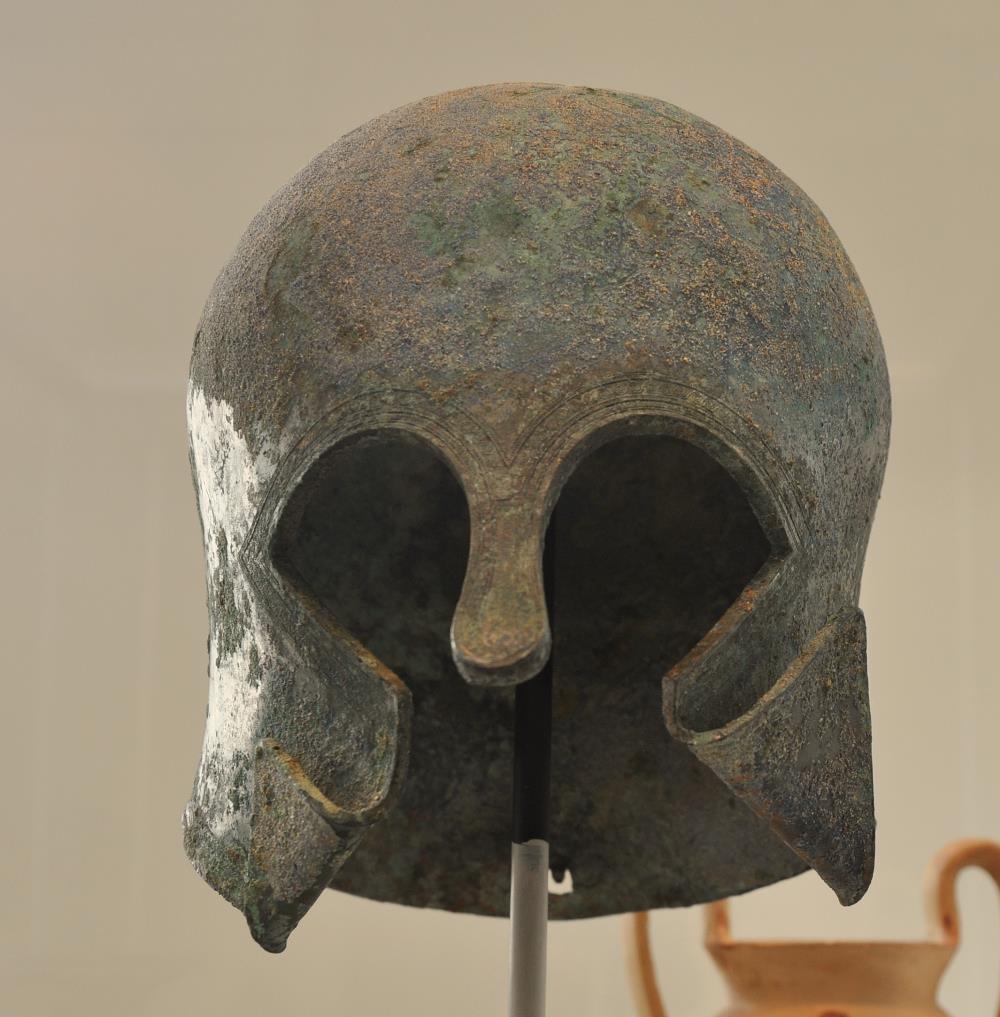
Corinthian Helmet

October 30, 2014

From an entry entitled, “Weapons” in the Harper’s Bible Dictionary we read:

As in the modern world, advancements in ancient technology were quickly adapted for use in instruments of war. One of the most important steps in the history of weapons was the development of carburized iron, a phenomenon that occurred in the eastern Mediterranean toward the end of the second millennium B.C., but earlier improvements in metallurgy (i.e., the production of copper and bronze) had been applied to arms production for nearly two thousand years before the Iron Age. Naturally, the shape, size, and overall durability of dagger and sword blades and spearheads and arrowheads were affected by such improvements in copper, bronze, and iron technology. Another important weapon that improved over time was the chariot, whose speed and maneuverability were increased by changes in design and construction materials, including metals. Other major steps in the development of ancient weaponry include the invention of the composite bow, piercing battle-ax, “Corinthian” helmet, and siege engines (pp. 1123-1124).

The Metropolitan Museum in NY has several such helmets on display.

Corinthian Style Helmet. Photo by Leon Mauldin. Metropolitan Museum, NY.

Corinthian Style Helmet. Photo by Leon Mauldin. Metropolitan Museum, NY.

This Grecian helmet, made of bronze and dating back to 7th-6th century BC, put me in mind of some biblical texts:

–Isaiah 59:17:  He put on righteousness like a breastplate, And a helmet of salvation on His head; And He put on garments of vengeance for clothing And wrapped Himself with zeal as a mantle. (Reference here is to the Lord, YHWH).

–Ephesians 6:17: And take THE HELMET OF SALVATION, and the sword of the Spirit, which is the word of God. The above Isaiah text provides background for this Ephesians passage. The New American Standard Bible uses all caps to indicate a quotation from the OT. The helmet is a vital part of the Christian’s armor listed in Eph. 6:10-17.

–1 Thessalonians 5:8: But since we are of the day, let us be sober, having put on the breastplate of faith and love, and as a helmet, the hope of salvation. A helmet protects the head. Here the hope of salvation possessed by Christians is said to be a helmet. Keep your helmet on. Keeping the hope of salvation constantly in the forefront of the mind serves to protect one against Satan’s devices.

I believe I’ll keep my helmet on!


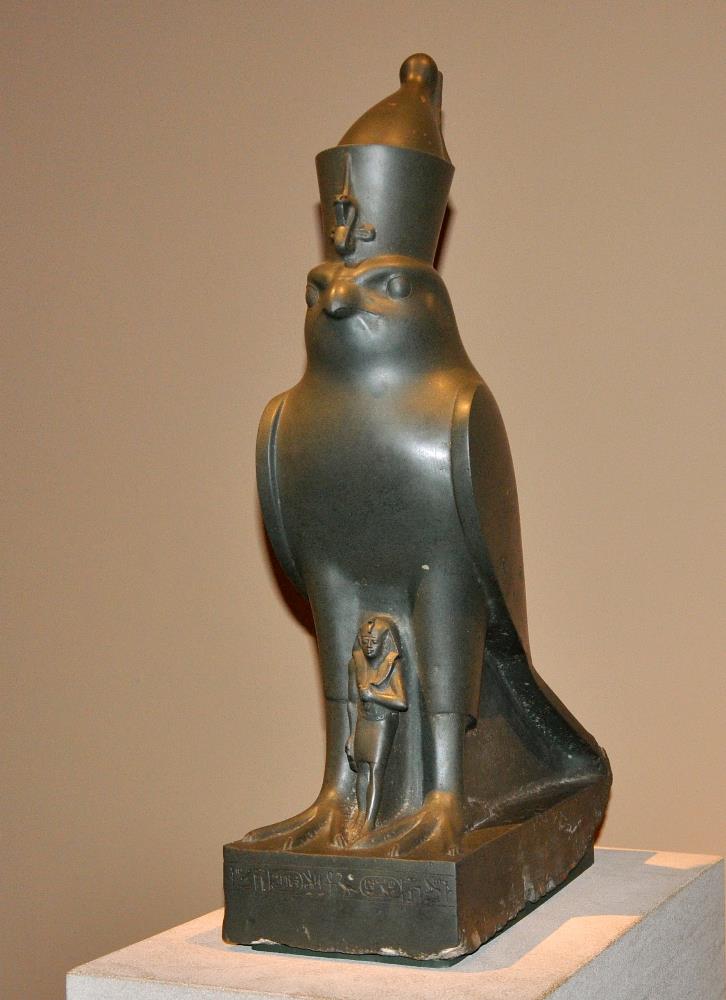
The god Horus Protecting King Nectanebo II

October 21, 2014

The god Horus, symbolized by the falcon, had a very close relationship with the Pharaoh in Egyptian mythology. Pharaoh was believed to be the god-king, and “was regarded as the god Horus incarnate” (Bible and Spade 1990, vol. 3, no4, p. 111).

Our photo shows the Egyptian god Horus protecting King Nectanebo II. He reigned during the Late Period, Dynasty 30, 360-343 BC. This statue is said to be from Heliopolis, Egypt.

Egyptian god Horus. Metropolitan Museum. Photo by Leon Mauldin.

Egyptian god Horus. Metropolitan Museum. Photo by Leon Mauldin.

The king holds a sword in his left hand. This statue is on view in Gallery 128 in the Metropolitan Museum of Art, New York. Click image for larger view.


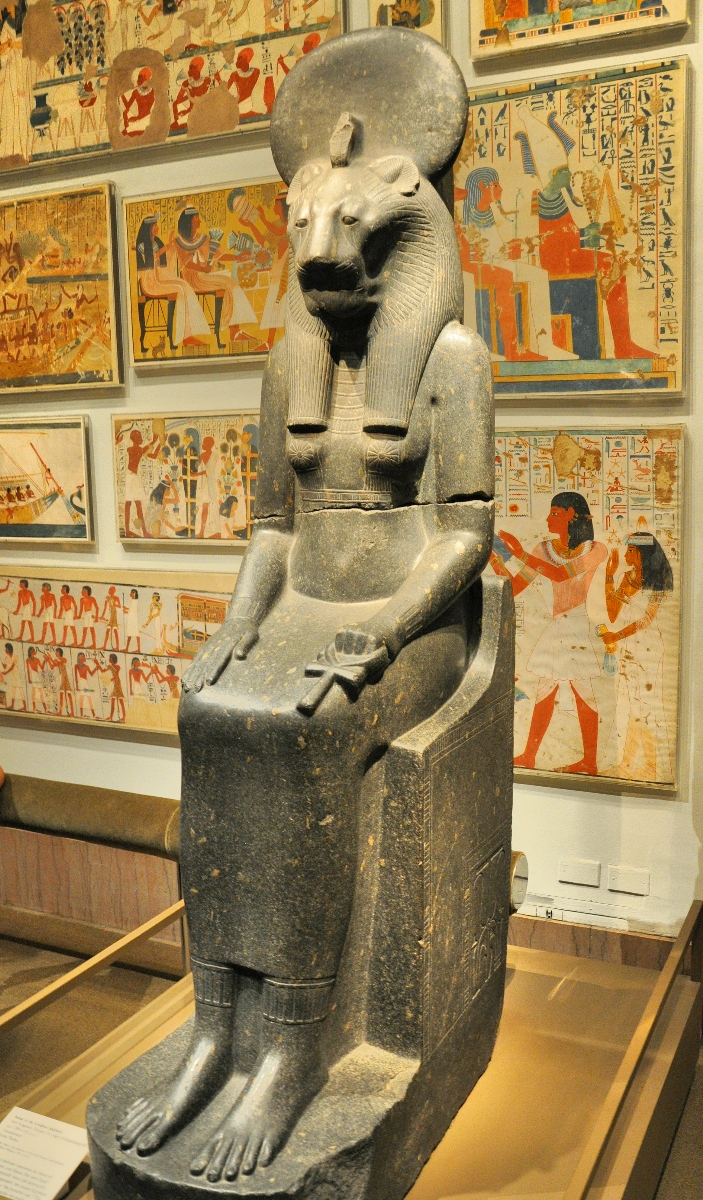
The Goddess Sakhmet

October 9, 2014

During Egypt’s New Kingdom Period, in the 18th dynasty, Amenhotep III (ca. 1390-1352 BC) commissioned hundreds of statues of the goddess Sakhmet for his mortuary temple in western Thebes. These statues were intended as monumental prayers to appease the goddess and guarantee peace and health.

Goddess Sakhmet. Metropolitan Museum, NY. Photo by Leon Mauldin.

Goddess Sakhmet. Metropolitan Museum, NY. Photo by Leon Mauldin.

“The goddess Sakhmet represents the forces of violence, disaster, and illness. Her lion’s head expresses her potentially fierce and destructive character and, appropriately, her ancient Egyptian name, Sakhmet, means ‘the powerful one.’ The sun disk on her head identifies the goddess as the daughter of the sun god Re” (from museum placard).

This puts me in mind of what YHWH said prior to the 10th of the ten plagues of Egypt: “and on all the gods of Egypt I will execute judgments: I am the LORD” (Ex. 12:12).

Click image for larger view.


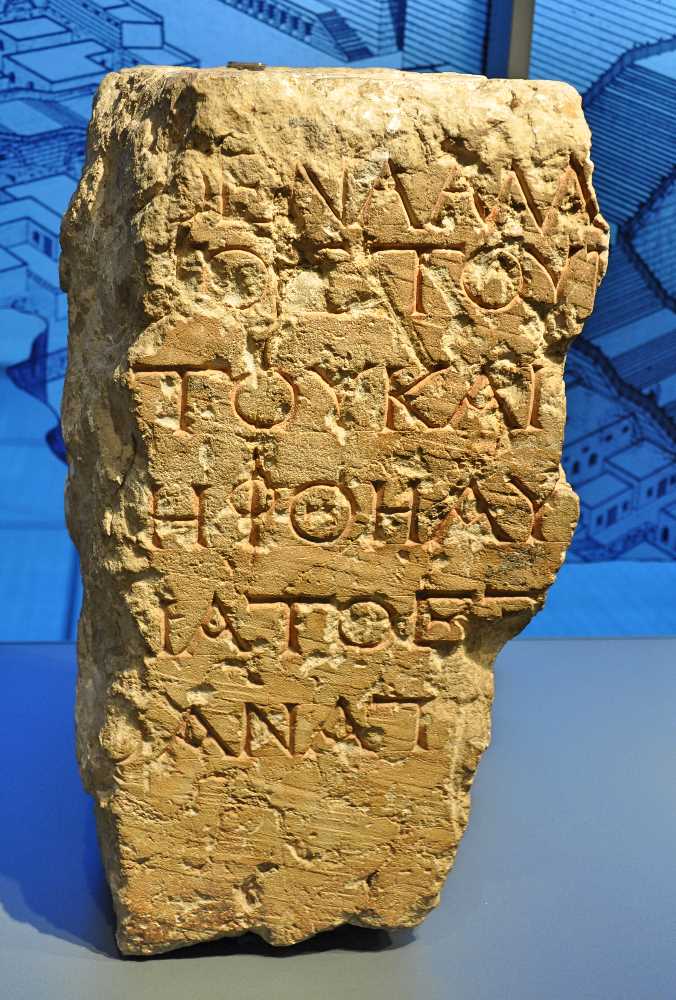
Temple Inscription Fragment

September 15, 2014

Some biblical texts are especially illuminated by archaeological finds. For example, Acts 21:28 records the false charge against Paul, “He also brought Greeks into the temple and has defiled this holy place” (v.28). The next verse shows this they “supposed” (NET “assumed). Ephesians 2:14 speaks of Jesus’ death breaking down “the middle wall of separation” between Jews and Gentiles.

Temple Inscription Fragment. Israel Museum. Photo by Leon Mauldin.

Temple Inscription Fragment. Israel Museum. Photo by Leon Mauldin.

Our photo shows one of the warnings posted marking the boundary within the temple complex beyond which no Gentile could proceed. The inscription read, “NO FOREIGNER IS TO GO BEYOND THE BALUSTRADE AND THE PLAZA OF THE TEMPLE ZONE. WHOEVER IS CAUGHT DOING SO WILL HAVE HIMSELF TO BLAME FOR HIS DEATH WHICH WILL FOLLOW.”

A complete tablet is housed in the Istanbul Museum, and can be seen in a previous post here.

So the Acts 21 text means that Paul was charged with taking a Gentile beyond the balustrade marked off by signs just like this one.

The Ephesians 2 text shows that with Jesus’ death on the cross, reconciliation is made possible between men (Jew and Gentile) and God, and those reconciled unto God are reconciled to each other. The reconciled are in one body (the church, Eph. 1:22-23). That distinction epitomized by the wall of separation, and reflected by these warning signs, has been removed.


Balance and Caution in Use of Archaeology

September 4, 2014

A question from a friend:

It concerns the crossing of the Red Sea. There is an awful lot of talk about the “traditional” Red Sea crossing maps versus the so-called “archaeological findings” purportedly found at the Gulf of Aqaba.

. . . However, some of our brethren have begun using maps and pictures that show what is believed to be possibly the “real Mt. Sinai” with charred rock covering its cap, a “split rock” in the wilderness, chariot wheels, etc… (I’m not buying it.) All of these things I see look like the work of Ron Wyatt, but all sorts of people have these things on their internet sites.

. . . All of that said, I was wondering if you had any material or resources dealing with the subject head on. I do not plan on making this an issue… nor do I plan on bringing anyone else’s name into the mix. I would just like to be able to give a “ready defense” if I am ever called upon. I’d greatly value your input on the matter. Thank you.
Others more qualified that I have dealt with the claims of Mr. Wyatt. As a starting point I can recommend the following sources: Ferrell Jenkins has an article entitled, “Pharaoh’s Chariot Wheels and Other Things that Won’t Float — Examining the Claims of the Late Ron Wyatt ,” that you can access here, plus another article entitled, “Pseudo Archaeologists”here. These articles have numerous related links for further reading. Additionally I would recommend Gordan Franz’s site, Life and Land, here. Use the search box. He has several entries under “Cracked Pot Archaeology.” The use of caution in using Mr. Wyatt’s material/claims would be prudent.
While no one can be certain of the exact location of Israel’s crossing. the best evidence would be somewhere along the Suez.

From Sinai looking across Suez to Egypt. Photo by Leon Mauldin.

I took the above photo in 2003, having crossed the Suez. We are standing on the Sinai side looking back across Egypt.

I personally conclude that the traditional Mt. Sinai (Jebel Musa) best fits the biblical criteria.

The above info was posted Sept. 28, 2013.

See Ferrell Jenkins’ current post, “The Route of the Exodus and the Location of Mt. Sinai,” for a number of links and as well as balanced observations. I recommend it. Click here.

Click photo for larger view.