Laodicea, cont’d.

June 26, 2010

In our previous post we saw a startling difference between the Laodiceans’ assessment of themselves, and the Lord’s evaluation.  They thought they were rich and in need of nothing; Jesus said that spiritually they were “wretched, pitiful, poor, blind, and naked” (Rev.3:17).  They were blissfully unaware of their true condition before God! Further, their lukewarmness was a condition that nauseated the Lord.

That’s why we have the Bible. Therein is revealed how to be saved by the provisions of God in Jesus Christ, and then further teaching furnishes the Christian with what God wants His people to be.  In other words, to avoid the condemnation of the Lord, and to have His approval, requires constant looking at the Scriptures as the standard, and examining self in light of that Word.

But we want to explore further the city itself where the church addressed in Rev. 3 was located.

Besides the evidence of many public buildings and facilities, archaeologist have also excavated some private residences, such as the one in this photo. Note the storage jar at left center.
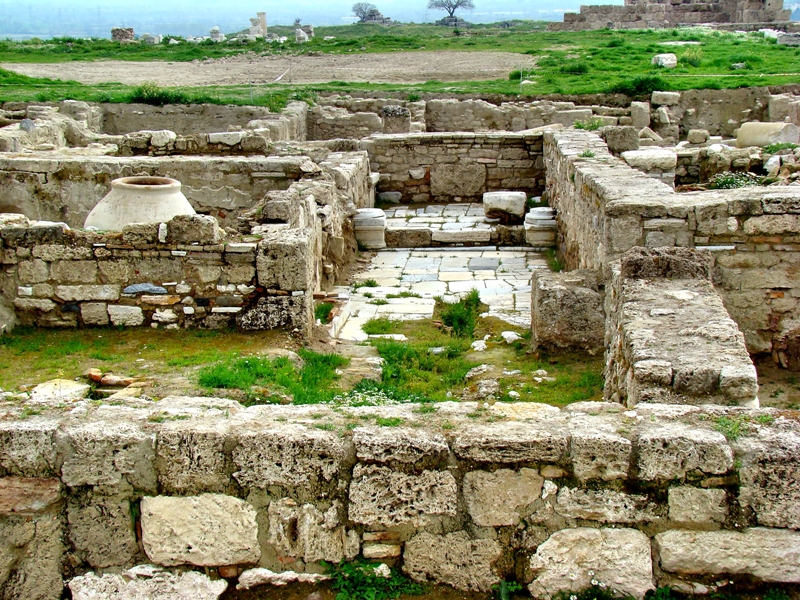
Private Residence at Laodicea. Photo ©Leon Mauldin.

Such storage jars would have been used in homes for storage of grain and other such items.  Such items are indicative of considerable purchasing power.
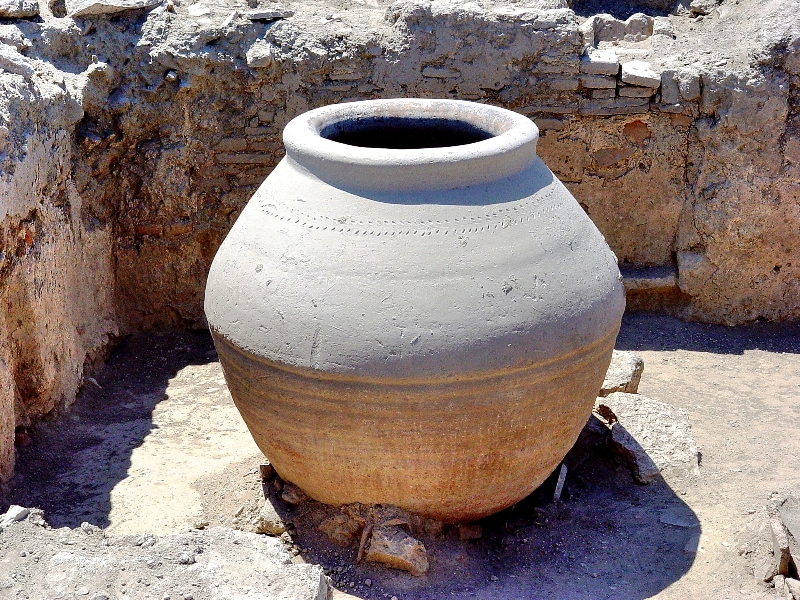
Storage Jar in Private Residence at Laodicea. Photo ©Leon Mauldin.

Still more to come on Laodicea.  Click on image for larger view.


Laodicea, the Church that Nauseated the Lord

June 25, 2010

Laodicea is the seventh of the seven churches addressed in Revelation 2-3. Laodicea was a biblical city of great importance: it was a wealthy banking center, it was known for its black raven wool and the manufacture of clothing; also it was known for its invention of eye salve.   Located in the Lycus River Valley, Laodicea was strategically situated on an east-west travel route.  Nearby Hierapolis was known for its medicinal hot springs; neighboring Colossae was known for its cold refreshing water.  Laodicea was noted for neither; its water was tepid, lukewarm and sickening. With these things in mind, consider Jesus’ assessment of the church, which had taken on the lukewarm characteristics of the wealthy city:

15 ‘I know your deeds, that you are neither cold nor hot. I wish you were either cold or hot! 16 So because you are lukewarm, and neither hot nor cold, I am going to vomit you out of my mouth! 17 Because you say, “I am rich and have acquired great wealth, and need nothing,” but do not realize that you are wretched, pitiful, poor, blind, and naked, 18 take my advice and buy gold from me refined by fire so you can become rich! Buy from me white clothing so you can be clothed and your shameful nakedness will not be exposed, and buy eye salve to put on your eyes so you can see! (Rev. 3:15-18, NET).

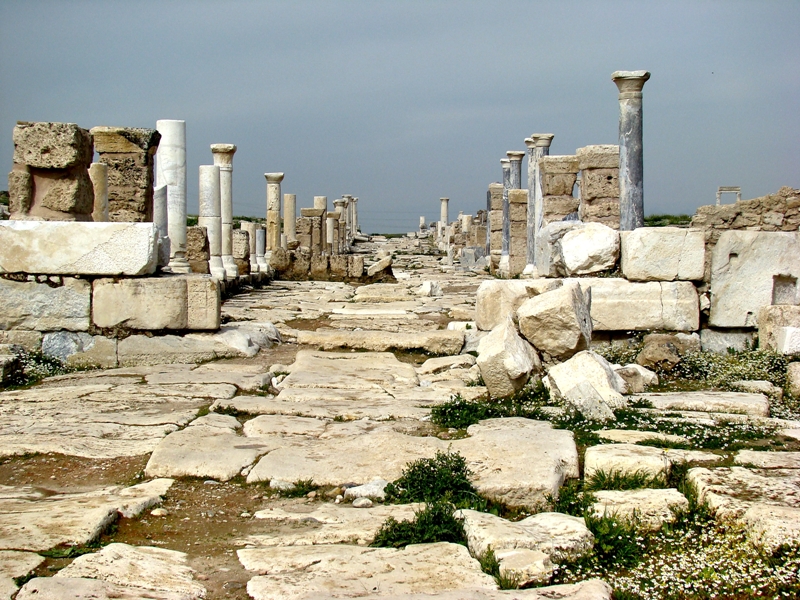
Since 2000, extensive excavation has been done at Laodicea, and continues through the present. Much of the work has been to reveal some of the major streets of the city, including the main street featured in our photo here. This street was called Syria Street.

Laodicea Syria Street. Main Street in City. Photo ©Leon Mauldin.

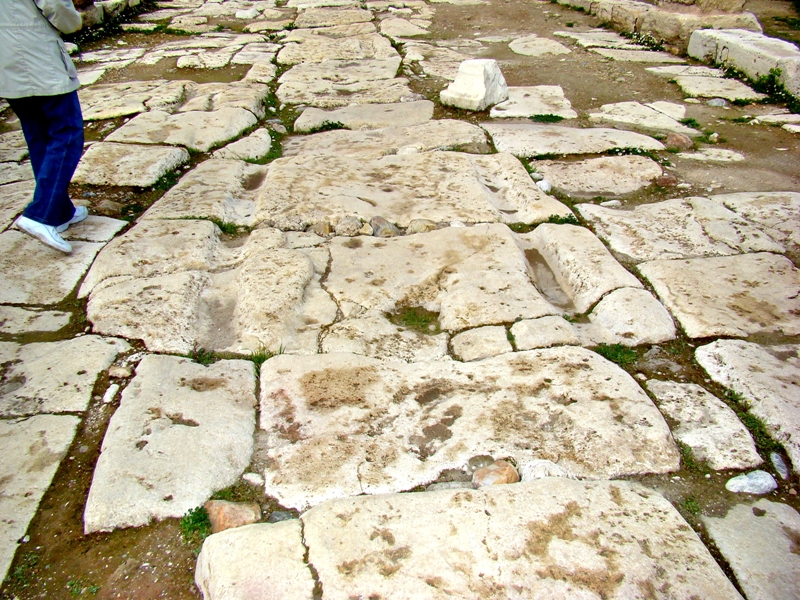
The scoring of pavement stones made by chariot wheels may be seen at some points in the street.

Grooves in Street Made by Chariot Wheels. Photo ©Leon Mauldin.

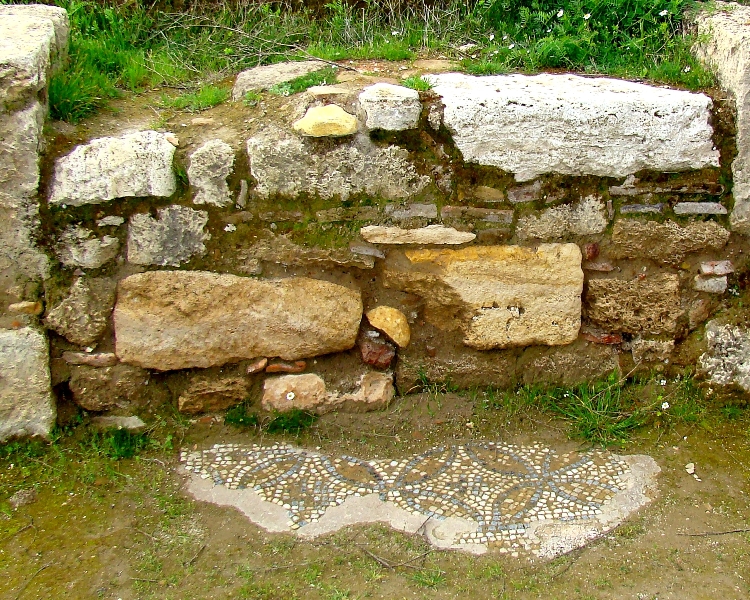
Syria Street as well as other streets would have been lined with shops on either side.  Our photo below depicts a mosaic at the entrance of an ancient shop.

Laodicea Mosaic at Shop Entrance. Photo ©Leon Mauldin.

More to come on Laodicea.  Remember to click on photo for larger view.