In a class studying Hebrews in our local congregation, we are impressed with the many references to the Tabernacle (9X, NKJV). The Old Testament and its priesthood “serve the copy and shadow of the heavenly things” (Heb. 8:5), and are among the things “having a shadow of the good things to come, and not the very image of the things” (Heb. 10:1). It is a matter of typology: the OT tabernacle, its priests, its sacrifices, point forward to the High Priest Jesus, with His sacrifice (His blood), and the “true tabernacle” (Heb. 8:2) with its “holy place” which is “heaven itself” (Heb. 9:24).
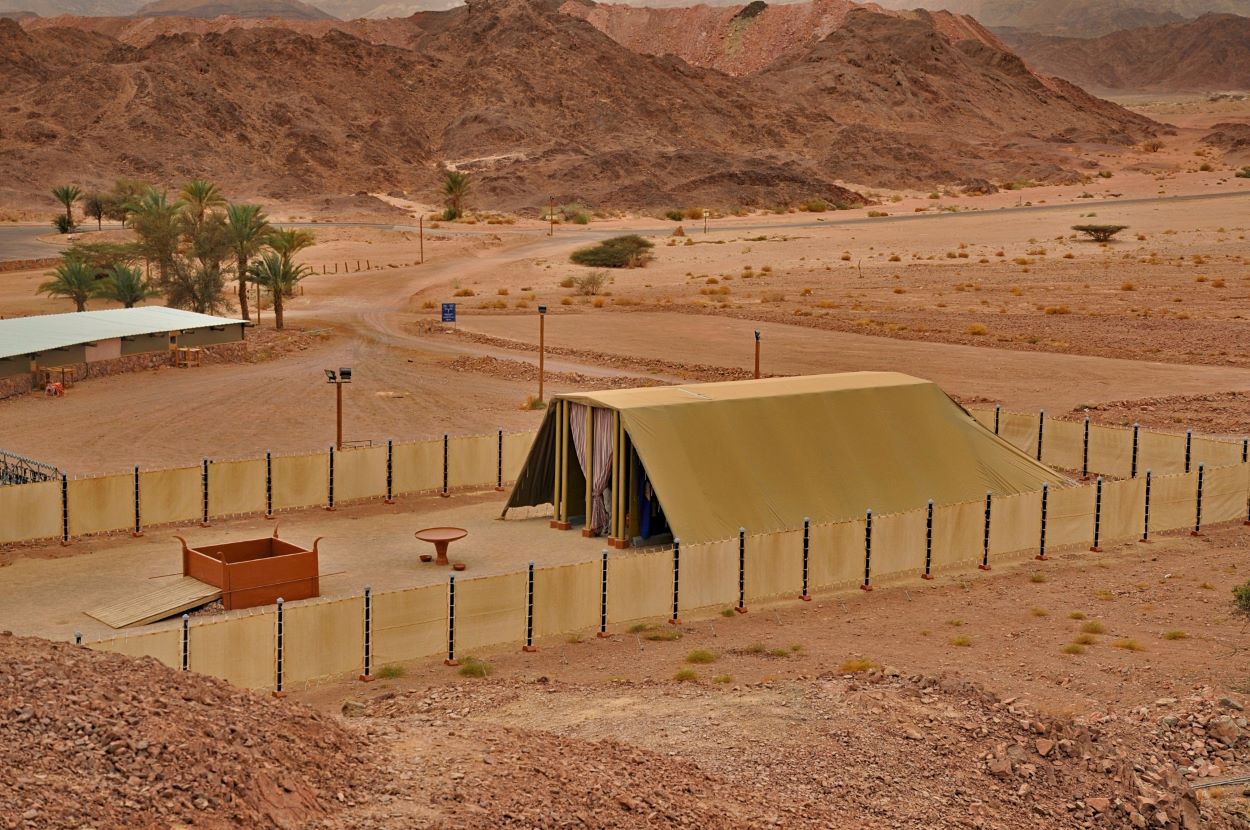
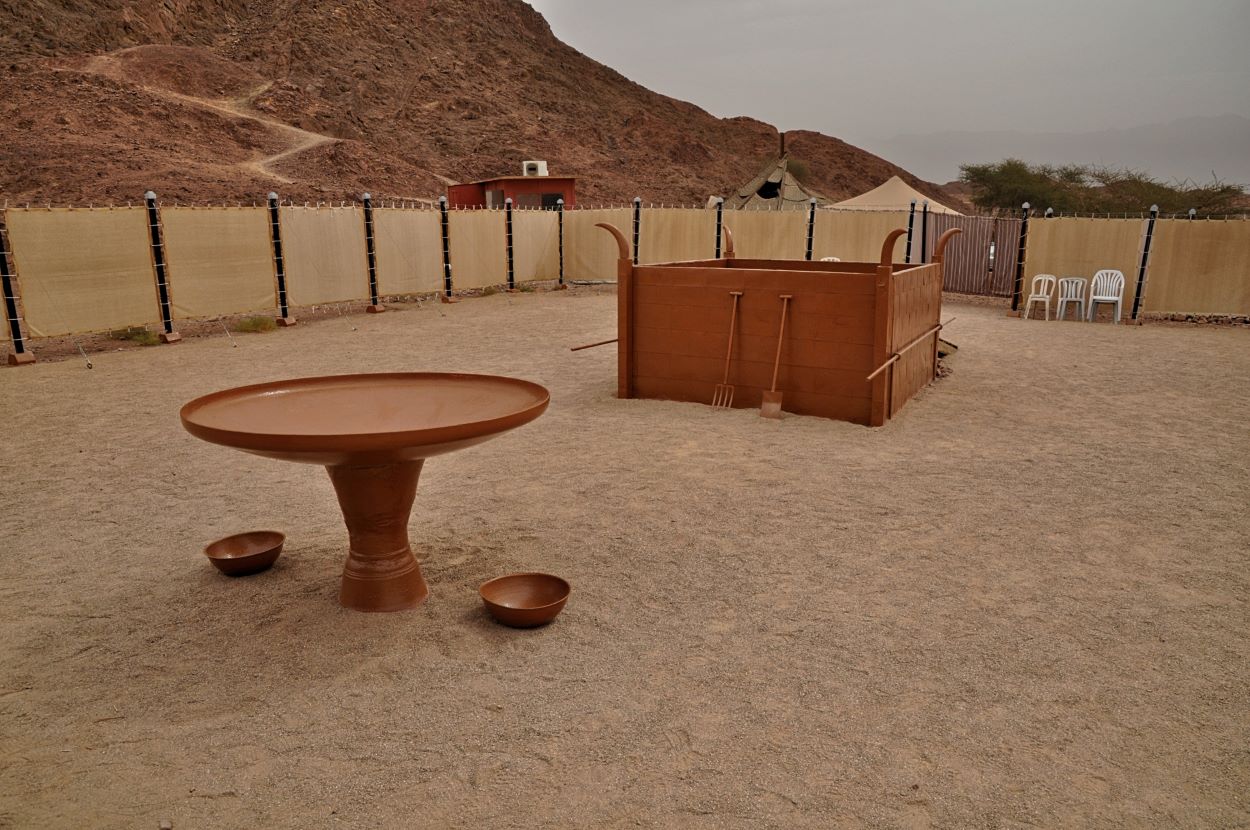
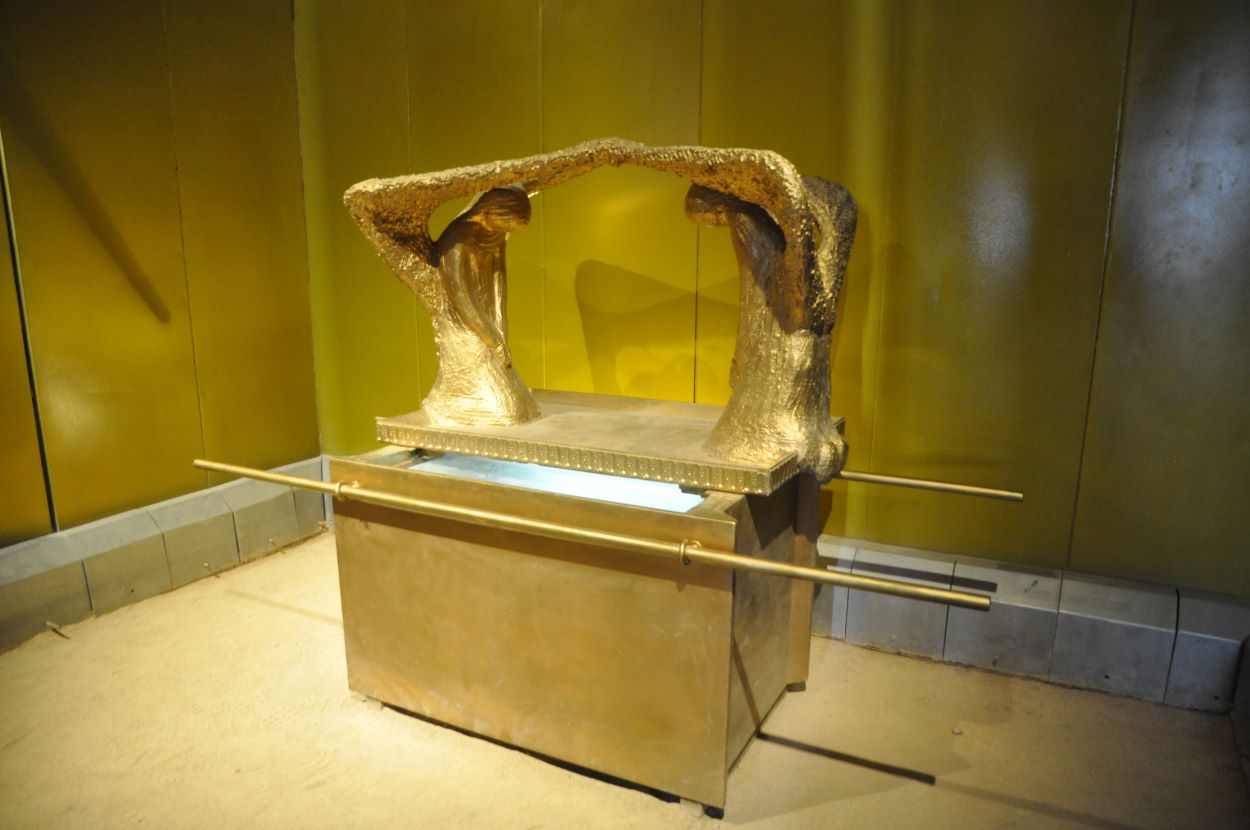
In this post we will share some visuals of the life-size model of the tabernacle in Timna, southern Israel.
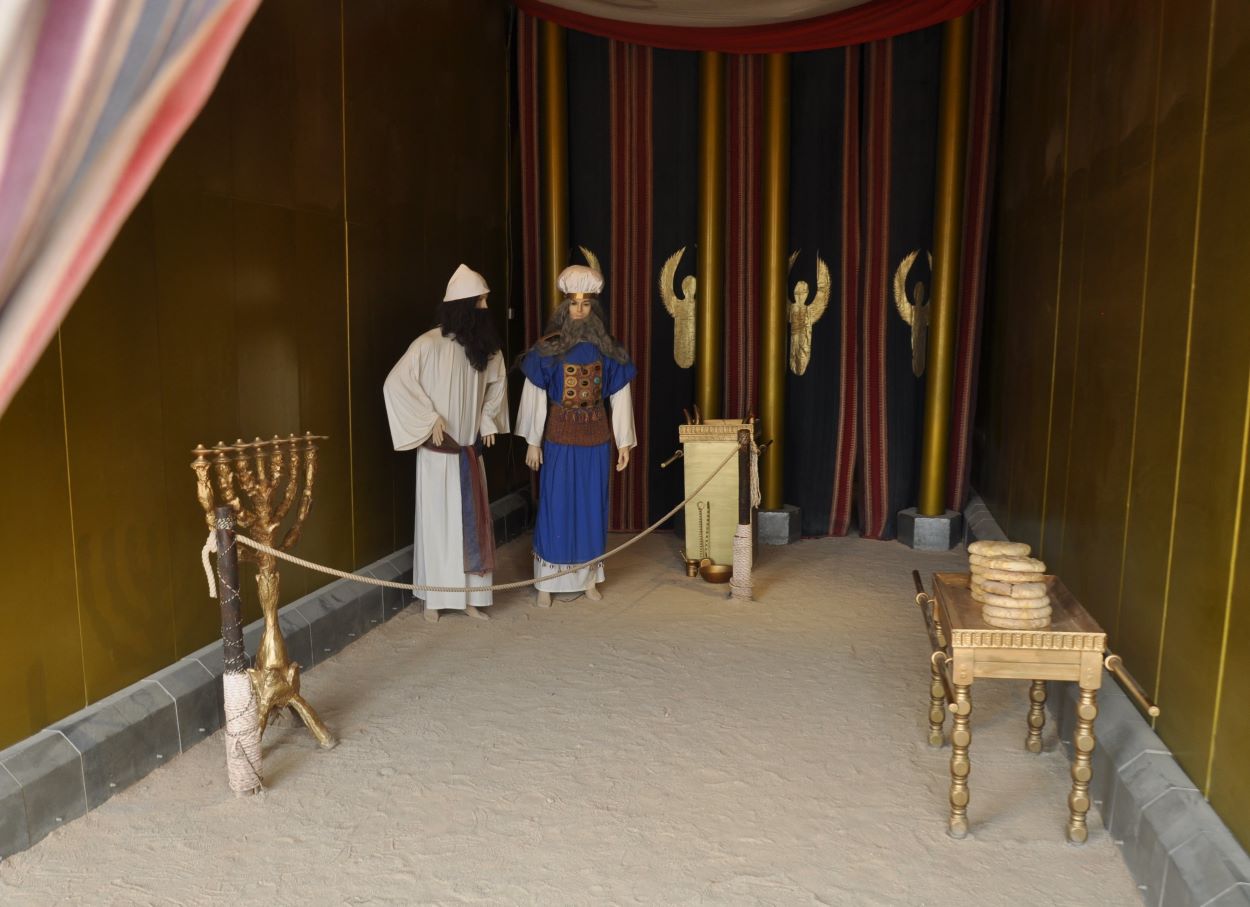
Here is a view inside the tabernacle, where you see the lampstand on your left, the table of showbread on your right, and the altar of incense at back just in front of the veil. Also you can see models of the priest, and High Priest.
Acts 27:39-Acts 28:1 describes the shipwreck on which the Apostle Paul was a prisoner en route to Rome:
When it was day, they did not recognize the land; but they observed a bay with a beach, onto which they planned to run the ship if possible. And they let go the anchors and left them in the sea, meanwhile loosing the rudder ropes; and they hoisted the mainsail to the wind and made for shore. But striking a place where two seas met, they ran the ship aground; and the prow stuck fast and remained immovable, but the stern was being broken up by the violence of the waves. And the soldiers’ plan was to kill the prisoners, lest any of them should swim away and escape. But the centurion, wanting to save Paul, kept them from their purpose, and commanded that those who could swim should jump overboard first and get to land, and the rest, some on boards and some on parts of the ship. And so it was that they all escaped safely to land. Now when they had escaped, they then found out that the island was called Malta.
Acts 27:39-Acts 28:1
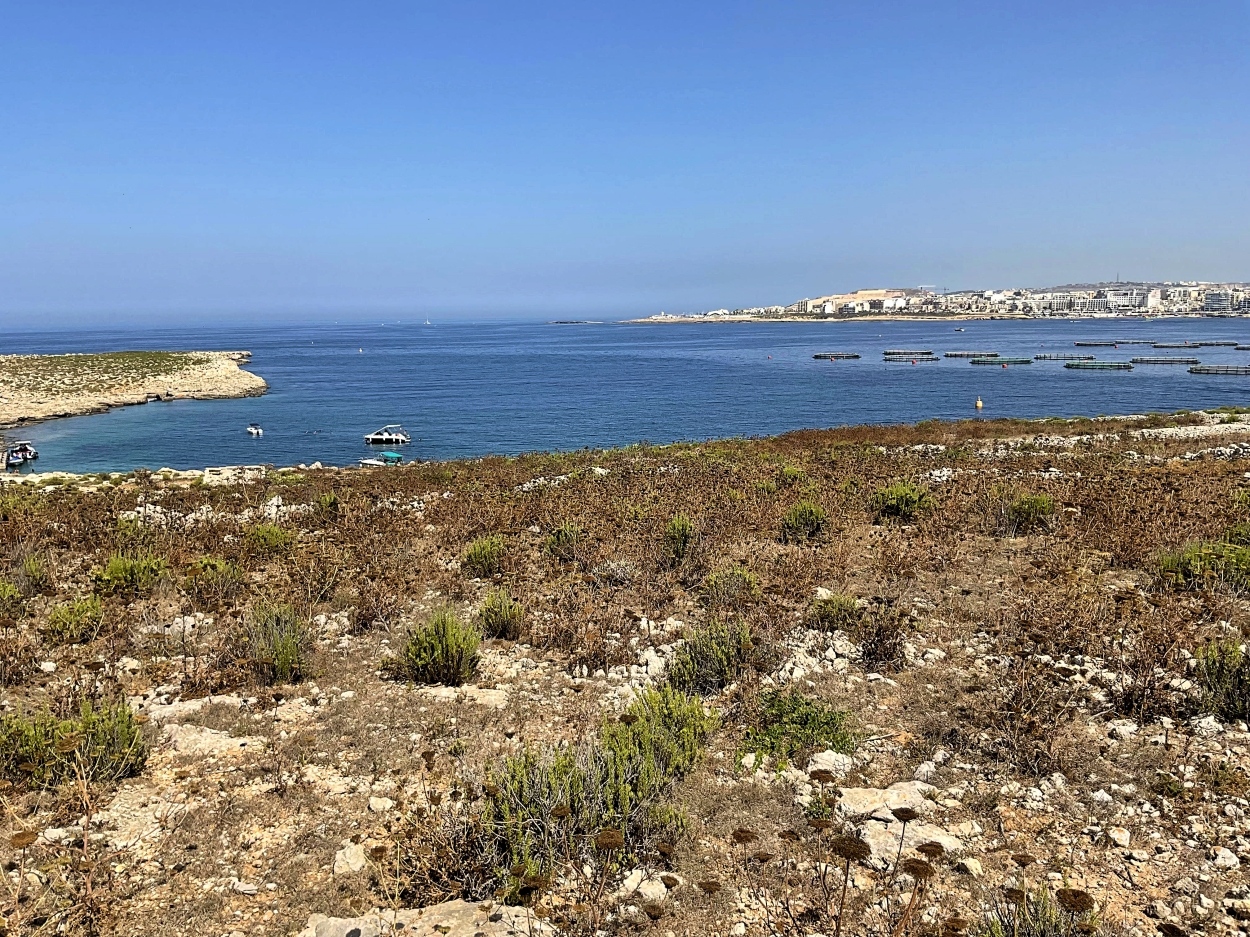
Here is the site proposed by many scholars of that area, known as St. Paul’s Bay:
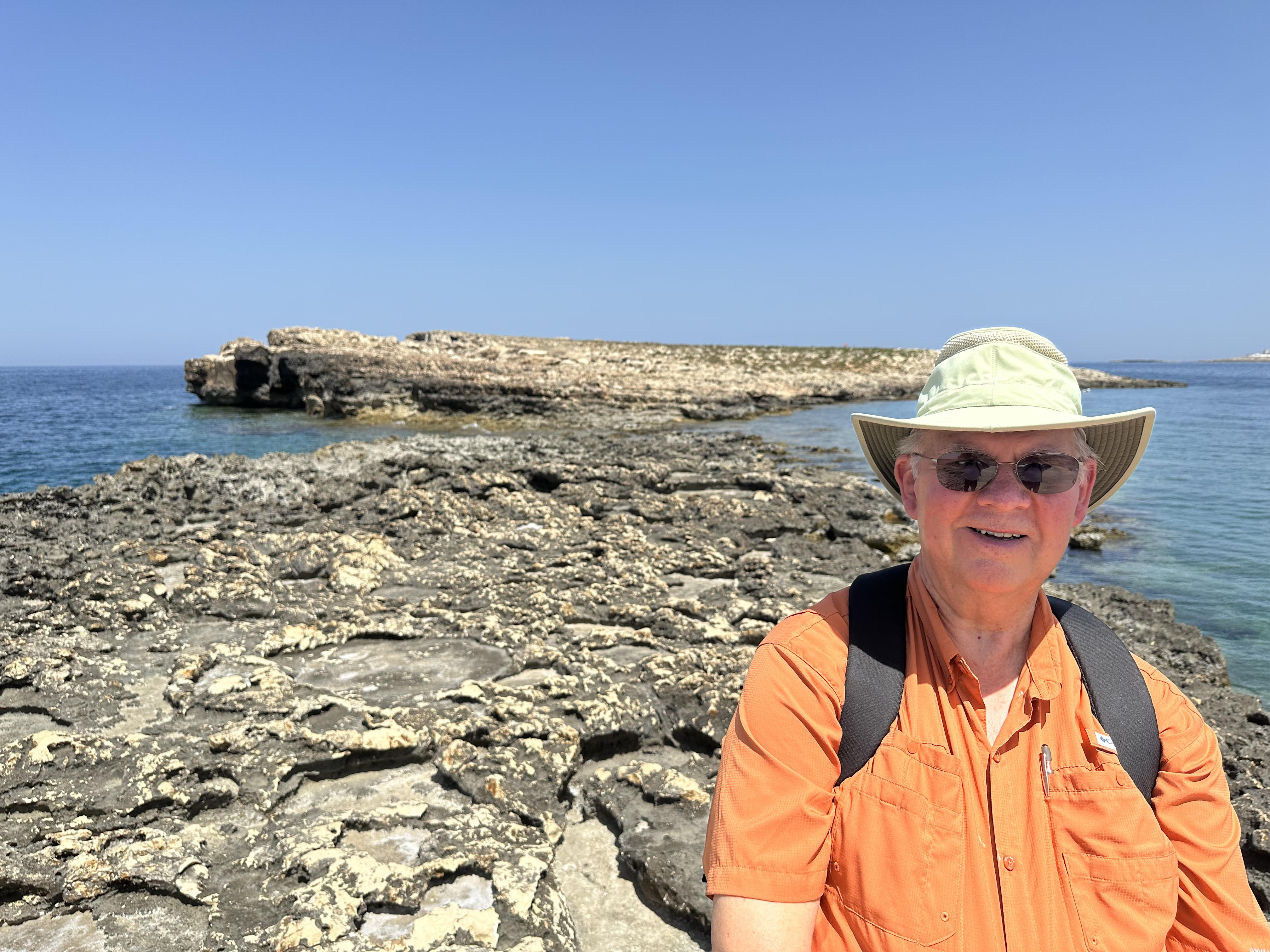
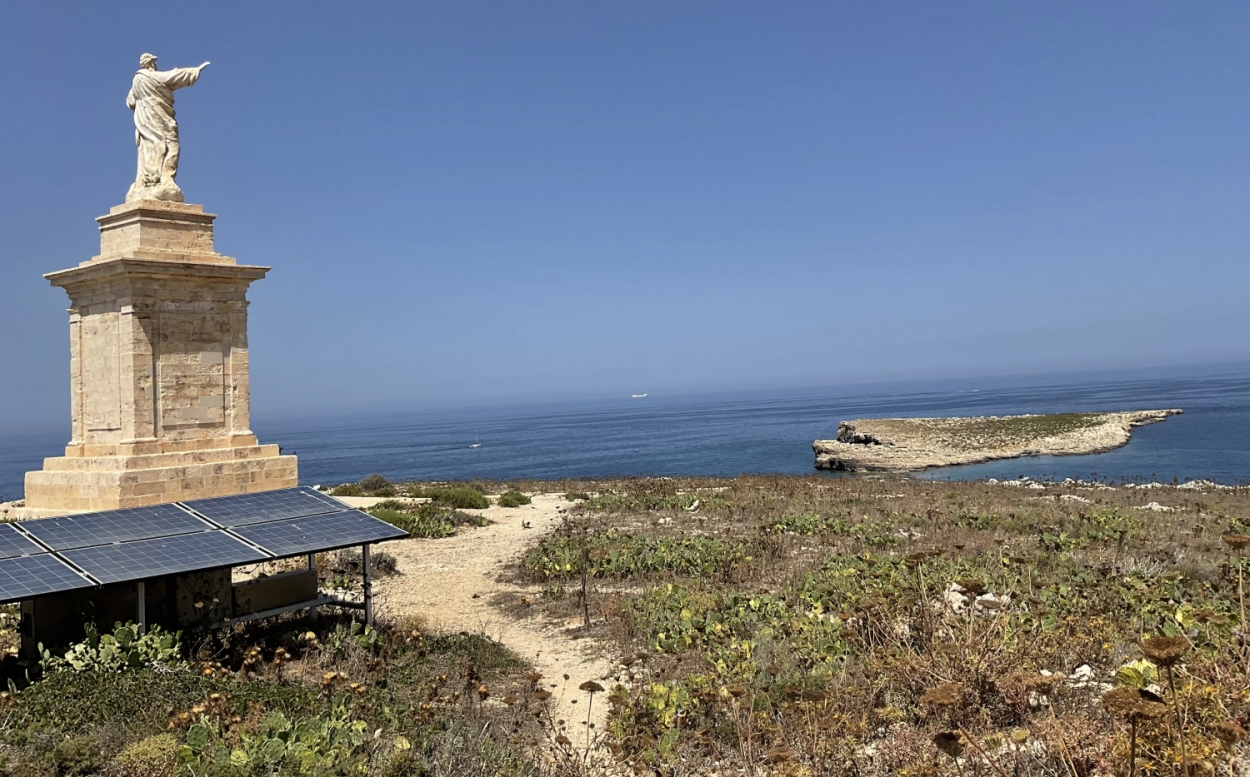
Having just returned from a personal study trip to Malta, I hope to share some of the sites and artifacts we were able to photograph in upcoming posts.
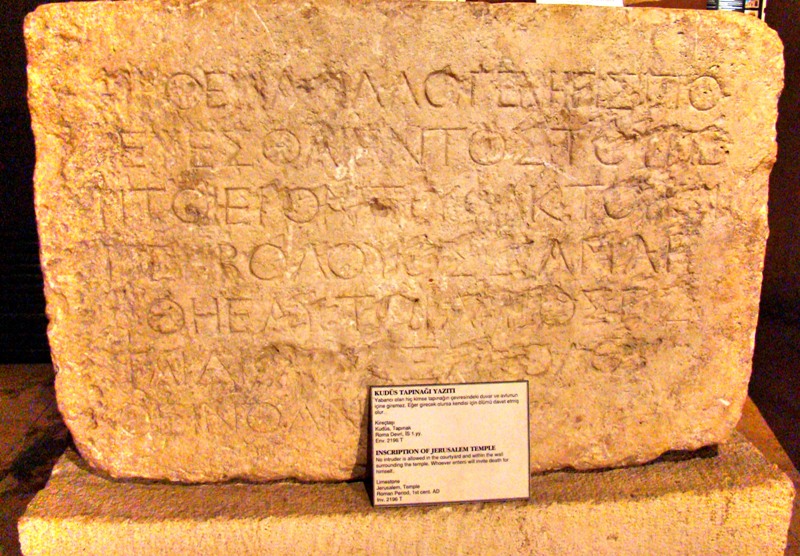
Some biblical texts are especially illuminated by archaeological finds. For example, Acts 21:28 records the false charge against Paul, “He also brought Greeks into the temple and has defiled this holy place” (v.28). The next verse shows this they “supposed” (NET “assumed). Ephesians 2:14 speaks of Jesus’ death breaking down “the middle wall of separation” between Jews and Gentiles.
Temple Inscription Fragment. Israel Museum. Photo by Leon Mauldin.
Our photo shows one of the warnings posted marking the boundary within the temple complex beyond which no Gentile could proceed. The inscription read, “NO FOREIGNER IS TO GO BEYOND THE BALUSTRADE AND THE PLAZA OF THE TEMPLE ZONE. WHOEVER IS CAUGHT DOING SO WILL HAVE HIMSELF TO BLAME FOR HIS DEATH WHICH WILL FOLLOW.” I took this photo earlier this month in the Israel Museum.
A complete tablet is housed in the Istanbul Museum, as seen in our photo here:
Complete Temple Inscription. Istanbul Archaeology Museum. Photo by Leon Mauldin.
So the Acts 21 text means that Paul was charged with taking a Gentile beyond the balustrade marked off by signs just like thsee.
The Ephesians 2 text shows that with Jesus’ death on the cross, reconciliation is made possible between men (Jew and Gentile) and God, and those reconciled unto God are reconciled to each other. The reconciled are in one body (the church, Eph. 1:22-23). That distinction epitomized by the wall of separation, and reflected by these warning signs, has been removed!
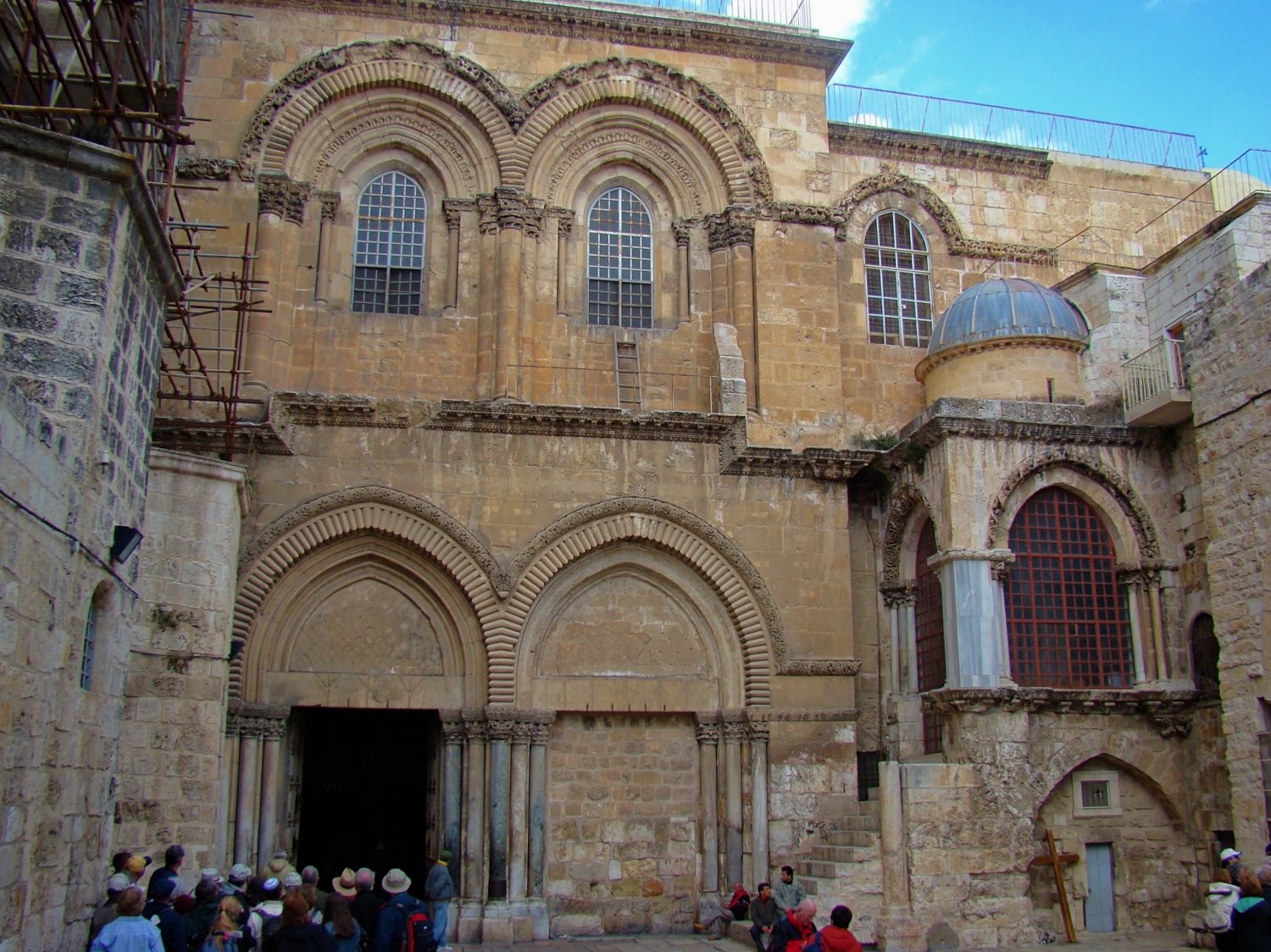
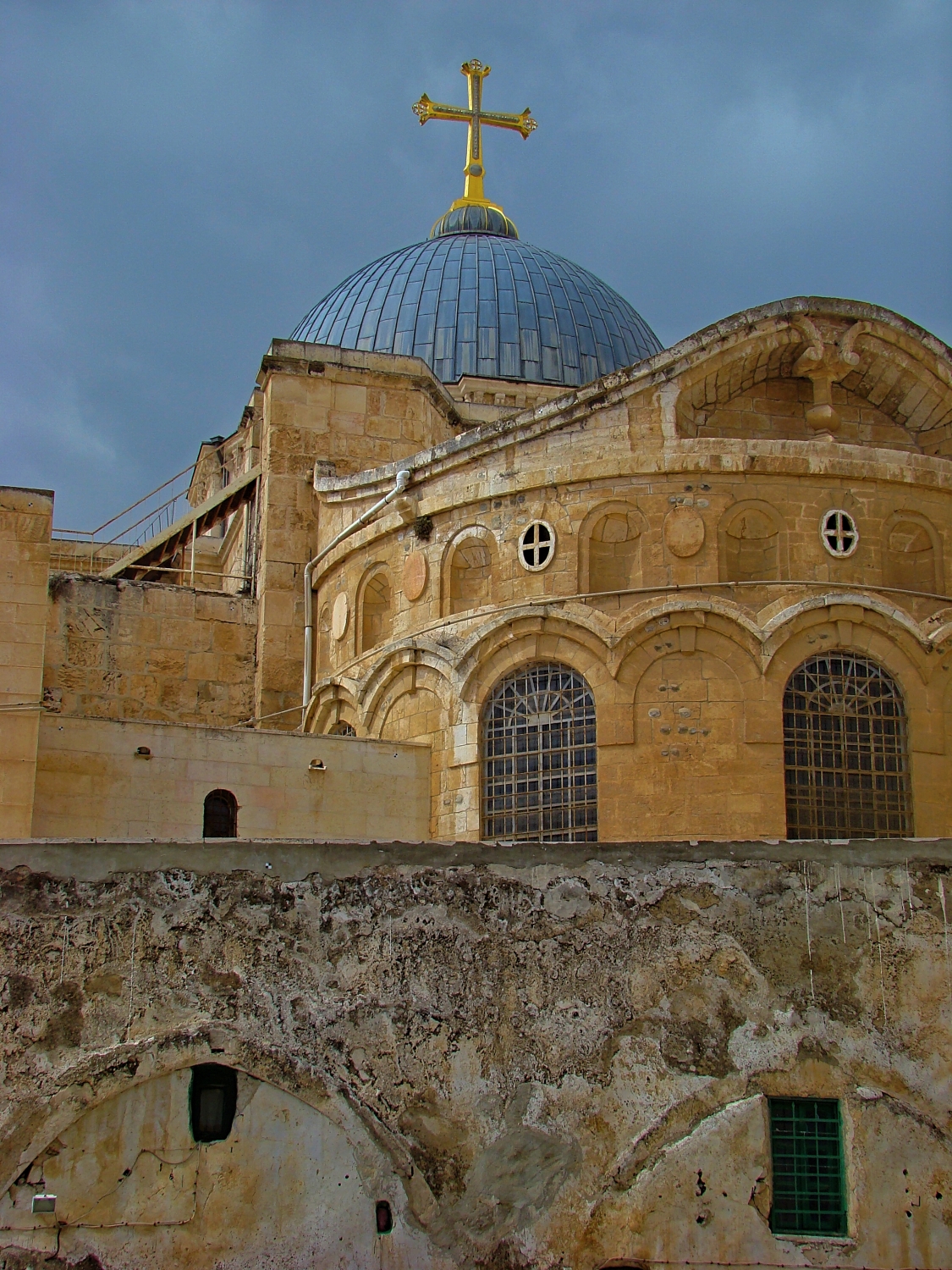
The Roman Emperor Hadrian (r. 117-138 AD) built a temple devoted to Jupiter over the site venerated as Jesus’ tomb. Later Constantine (r. 306-337 AD) ordered Hadrian’s temple to be destroyed and ordered that a church be built over Jesus’ tomb. Despite the years of destruction and rebuilding, enough remains from earlier structures to provide a plan of Constantine’s buildings.
The site of the crucifixion itself is thought to be very near the place of Jesus’ entombment. Previously Hadrian had erected a Venus statue over Golgotha, ironically marking the spot! Constantine constructed the Martyrium Church over the site of the crucifixion itself.
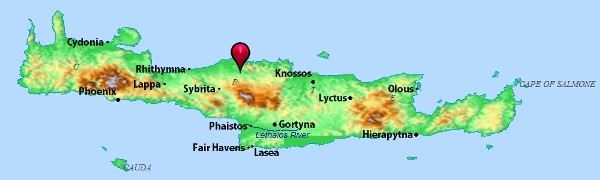
After the Apostle Paul left the younger evangelist Titus at Crete, he wrote, “For this reason I left you in Crete, that you should set in order the things that are lacking, and appoint elders in every city as I commanded you” (Titus 1:5). There were many cities (Greek polis) on the island of Crete, as can be seen from this map by bibleatlas.org:
In each of these cities where congregations of Christians were established, qualified men were to be appointed to serve as elders (bishops, pastors are biblically interchangeable terms). The list of qualifications was given as follows:
if a man is blameless, the husband of one wife, having faithful children not accused of dissipation or insubordination. For a bishop must be blameless, as a steward of God, not self-willed, not quick-tempered, not given to wine, not violent, not greedy for money, but hospitable, a lover of what is good, sober-minded, just, holy, self-controlled, holding fast the faithful word as he has been taught, that he may be able, by sound doctrine, both to exhort and convict those who contradict.
Titus 1:6-9
The archaeological excavations of Arthur Evans at Knossos got underway in 1900. He is credited with inventing the term “Minoan,” naming the civilization after King Minos, who ruled the island of Crete, according to legend.
A deity worshiped by the Minoans was the bull. In the Biblical Archaeology Society publication (2008), Island Jewels: Understanding Ancient Cyprus and Crete, we read:
Again, we rely on the evidence of frescoes and gems that show how the Minoans practiced an astonishing ritual that consisted of grasping a bull by its horns and leaping over its back. When we add this to the ubiquity of stylized bulls’ horns, so-called “horns of consecration,” as well as the bull’s head rhyta (drinking vessels; singular, rhyton) and vivid portraits of individual beasts, there can be no doubt that the Minoans treated the bull with deep reverence…The bull may well have represented the young male consort of the goddess of love, a pattern that recurs throughout the ancient near east from Tammuz and Ishtar to Venus and Adonis, although if this is the case we cannot even give names to the Cretan versions of the divine couple (pp. 49-59).
BAS
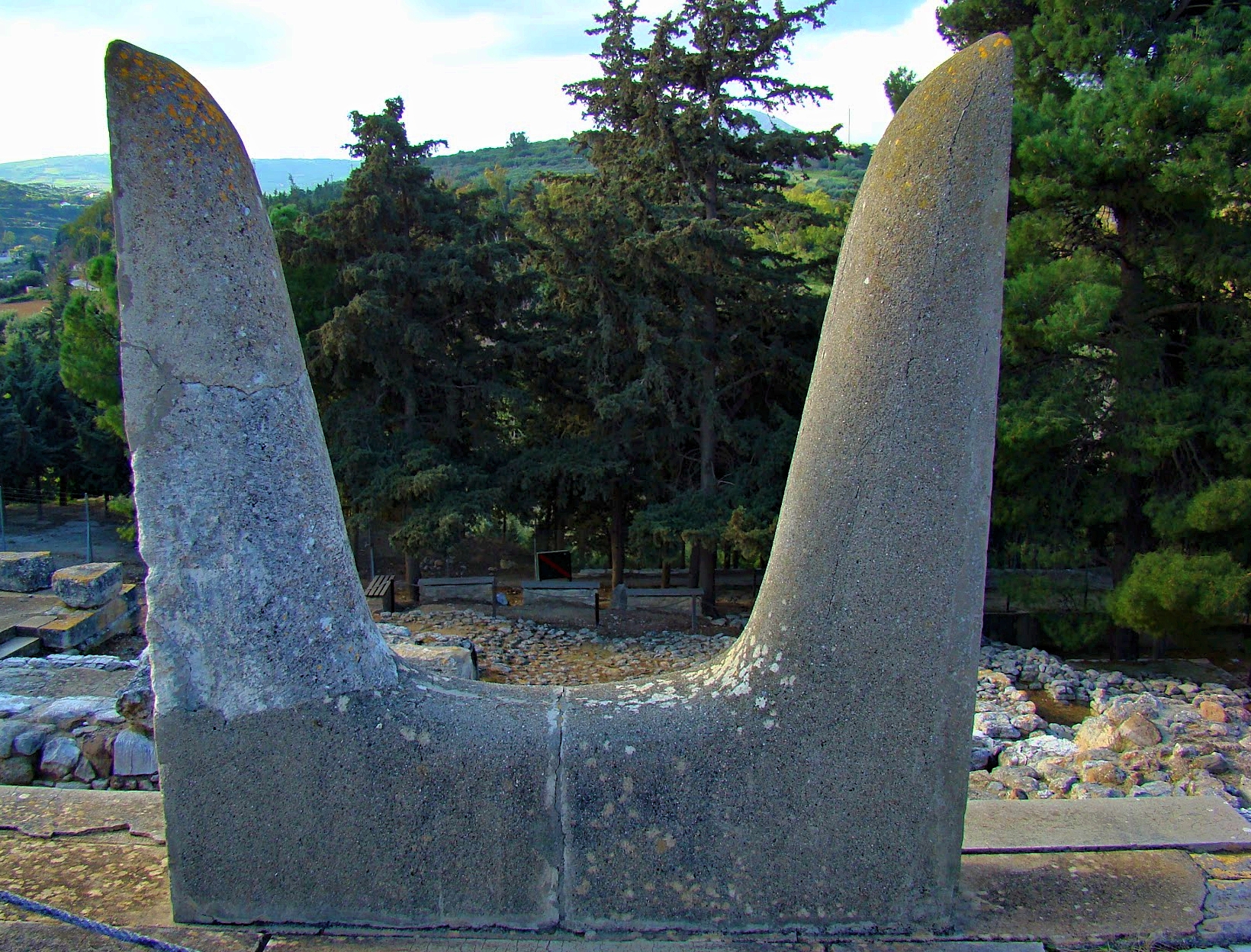
In keeping with this information, note our photo of the gigantic bull’s horns below:
It is thought by many that these restored horns symbolized the sacred bull, and that they once adorned the top of the palace at Knossos, Crete.
The palace at Knossos was the largest of the Minoan palaces and served as the home of the legendary king Minos. This palace complex was named and excavated in 1900 by the Englishman Arthur Evans. Arthur Evans is also responsible for naming this sculpture-like object which resembles the horns of a bull, as “”horns of consecration.”” The horns in this slide, which are located outside the South Propylaea at the Knossos complex, are a 20th century reconstruction. Different depictions of horns of consecration can be found throughout Minoan culture, such as on Minoan sarcophagi. Overall, the bull was considered to be a sacred animal in ancient Crete, playing a large role in religious rituals. Since Evans, scholars and archaeologists have debated the true function and meaning of the horns of consecration. One scholar has suggested that these horns were used as seats of honor for nobility or gods. Other scholars have thought that the horns originally served as a pot-support in a hearth. Today, there is still a lack of consensus among scholars as to the function of these horns.
We recently began a class study of Paul’s letter “to the saints and faithful brethren in Christ who are of Colossae” (Col. 1:2) in our local congregation. Knowing somewhat of the geographical setting helps one to enter the biblical world as the text is studied.
Colossae (also spelled Colosse) was a city in the Roman province of Asia, located in the Lycus River Valley about 100 miles east of Ephesus. It was situated near the cities of Hierapolis and Laodicea (see map here).
Location of Colossae. Map curtesy of BibleMapper.com.
I took a group to biblical sites in Greece/Turkey this past October, and Colossae was included on our itinerary.
During the Persian period, Colossae was a prosperous city, but by the time of the 1st century, it declined in importance, being eclipsed by Laodicea and Hierapolis. “Though commercially less successful, Colossae continued to be a place of importance in the Roman imperial period, as is shown by an inscription of this time and by second and third century A.D. coins that depict the usual city officials, showing that it had the rights of a city under the Romans” (Mare, W. H. (1976). “Archaeological Prospects at Colossae.” The Near East Archaeological Society Bulletin, 7, 43).
Back in 2006, Ferrell Jenkins and I made a personal study trip that included this site. Here is a photo from that occasion, giving a more distant shot than that above.
Unlike many of the recipients of Paul’s letters, Paul had not personally established the Colossian church, but apparently those who learned the truth of the Gospel during Paul’s stay at Ephesus (Acts 19:10), had taught and converted the Colossians.
Further, a comparative reading of Colossians with the personal letter to Philemon will show that Philemon was a Colossian also, so in reality two of the New Testament books were directed initially to this location.
Both letters were written when Paul was in chains.
Timothy joined Paul in both.
Epaphras, Mark, Aristarchus, Demas & Luke joined in salutations.
Onesimus was one of the messengers by whom Colossians was sent.
Archippus is addressed in both.
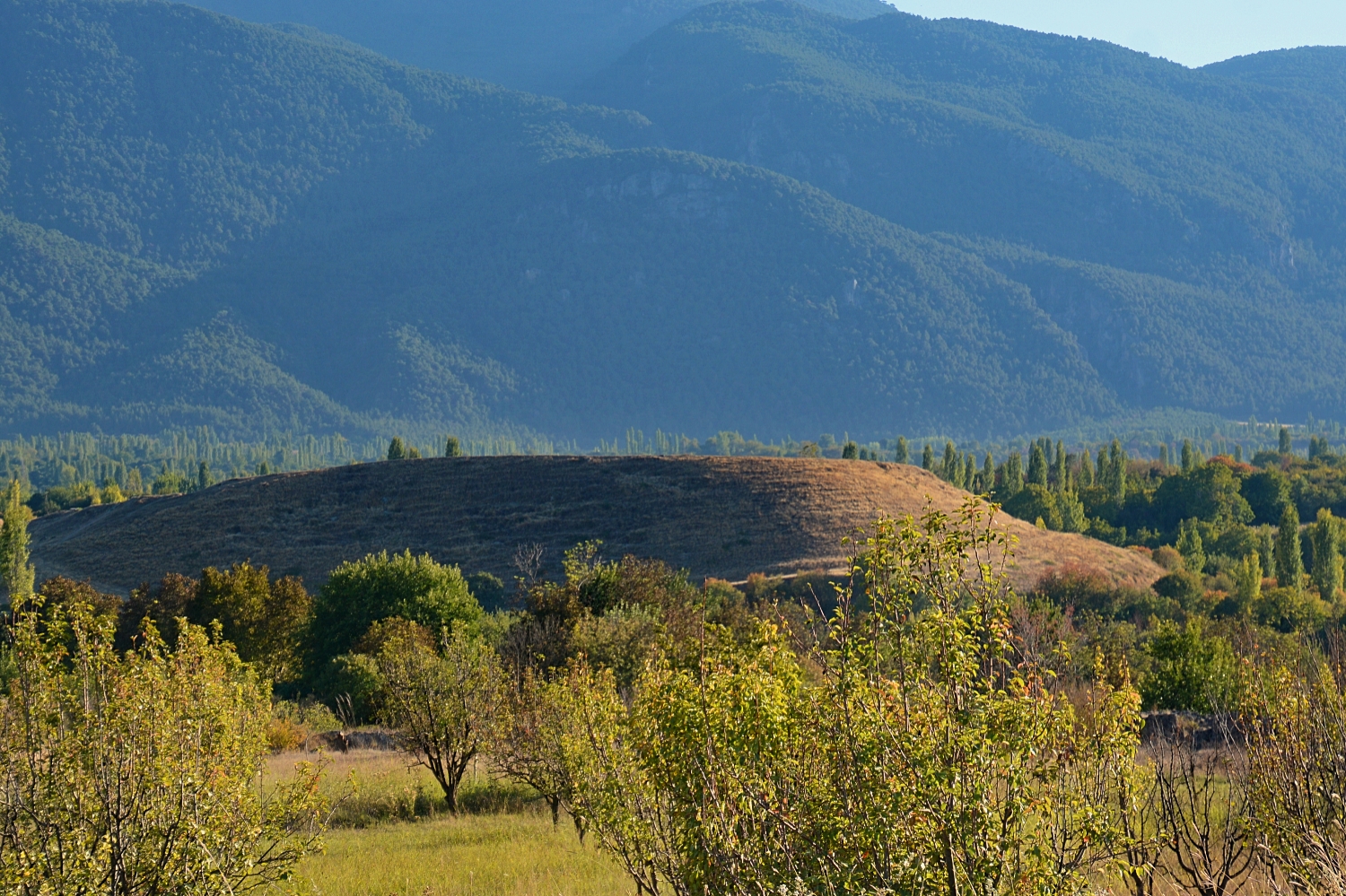
Colossae has not been excavated as of yet. Click on photos for larger view.
Among the sites our group was able to visit in Corinth was the bema, the judgment seat, mentioned in Acts 18:12-17:
When Gallio was proconsul of Achaia, the Jews with one accord rose up against Paul and brought him to the judgment seat, 13 saying, “This fellow persuades men to worship God contrary to the law.” 14 And when Paul was about to open his mouth, Gallio said to the Jews, “If it were a matter of wrongdoing or wicked crimes, O Jews, there would be reason why I should bear with you. 15 “But if it is a question of words and names and your own law, look to it yourselves; for I do not want to be a judge of such matters.” 16 And he drove them from the judgment seat. 17 Then all the Greeks took Sosthenes, the ruler of the synagogue, and beat him before the judgment seat. But Gallio took no notice of these things.
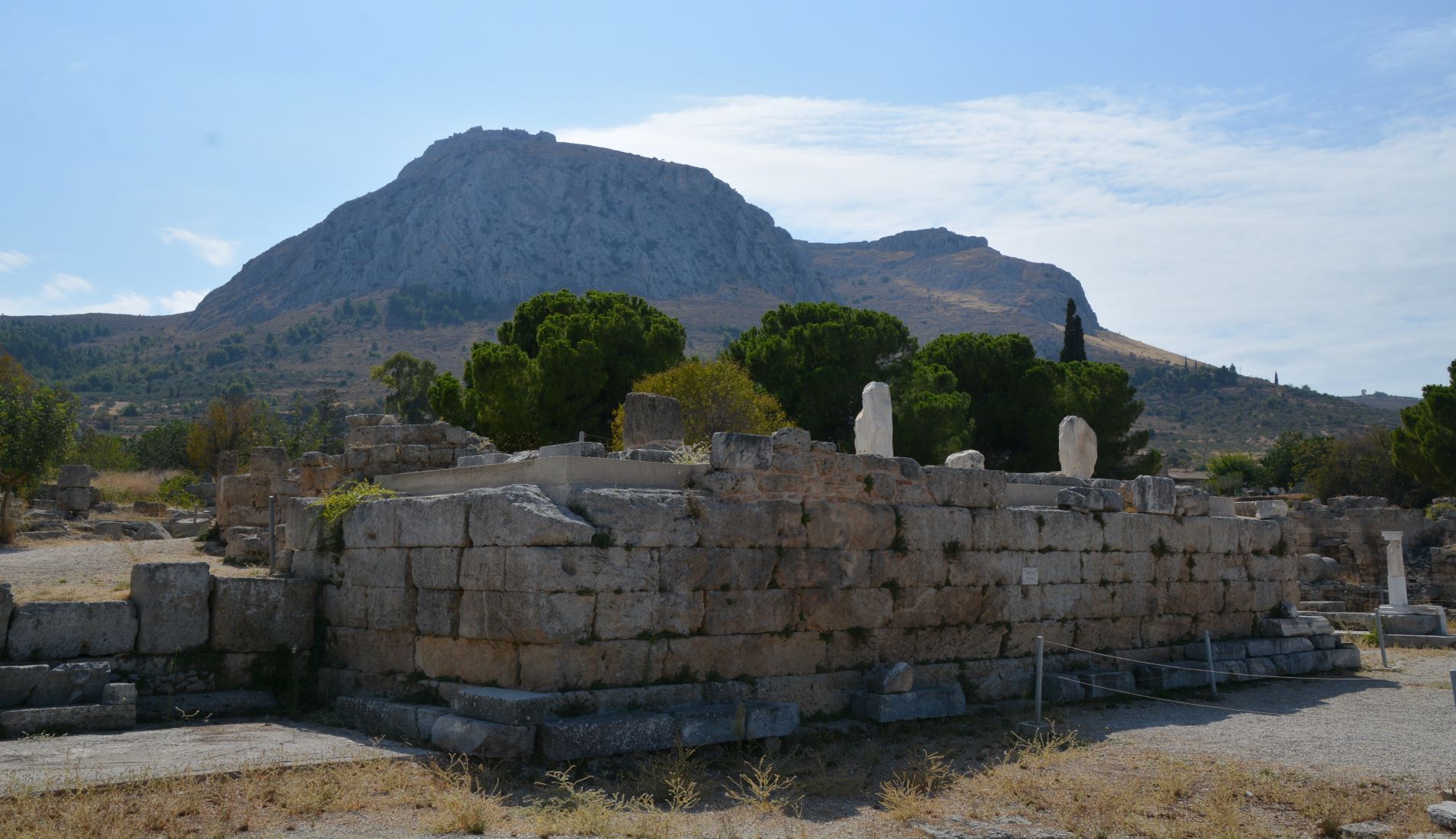
The Bema, Judgment Seat of Galillo at Corinth where charges against Paul were dismissed. Acrocorinth is in background. Photo by Leon Mauldin.
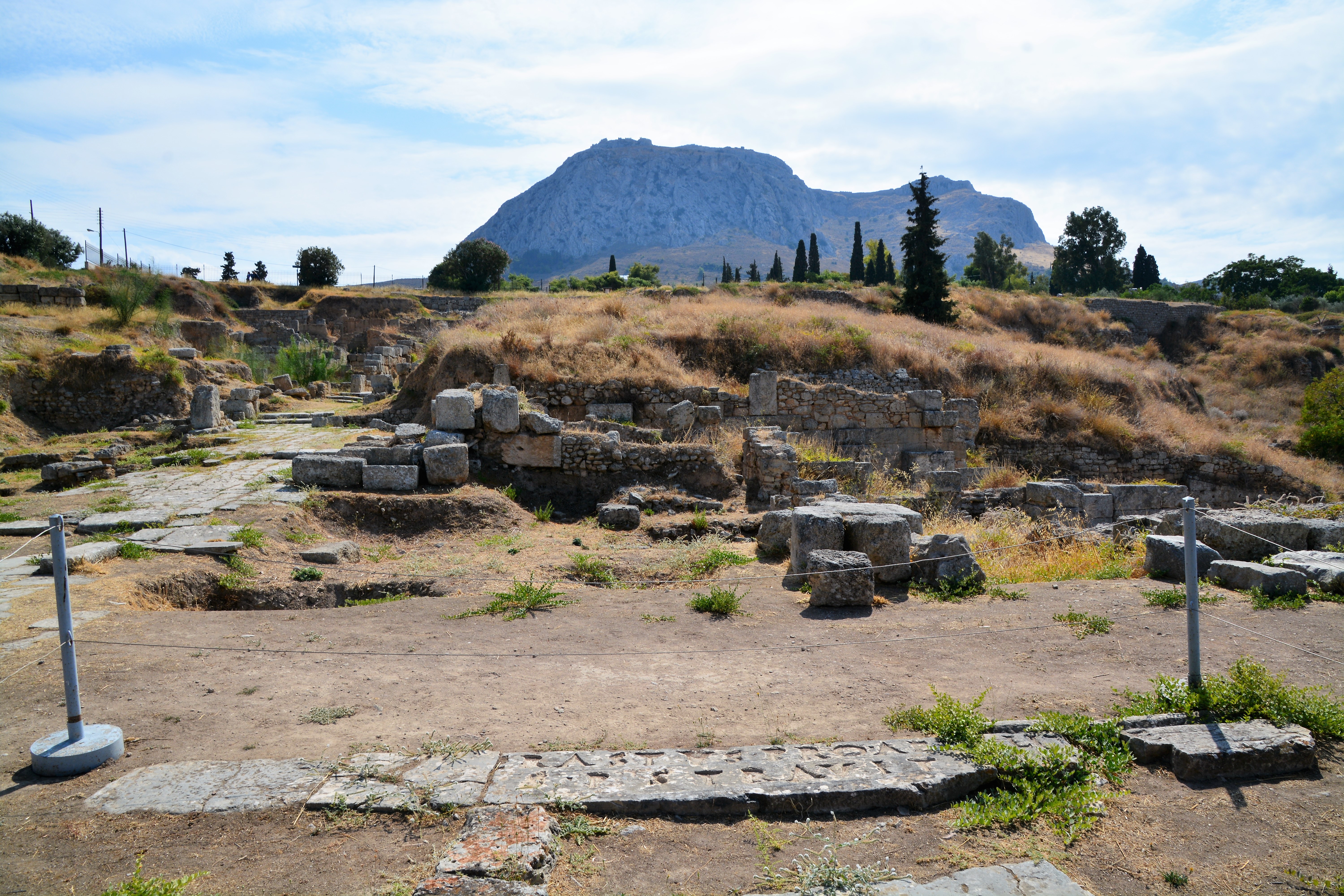
We also saw the Erastus inscription:
Erastus Inscription in foreground. Many identify this Erastus with Paul’s host at Corinth mentioned in Romans 16:23. Photo by Leon Mauldin.
Paul wrote the New Testament letter of Romans from Corinth, 3rd Missionary Journey. In Romans 16:23 we read, “Gaius, my host and the host of the whole church, greets you. Erastus, the treasurer of the city, greets you, and Quartus, a brother.”
In 1929 an inscription was discovered at Corinth naming an Erastus as the one who paid for the paving of the street. The inscription reads “ERASTVS. PRO. AED. S. P. STRAVIT” which is translated, “Erastus in return for his aedilelship laid [the pavement] at his own expense.” It would seem that the Erastus of the inscription is the same as the one mentioned in the biblical text.
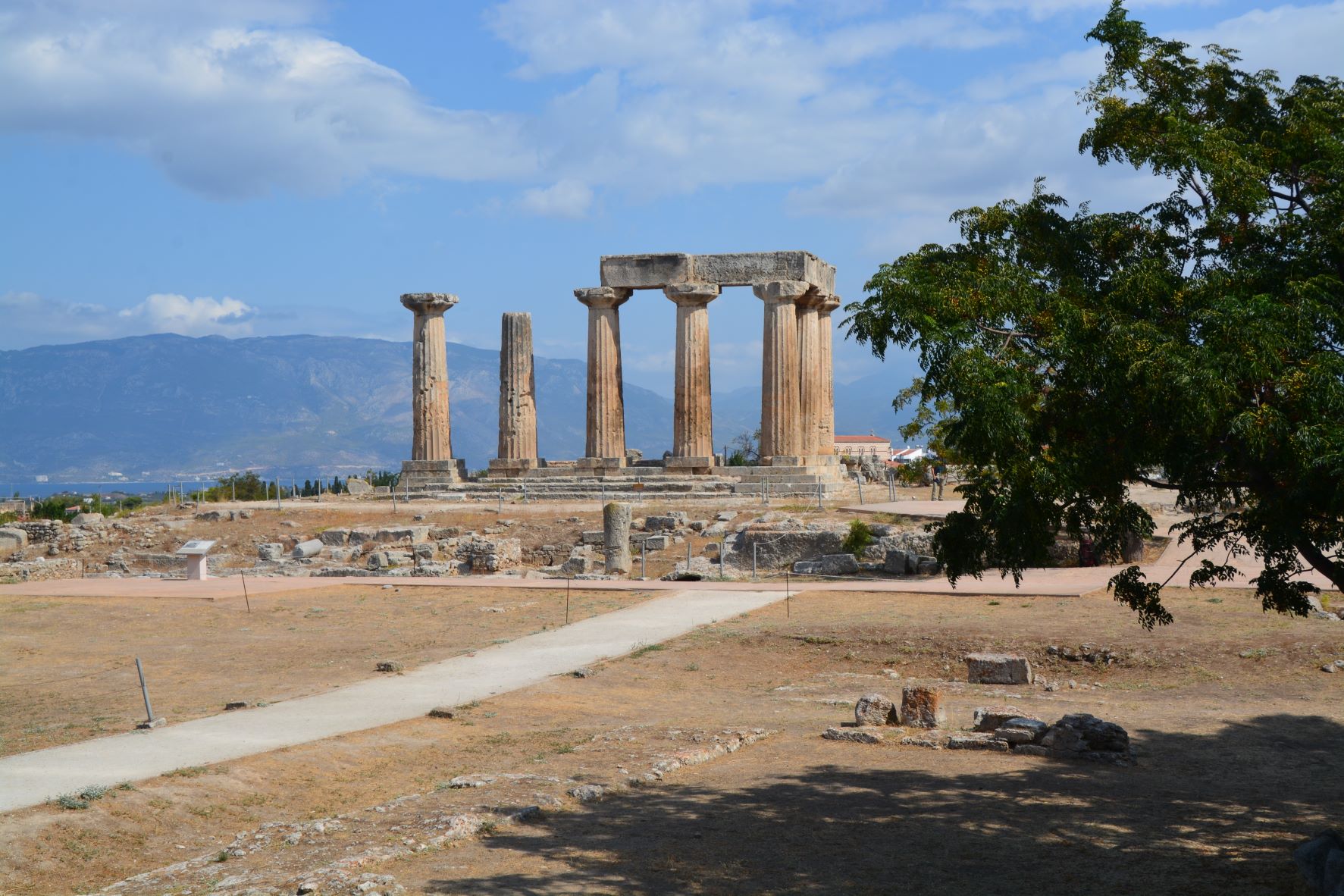
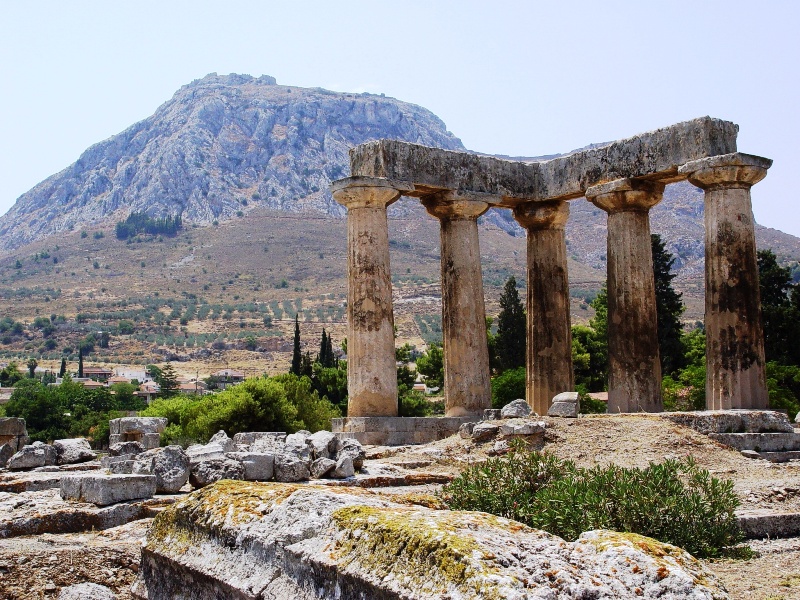
We also saw the famous ruins of the temple of Apollo.
Temple of Apollo at Corinth. Photo by Leon Mauldin
Regarding this site BAS says,
The Temple of Apollo at Corinth was 700 years old by Paul’s time. On the hill directly overlooking the Roman city’s main forum, its sturdy Doric columns served as a dramatic reminder of Corinth’s ancient grandeur. But the temple was already in ruins; to Paul it would have served merely as a sermon illustration of the impotence of the Greeks’ “pagan” gods.
As noted above, the temple was in ruins in the days of Paul, but the centuries of pagan idolatrous influence was still very much there.
The Apollo temple originally had 38 columns of the Doric order. Today seven are standing.
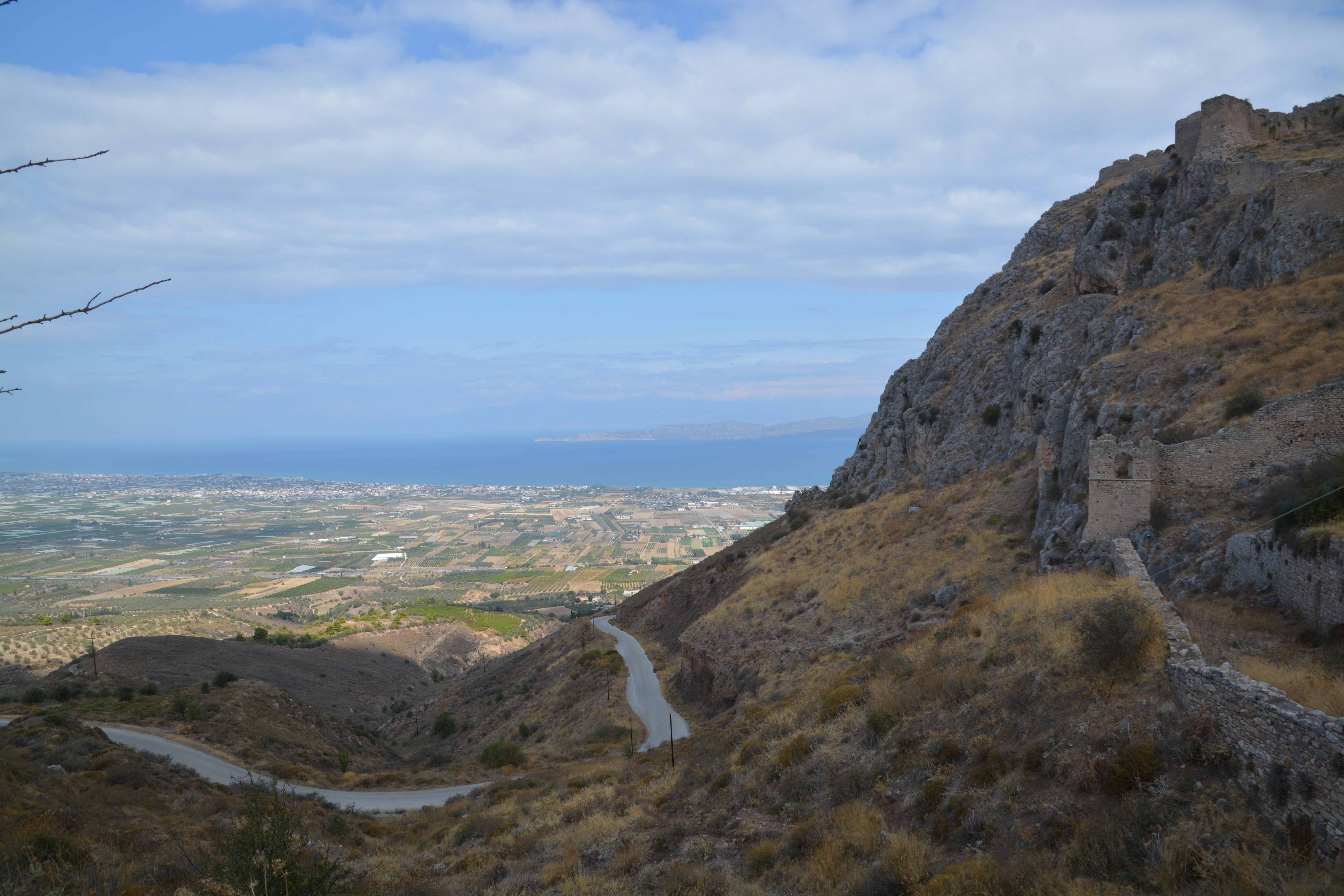
We also drove to the base of the Acrocorinth. What a view!
Acrocorinth. Photo by Leon Mauldin.
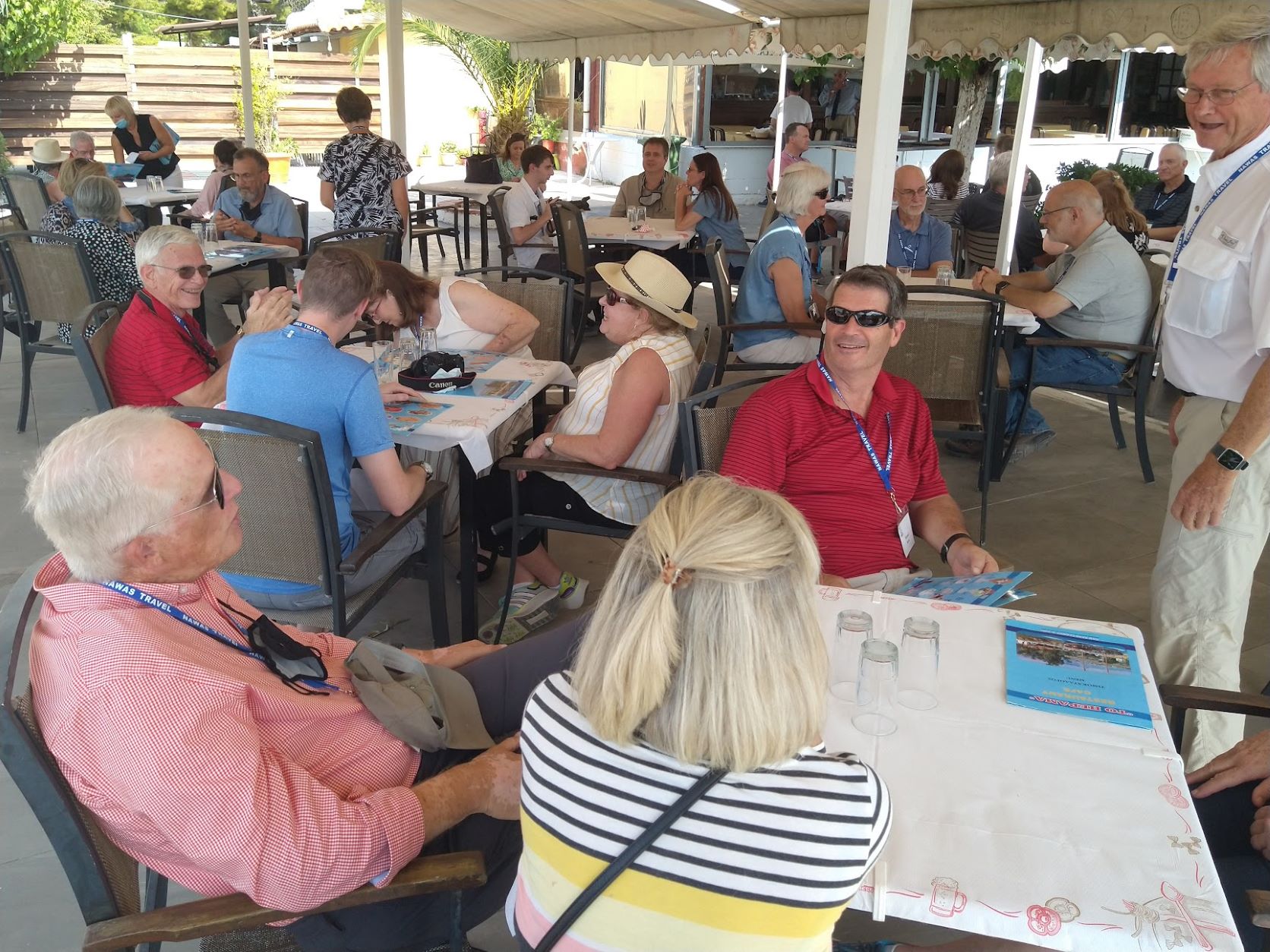
Finally, time for lunch at the Corinth Canal.
Some of our group sitting down to lunch at the Corinth Canal. Photo by Leon Mauldin.
This nice restaurant is on the eastern side of the Corinth Canal. You might see someone you know.
On our way to the archaeological site of Corinth our group made a couple of very important stops. The first was to see the Corinth Canal.
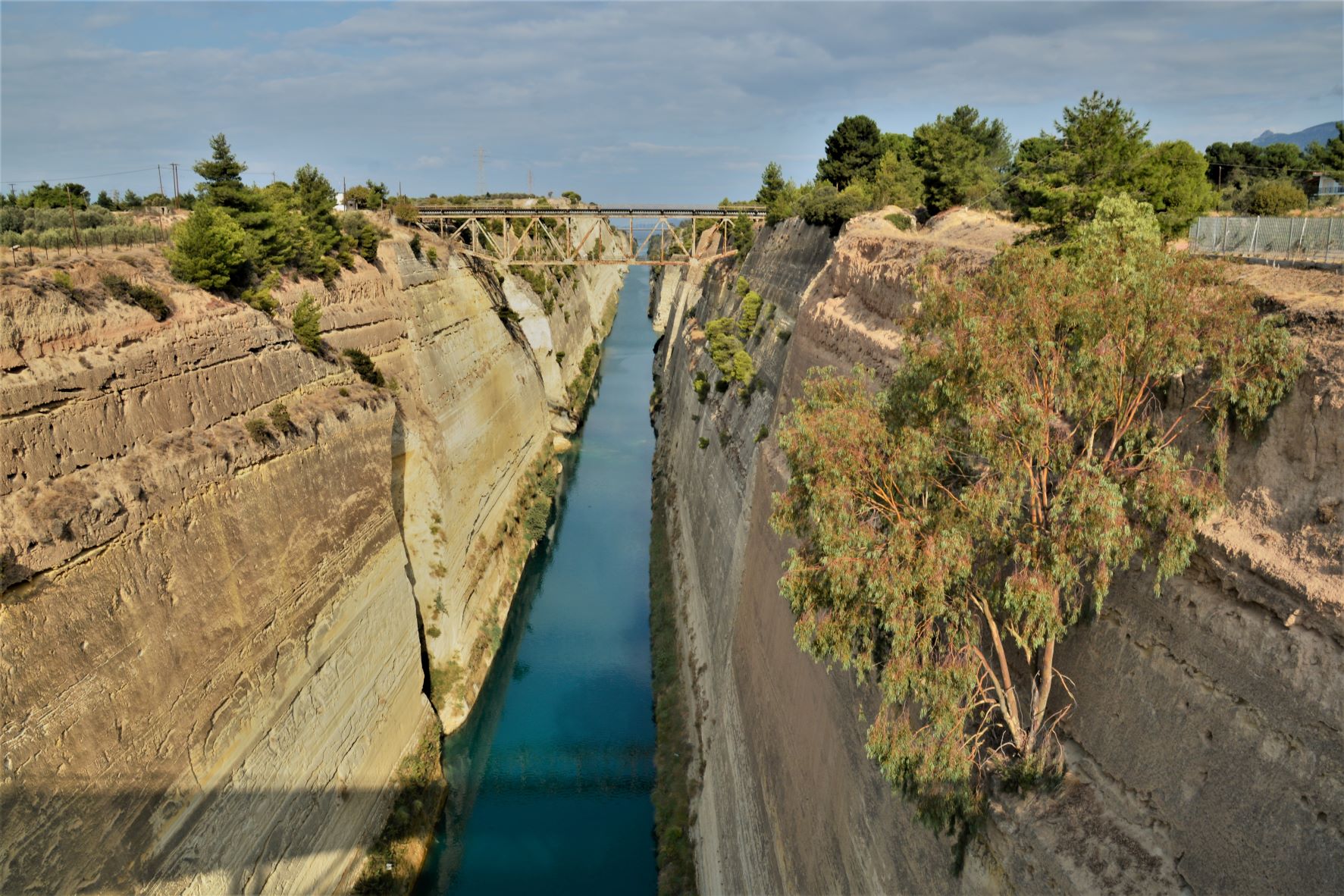
The narrowest point of the isthmus of Corinth is only 4 miles wide. A canal was engineered and completed between 1882 and 1893. Nero (A.D. 67) had the idea of building a canal at that exact route utilized by the modern engineers. He planned to use 6,000 Jewish prisoners as his work force, but the idea was abandoned.
Corinth Canal. Photo by Leon Mauldin
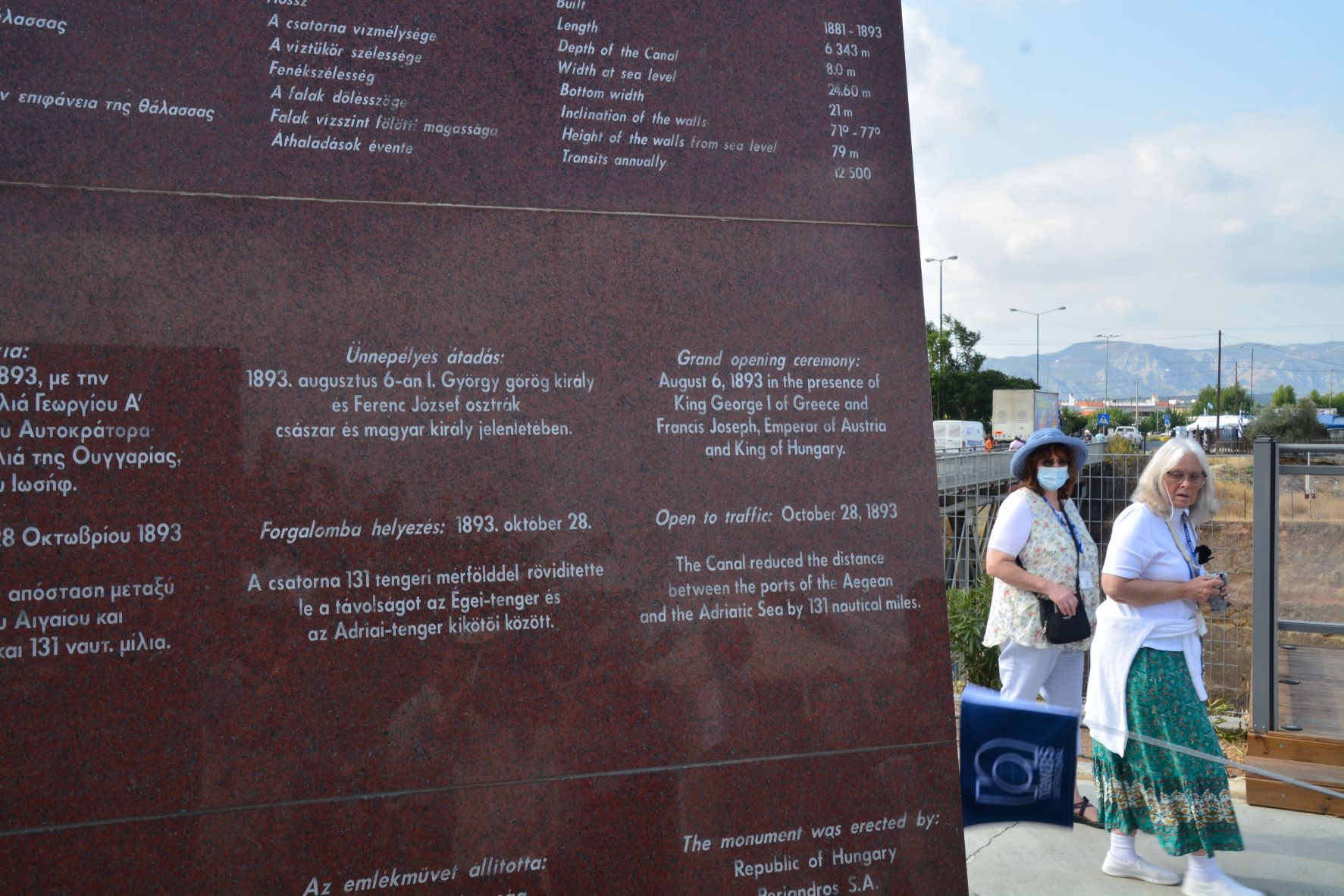
The canal cuts through the Isthmus of Corinth, separating the Peloponnesian peninsula from the Greek mainland. It connects the Gulf of Corinth with the Aegean Sea. On the site is a sign with info:
Info sign at Canal. Photo by Leon Mauldin.
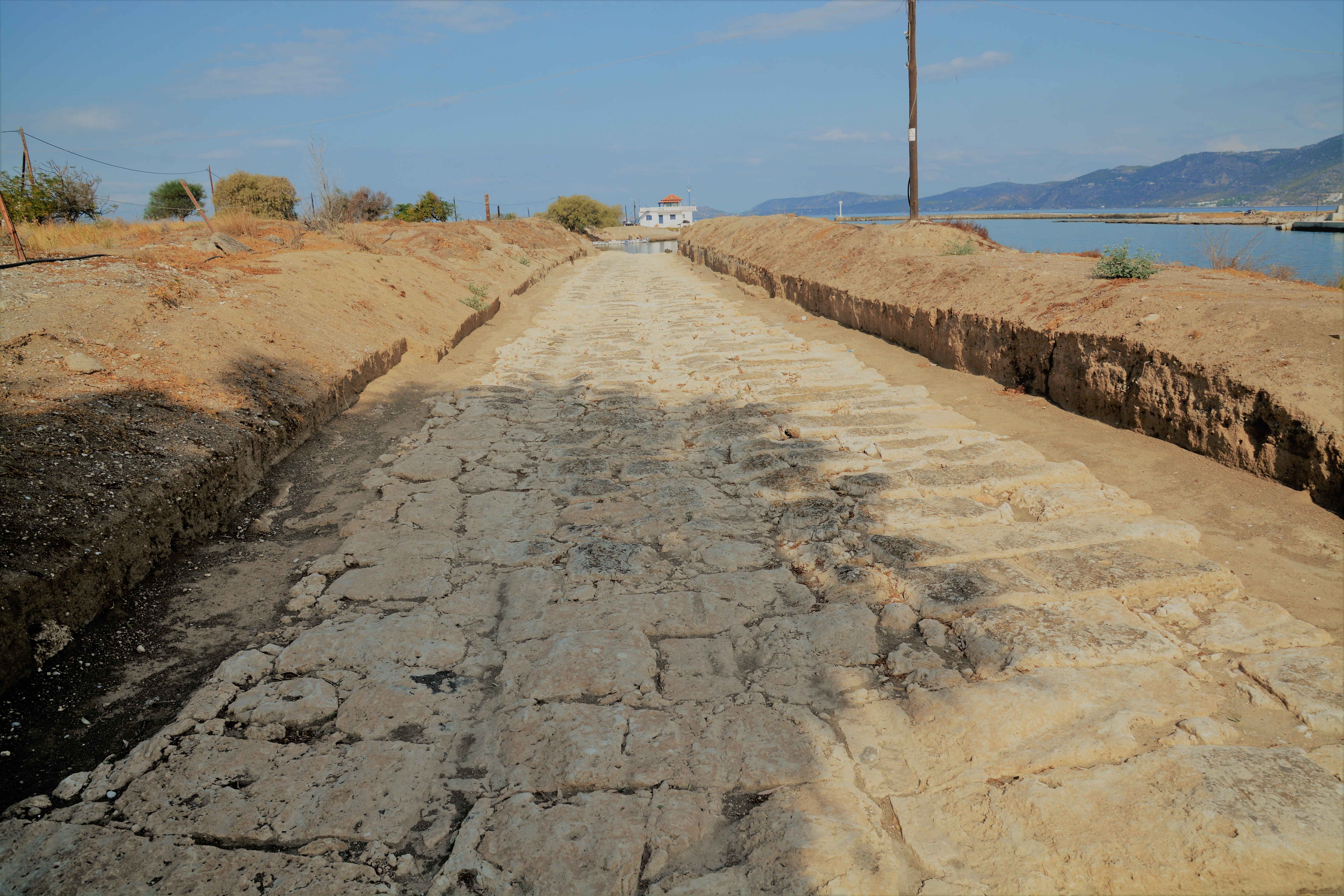
In ancient times there was a paved road that stretched across the isthmus, called the diolkos, which enabled cargo and smaller ships to be hauled overland, thus avoiding the dangerous circumnavigation of the Peloponnese.
Our photos below show two remaining portions of the western end of the diolkos. Photos are on the south side of the canal.
On this pavement cargo could transferred across the Isthmus. Built in 600 BC. Photo by Leon Mauldin.
The BAS has this information re: this site in their collection, The Biblical World in Pictures commenting on their photo taken in the same area as mine above:
In Paul’s day a stone-paved sledway, called the Diolkos, was used to haul ships and their cargoes across the isthmus. At both ends of the road the pavement continued down beneath the waterline, allowing the shallow-draft ships to be floated onto and off of the sleds. The sleds were then pulled out of the water and across the isthmus by mule-power.
This view of the Diolkos is near the western end, looking beyond to the Gulf of Corinth (and the mountains along its northern coast sheltering the oracle shrine of Apollo at Delphi). At the right can be seen the western outlet of the modern canal. The stone pavement of the Diolkos clearly shows the ruts formed by sled runners over centuries of use. Corinth, of course, controlled the Diolkos traffic. Moreover, since ship crews and passengers using this route had to leave their vessels temporarily at Corinth anyway, they had less reason to make an additional port-call at Athens’ harbor on the Piraeus. Thus, many more travelers of the Roman era passed through Corinth than through Athens.
In our previous post of September 28, I reported that our tour group (of 45 passengers) had arrived safely and were set to begin our Steps of Paul and John Tour. We had a great tour, visiting sites from southern to northern Greece, then crossing the Dardanelles and exploring Troas, Assos, the cities of the Seven Churches, also Colossae and Hierapolis, and finally concluding in Istanbul.
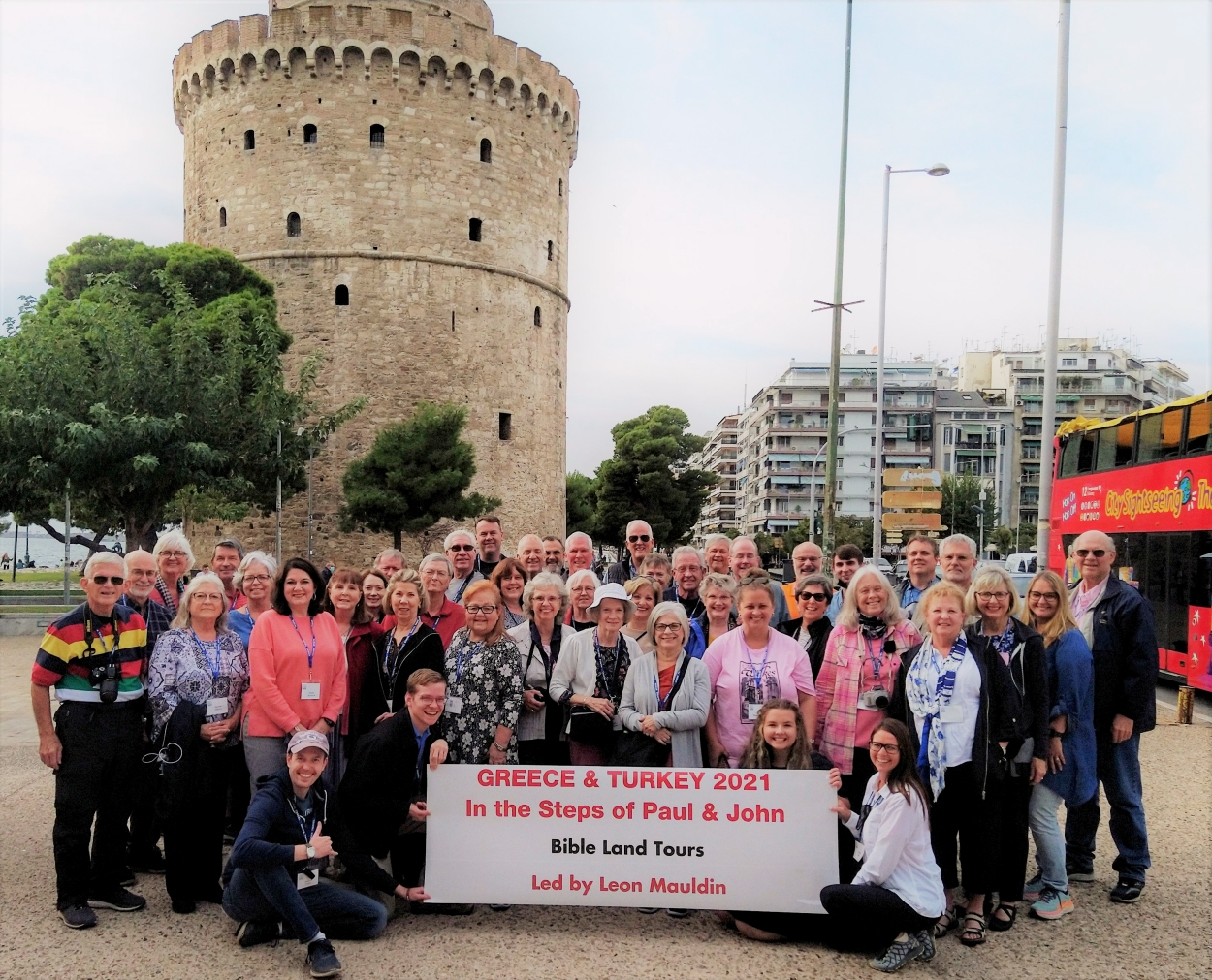
I had intentions of making posts in this blog during the tour, but due to several factors, it turned out to be more workable to use my Facebook account and make posts on my phone. But now that we are back in the states we plan to report on the tour on this site. In upcoming posts I want to begin at Corinth, and basically follow our itinerary with appropriate posts. In this post however, I want to “fast-forward” to Assos, and look at the wonderful Roman road there which we were able to see for the first time. But first, a group photo taken at Thessaloniki, Greece. The famous White Tower is in the background.
Mauldin’s Group at Thessaloniki, Greece. Photo by Maria Psychari.
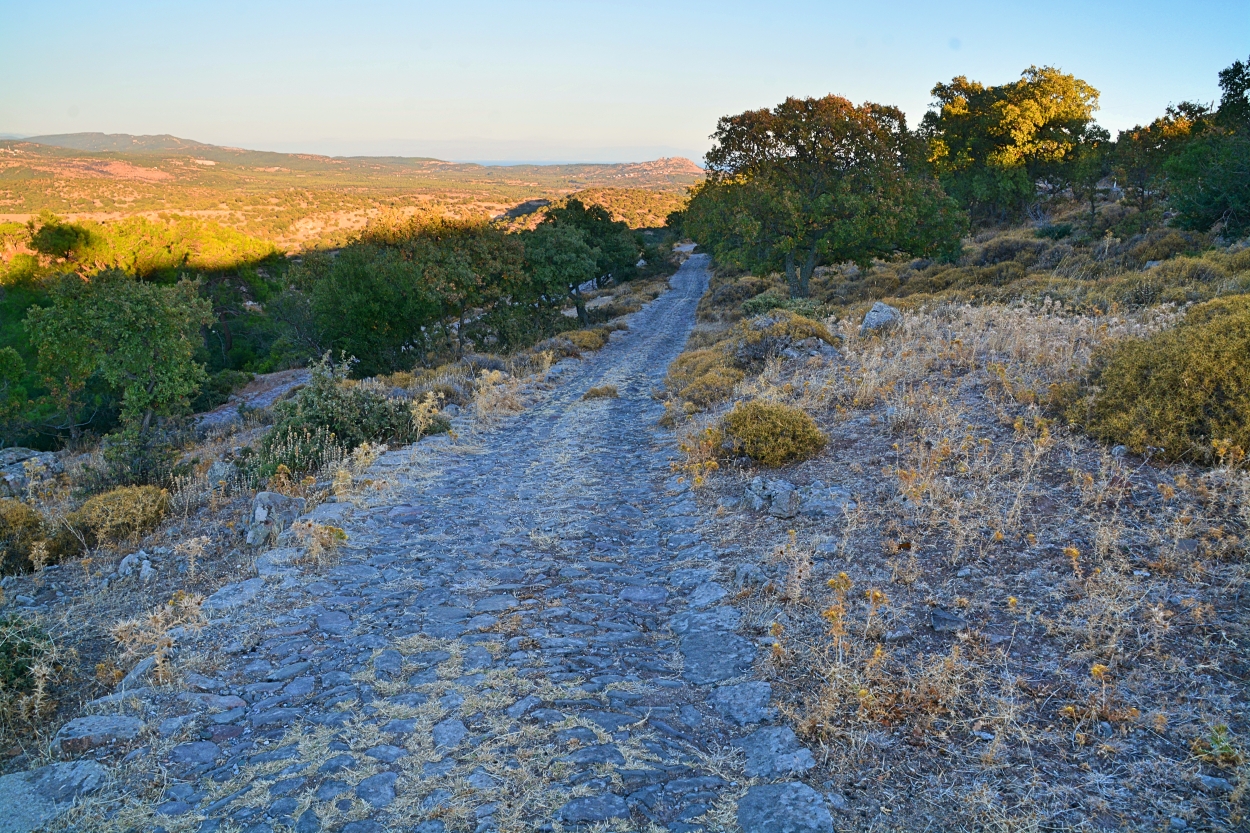
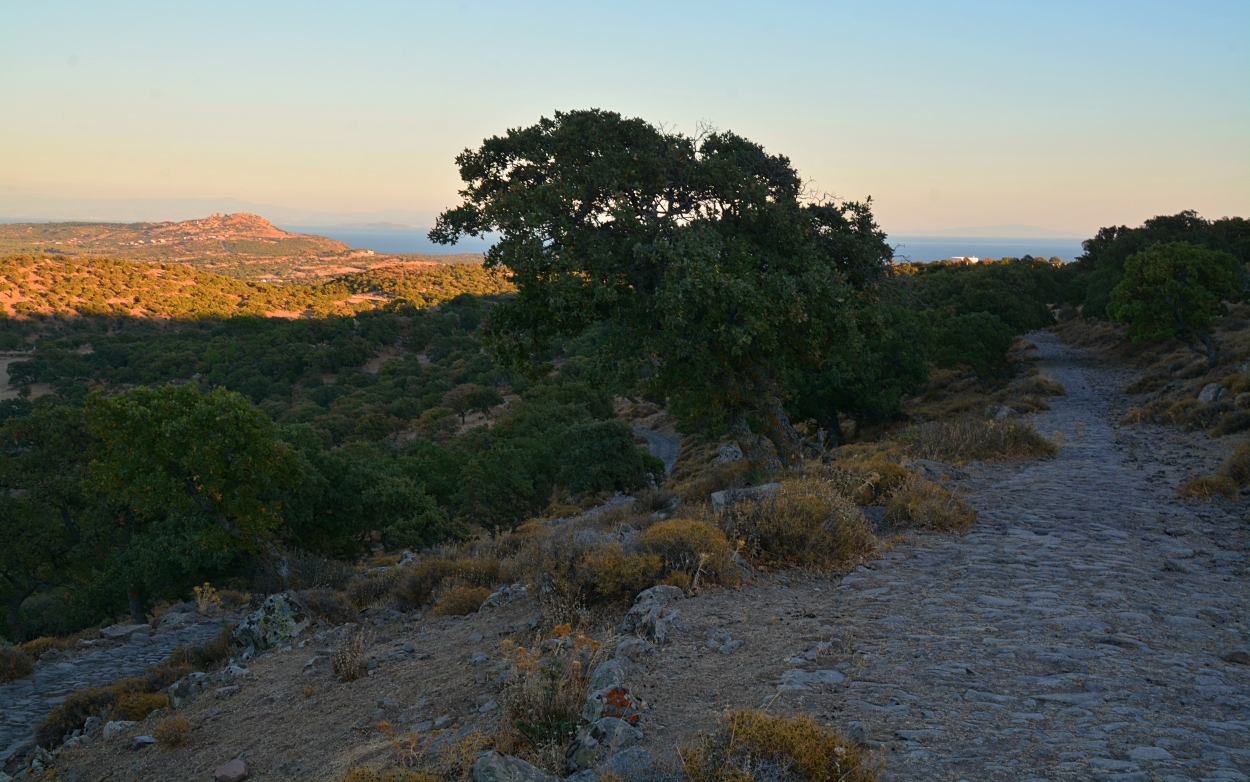
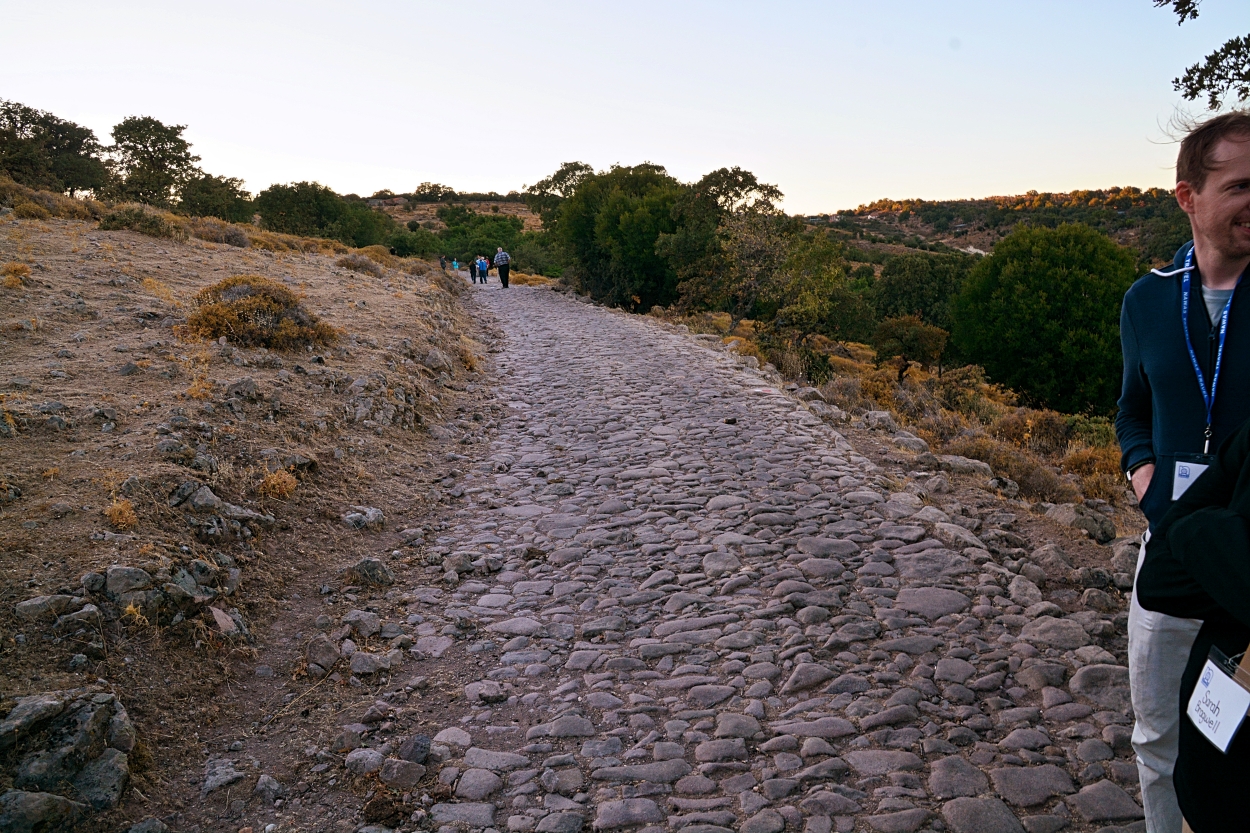
The Road from Troas to Assos.
Assos is only mentioned on one occasion in Scripture. On Paul’s return trip on his 3rd Missionary Journey, after departing from Troas, he walked on to Assos and rejoined his traveling companions there. Paul had preached all night, only stopping at midnight when Eutychus fell from the 3rd floor, and was taken up dead. Paul raised him from the dead. Acts 20 continues the narrative:
11 Now when he [Paul] had come up, had broken bread and eaten, and talked a long while, even till daybreak, he departed. 12 And they brought the young man [Eutychus] in alive, and they were not a little comforted. 13 Then we went ahead to the ship and sailed to Assos, there intending to take Paul on board; for so he had given orders, intending himself to go on foot. 14 And when he met us at Assos, we took him on board and came to Mitylene (Acts 20:11-14).
Paul purposefully traveled overland by himself, and then rejoined his traveling companions on the ship at Assos. The route over land was 31 miles! Luke does not supply the reason why Paul chose to leave the group and travel overland to Assos. A statement Paul made in the larger context of our passage may be helpful: “And see, now I go bound in the spirit to Jerusalem, not knowing the things that will happen to me there, except that the Holy Spirit testifies in every city, saying that chains and tribulations await me” (Acts 20:22-23).
Though not knowing the details, Paul knew that his freedom would soon be taken away, that he was about to enter a period of confinement/imprisonment once he arrived at Jerusalem. On the ship there would be little if any opportunity to be alone. It would seem that those miles on his walk from Troas to Assos furnished time for deep thought and prayer. For sure it would be the final such opportunity before he became “Paul, the Prisoner” (from the point of his arrest in Jerusalem, Acts 21:26ff, until Acts concludes at 28:30-31, Paul will be a prisoner in chains).
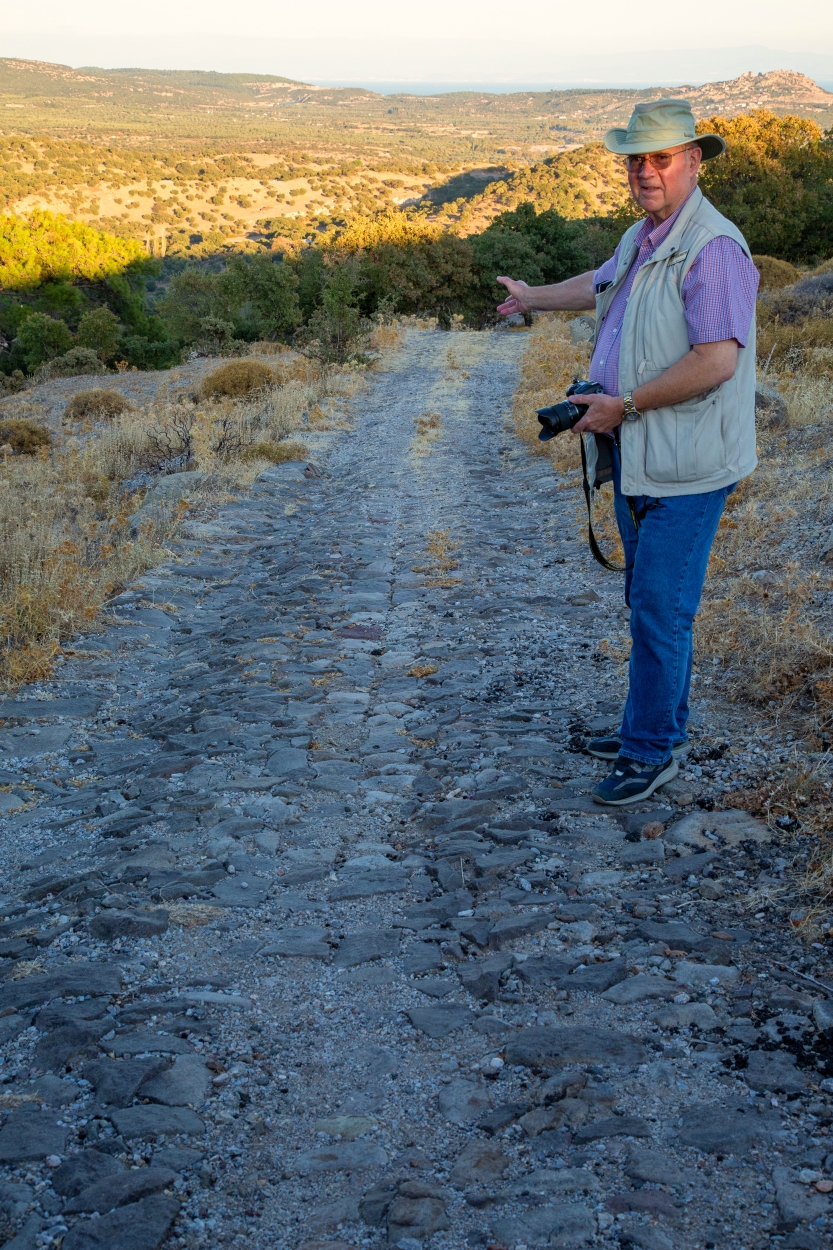
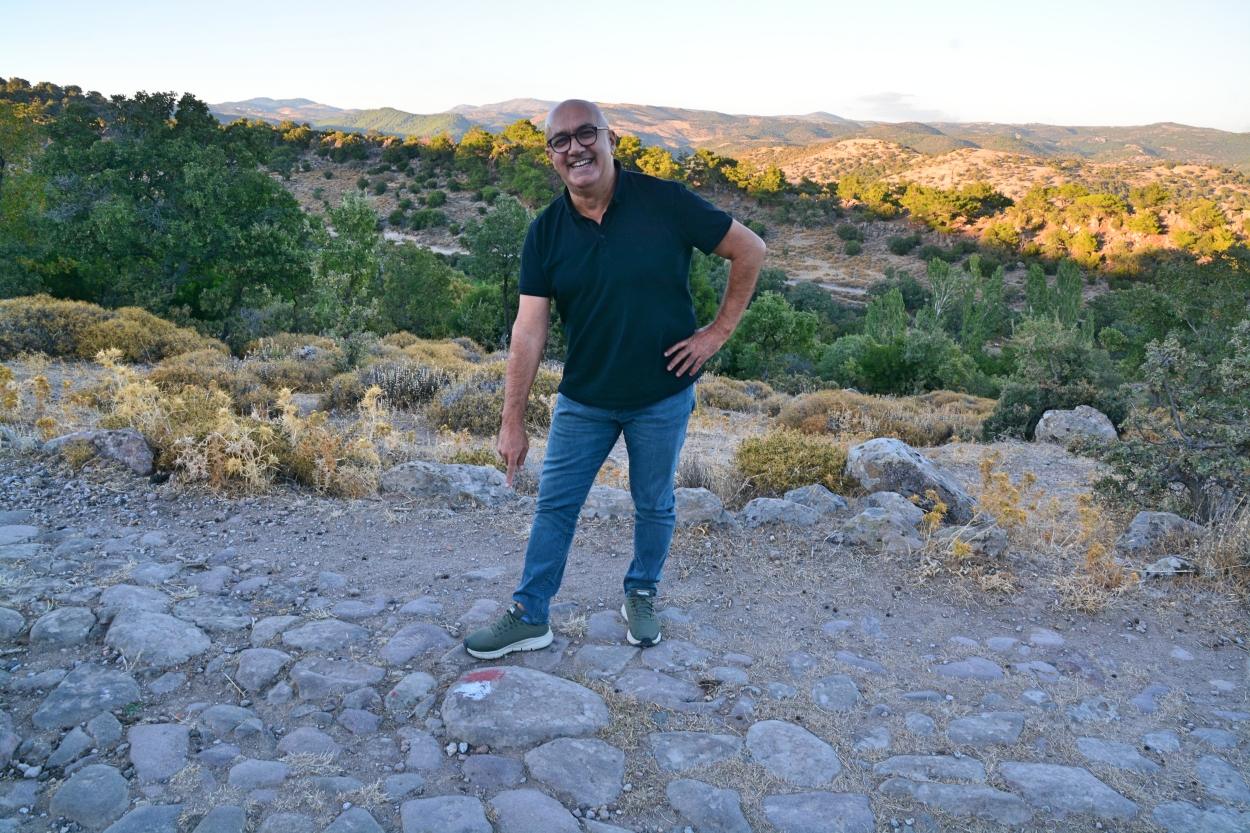
Leon Mauldin on Roman Road on which Paul would have walked from Troas to Assos. Note Acropolis of Assos in upper right. Photo by Dr. Paul Douthitt.
In 2006, former professor Ferrell Jenkins and I made a personal study trip to western Turkey, including Assos and Troas. It was not until then that I “connected the dots” and saw what would have been involved in that two day journey by land. Later, Dr. Carl Rasmussen posted photos of the well-preserved road connecting Troas and Assos: https://holylandphotos.org/browse.asp?s=1,3,7,20,55&img=TWNAAS24. More recently, Dr. Meg Ramey featured this road in an article in BAR, November/December 2019 issue. She reported that “Turkey’s Ministry of Culture and Tourism has caught the vision for preserving and promoting this sacred way.” See https://www.troycultureroute.com/route/.
In short, more than two years ago, when I was putting together the itinerary for this trip, I wanted to include a walk on this road if at all possible. I asked Orhan, who has served as our guide before, to help me with this. He had never seen this little known road, but promised he would make it happen. Because of the pandemic, our trip which was originally scheduled spring ’20, was rescheduled for fall ’20, and then again for the dates of September 27 – October 8, 2021. So finally (Oct 3) the time had come to be on the road to Assos. The group did not know the “surprise” that I had planned for them, but all seemed very pleased!
We are thankful for safe arrival in Athens, Greece early afternoon, to begin our tour “In the Steps of Paul and John,” seeing biblical sites in Greece and Turkey. Forty-five passengers make up our group. This afternoon is free time, getting settled in our hotel and having dinner, and hopefully a full night’s rest (our time zone is 8 hours ahead of Central Standard Time, though our group is from all over the US.).
Tomorrow we begin with a visit to Corinth. In this photo below you can see the ruins of the temple of Apollo, and in the background, the acrocorinth.
Temple of Apollo at Corinth. Photo by Leon Mauldin.


 Posted by Leon Mauldin