The Conquest: Crossing Jordan

February 17, 2014

Joshua 3 records Israel’s crossing Jordan from the eastern side, to set up camp temporarily at Gilgal, and from there to take the city of Jericho. See our map in previous post.

The timing at this point was just prior to Passover (Josh. 5:10), meaning this was the early harvest season.  When Israel was crossing the notation is made, “Now the Jordan overflows its banks throughout the harvest season” (Josh. 3:15, CSB). The text records divine intervention: the priests were carrying the ark, and when their feet touched the Jordan,

. . . the water flowing downstream stood still, rising up in a mass that extended as far as Adam, a city next to Zarethan. The water flowing downstream into the Sea of the Arabah (the Dead Sea) was completely cut off, and the people crossed opposite Jericho. The priests carrying the ark of the LORD’s covenant stood firmly on dry ground in the middle of the Jordan, while all Israel crossed on dry ground until the entire nation had finished crossing the Jordan (Josh. 3:16-17, CSB).

The study note in the Holman Christian Standard Bible states:

At spring flood, after the winter rains and during the barley harvest, the Jordan River could reach a width in excess of 100 feet and a depth of 10 feet. The priests as the leaders of the people were the first to step down into the water. Doing so was a risky activity with the river at flood stage. Carrying the ark could easily have caused them to be swept away by the current unless the promised miracle took place.

Note that the people crossed “opposite Jericho.” Our photo below is at the Jordan at Qasr el-Yahud, opposite and a little south of Jericho. It would be somewhere near here that the crossing of Joshua 3 took place. Our photo looks to the north.
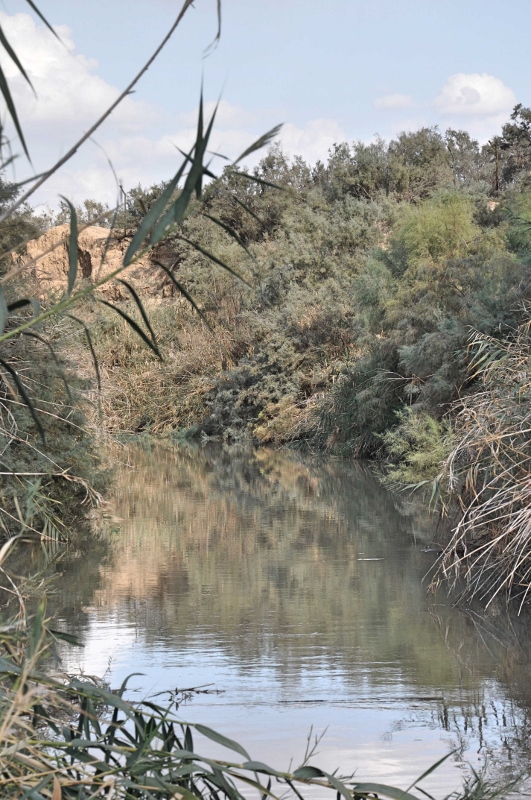
Jordan River at  Qasr el-Yahud. Photo by Leon Mauldin.

Jordan River at Qasr el-Yahud. Photo by Leon Mauldin.

In their introduction to the book of Joshua, the HCSB Study Bible has an interesting note about the change in volume of the flow of the Jordan:

The Jordan River was at flood stage when God commanded Joshua to lead the people across. Just as when God opened the Red Sea, He provided a dry path through the Jordan when the priests, bearing the ark of the covenant, touched the edge of the river. . . Up until the 1950’s, more than 3 billion cubic feet flowed through the southern Jordan annually. with construction of a number of dams on the Jordan north of the Sea of Galilee and on rivers that feed the Jordan, that volume of water has been reduced to 300 million cubic feet a year (p.338).

Qasr el-Yahud is a site on the Jordan thought by some to be across from the Bethany referenced in John 1:28, where John the Baptist did some of his baptizing. We had the opportunity to visit here in October.
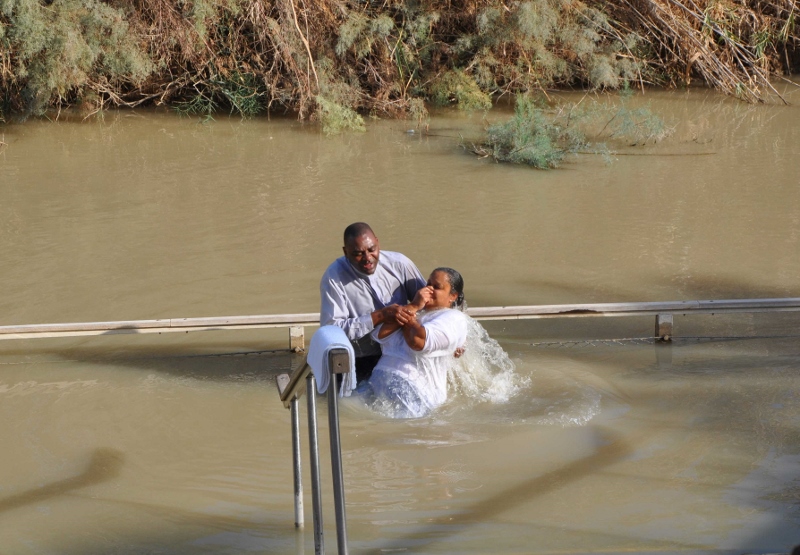
Baptism in the Jordan River. Photo by Leon Mauldin.

Baptism in the Jordan River. Photo by Leon Mauldin.

Click images for larger view.


William Ramsay on the Halys River and North Galatia

January 17, 2014

Sir William M. Ramsay (1851-1939), archaeologist, scholar, and author, was a champion of the South Galatia position (i.e., the N.T. letter to the Galatians was addressed to Antioch of Pisidia, Iconium, Lystra and Derbe) at a time when the North Galatia theory had been accepted for centuries. In his book, A Historical Commentary on St. Paul’s Epistles to the Galatians, he deals with the geography of north Galatia, giving evidence to eliminate that as the area intended in the book of Galatians. He was seeking to understand the geography of Galatia especially and specifically in the mid 1st century AD.

In that portion of his historical introduction, Ramsay mentions the Halys River and how it divided Galatia into two parts.

The country afterwards called Galatia was in primitive time divided ethnographically and politically into two parts, eastern and western: the division was made by the river Halys, which in this part of its course runs in a northerly direction towards the Black Sea. Galatia east of the Halys seems to have been originally reckoned to Cappadocia, though part of it was probably sometimes described as included in Paphlagonia; but the bounds of those countries were so indeterminate, and the ancient writers themselves were so ignorant of the geography of those lands, that it is quite impossible to say anything positive and certain on the subject. . .

Eastern Galatia lies mostly in the basin of the Halys (Kizil-Irmak, the “Red River”). The Halys itself has very few and quite insignificant tributaries. In Eastern Galatia the Delije-Irmak (whose ancient name is unknown) is the only tributary of any consequence; and most of the country lies in its basin; but the river, though it looks large on the map, carries very little water except in flood, when it becomes a broad and raging torrent, exactly as its name indicates, the “Mad River”. . .

Galatia west of the Halys, which was much larger than the eastern country, was the most important and the most typical part of the country; most of our scanty information relates to it; and in general, when any statement is made about North Galatia, the writer has the western part of it in his mind. This western region was originally part of the vast land called Phrygia; and, clearly, the population of the country in the early part of the fourth century were known to the Greeks as Phrygians (Φρύγες). (Ramsay, W. M. (1900). A Historical Commentary on St. Paul’s Epistle to the Galatians (pp. 15–17).

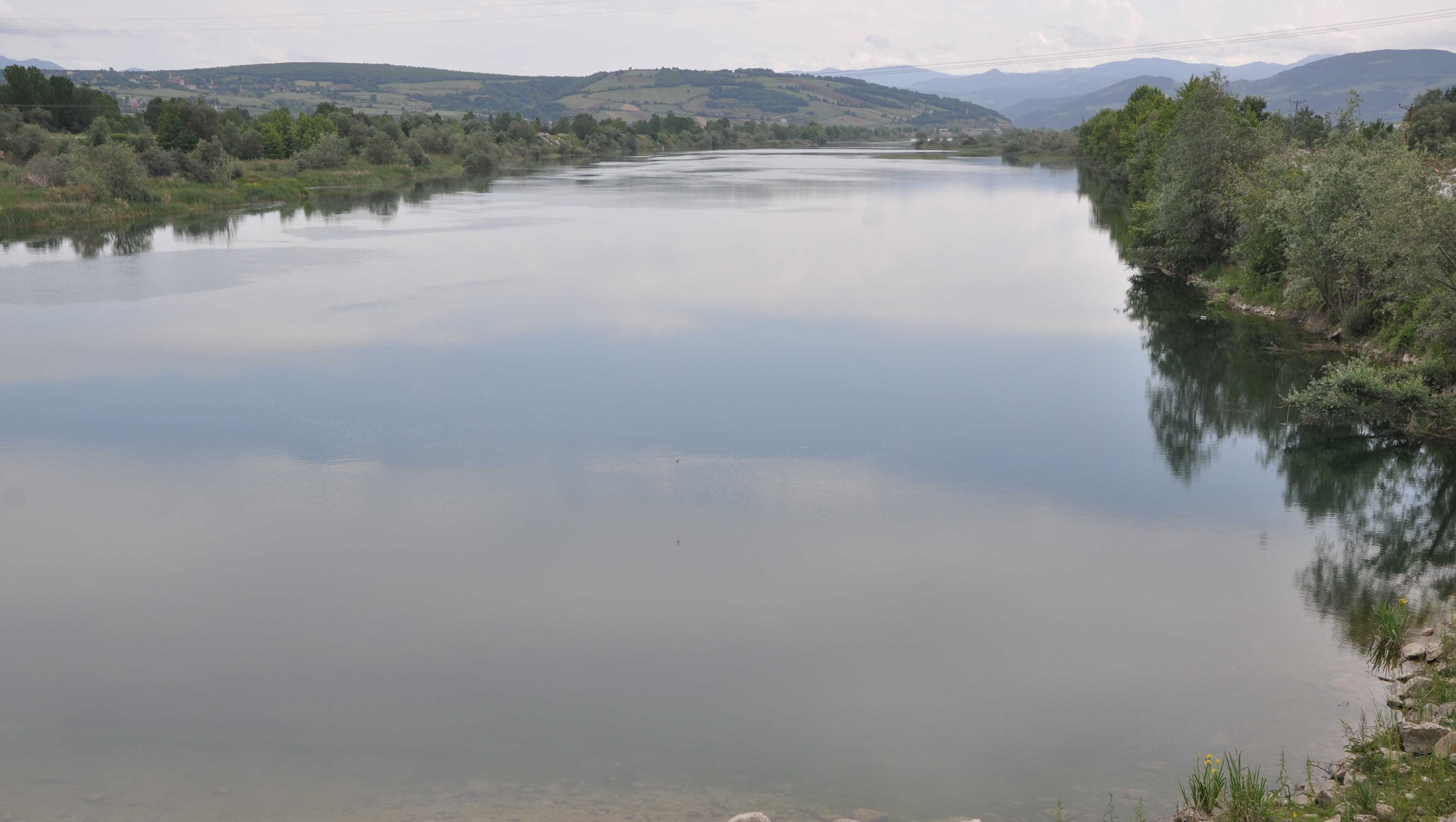
Halys River near the Black Sea. Photo by Leon Mauldin.

Halys River near the Black Sea. Photo by Leon Mauldin.

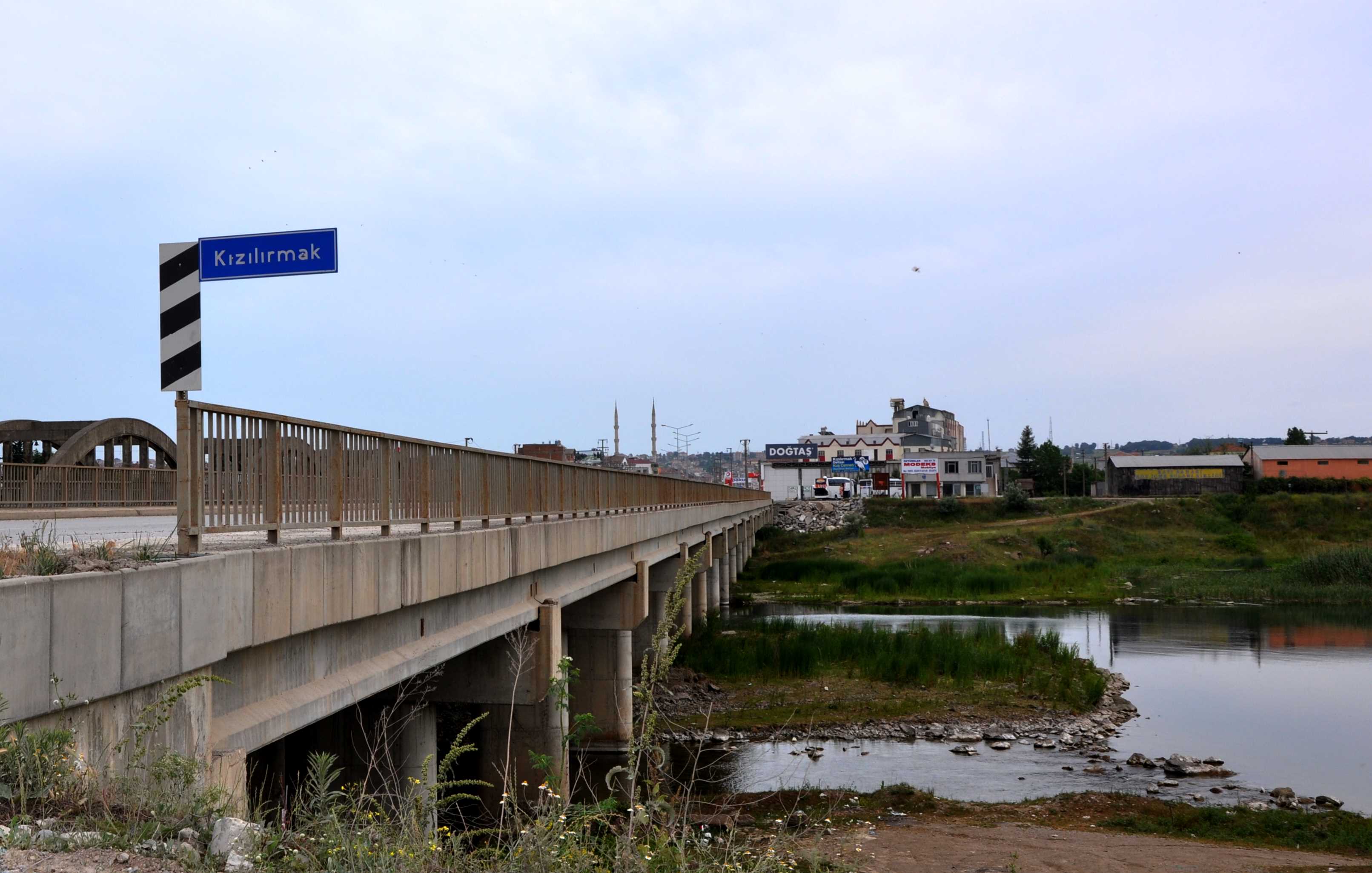
Sir Ramsay referenced the Halys as the Kizil-Irmak. Note the sign here at the bridge crossing the river.

Halys River/Kizil-Irmak. Photo by Leon Mauldin.

Halys River/Kizil-Irmak. Photo by Leon Mauldin.

Click images for larger view.


The Five Day Bible Reading Schedule

January 1, 2014

A Bible reading schedule which we have used and highly recommend is the one arranged by Mark Roberts. It is free. It takes the reader through the Bible in one year. Mark writes:

Are you looking for a reading plan for 2014? Consider the Five Day Bible Reading Schedule. It makes it much easier to complete the Bible in one year because you only have to read five days a week, not seven. This gives you time to catch up if you fall behind. Many Christians have successfully read the Bible with this plan and you can too!
With the Five Day Schedule you can read the entire Bible in 2014 or just the New Testament reading five days a week.
Best of all, it’s FREE. You can download your copy here:
www.BibleClassMaterial.com
May the Lord bless us all to know Him better through His Word.

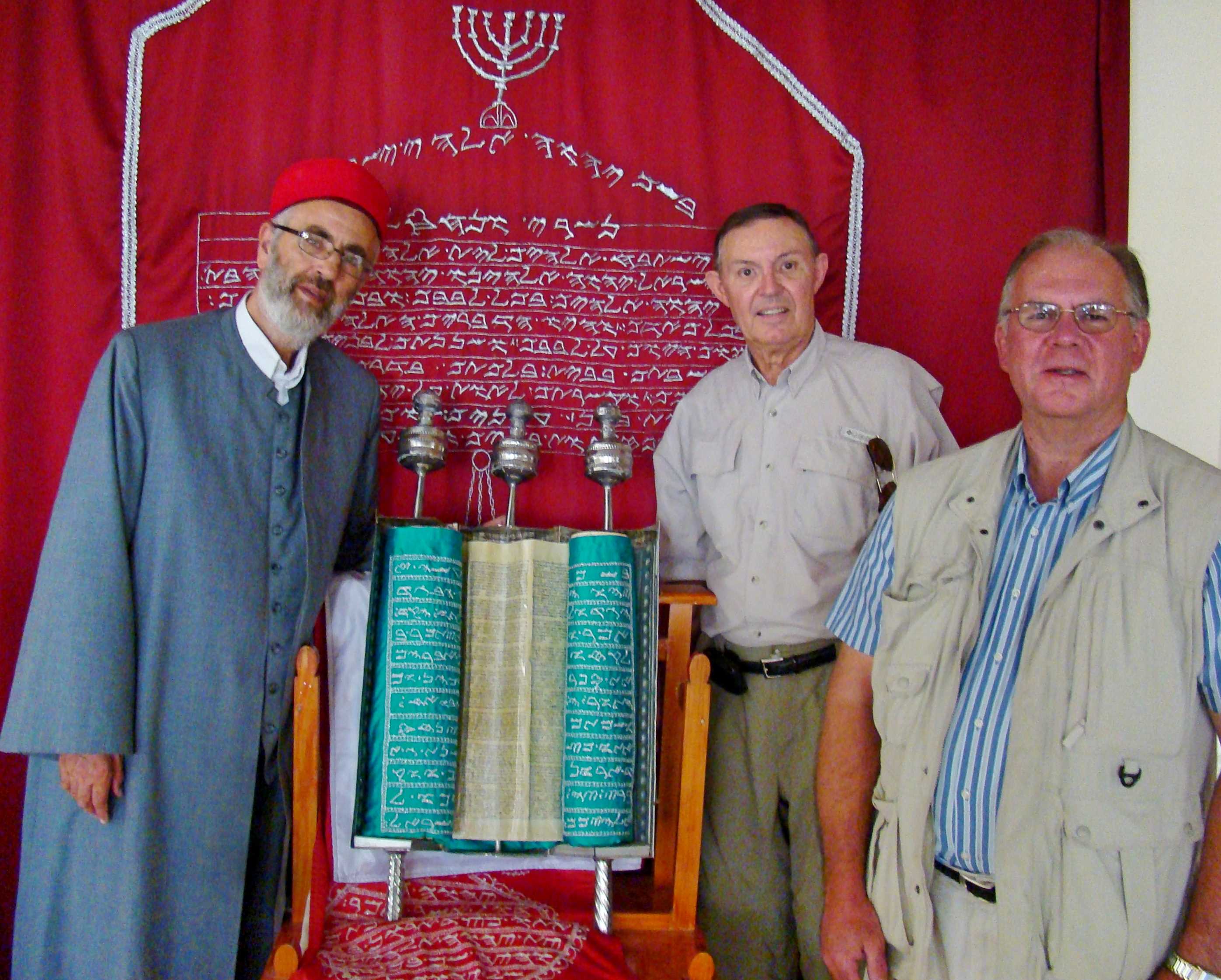
Samaritan Pentateuch at Mt. Gerizim. Photo by Leon Mauldin.

Samaritan Pentateuch at Mt. Gerizim. 

Photo shows Husney W. Cohen, a Samaritan priest and director of the Samaritan Museum, with Samaritan scroll, along with Ferrell Jenkins (center) and Leon Mauldin (right). The Samaritans accept only the first five books of the Old Testament.

I am so thankful for the easy access to the scriptures, and to the proliferation of good translations!


Build a Parapet on Your Roof

December 7, 2013

Reading recently in Deuteronomy I came across the following text: “When you build a new house, you shall make a parapet for your roof, that you may not bring the guilt of blood upon your house, if anyone should fall from it” (22:8, ESV). The NET renders, “guard rail.”

It  would be difficult to understand the meaning of that passage if we only read through 21st century eyes. The roof on my house is steep. It is much too steep for me to consider walking on it, or anybody else for that matter, except for roofers or repair men. There is no need for me to put a guard rail around my roof.

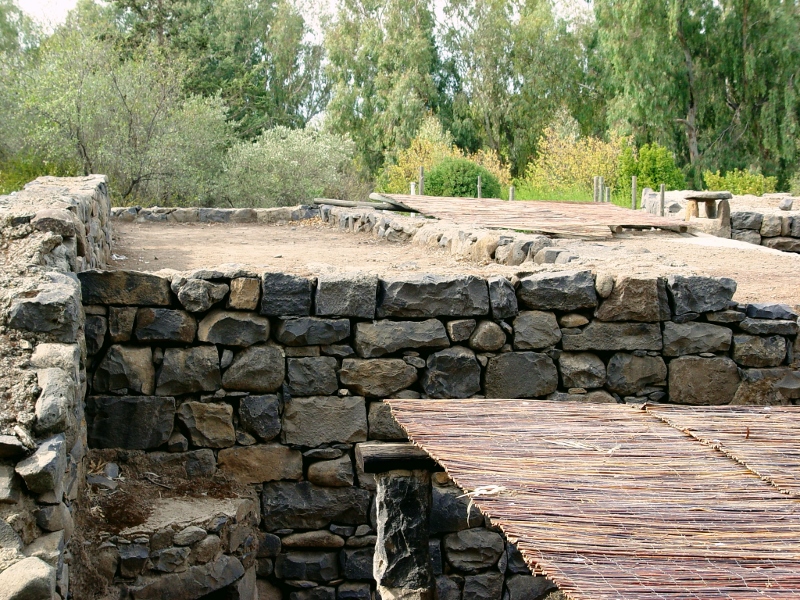
But roofs in biblical times were generally different (both Old and New Testament), being flat, and serving as a sort of “patio” or additional room. This is illustrated by the reconstructed two-story Talmudic house at Katzrin in the Golan:

Housetop at Katzrin in the Golan. Photo by Leon Mauldin.

Housetop at Katzrin in the Golan. Photo by Leon Mauldin.

It is not hard to visualize how several people might be on a housetop such as this. I might note that the above photo does not have a guard rail around the housetop, but does illustrate the need for one and the practical nature of the command in the Deuteronomy text.

Understanding this can make several biblical texts come alive:

Proverbs 21:9 It is better to live on a corner of the housetop than in a house in company with a quarrelsome wife.

Looking ahead to the Roman destruction of Jerusalem, Jesus said, “Whoever is on the housetop must not go down to get the things out that are in his house” (Matt. 24:17).

Acts 10:9: “On the next day, as they were on their way and approaching the city, Peter went up on the housetop about the sixth hour to pray.” Context: Men from Cornelius of Caesarea sent down the coast to Joppa where Peter was residing, to ask him to come to Caesarea to preach the Gospel there.

Click image for larger view.

We have previously posted on Katzrin here.


Jesus Pays the Half Shekel Tax

November 13, 2013

In Matthew 17, an  unforgettable event transpired in the lives of Peter and Jesus:

When they came to Capernaum, those who collected the two-drachma tax came to Peter and said, “Does your teacher not pay the two-drachma tax?” 25 He said, “Yes.” And when he came into the house, Jesus spoke to him first, saying, “What do you think, Simon? From whom do the kings of the earth collect customs or poll-tax, from their sons or from strangers?” 26 When Peter said, “From strangers,” Jesus said to him, “Then the sons are exempt. 27 “However, so that we do not offend them, go to the sea and throw in a hook, and take the first fish that comes up; and when you open its mouth, you will find a shekel. Take that and give it to them for you and Me.” (Matt. 17:24-27).

In a very real sense, Jesus was uniquely the Son of God; His Father was/is the owner of the universe. A case could be made that as such, Jesus was exempt from paying the temple tax, a half shekel, an annual tax paid by every male Israelite. But to avoid causing an occasion of offense, Jesus paid the tax. Peter would never forget the day that he went to the sea (Sea of Galilee) and pulled in the fish that had a shekel in its mouth, payment for two.

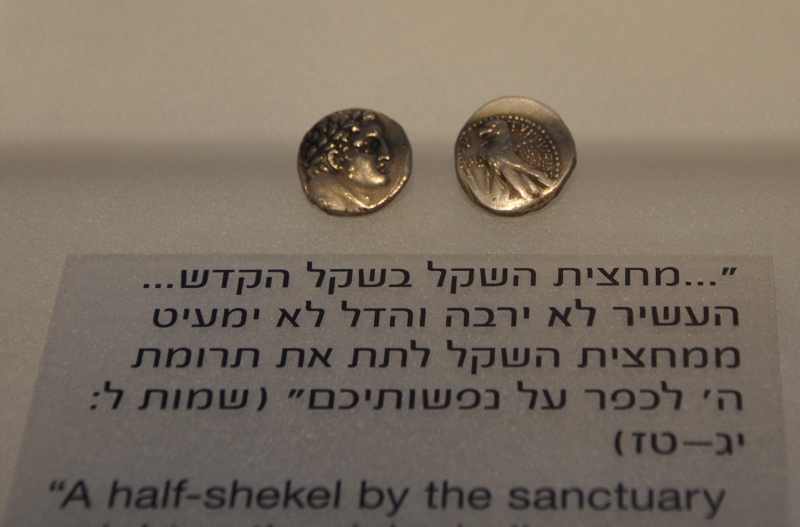
I had the opportunity to photograph the temple tax in the Israel Museum a few weeks ago.

Half Shekel. Israel Museum. Photo by Leon Mauldin.

Half Shekel. Israel Museum. Photo by Leon Mauldin.

This is a Tyrian half-shekel, a silver coin dated about AD 47-48. The placard provides the following information:

Every Jewish male over the age of twenty was obligated to pay a yearly tax to the temple. The Tyrian half-shekel silver coin was used for this purpose. The funds raised were used for maintenance, the purchase of sacrifices, and, indirectly, as a means of conducting a census.  Because Tyrian coins were not particularly common, they needed to be purchased from money-changers in the Temple. The coin depicts the Tyrian god Hercules-Melqart on one side and an eagle standing on the bow of a boat on the other.

It is our desire that such photos and info help illuminate our reading of Scripture.

Click on image for larger view.


Reflections on the Cities of Refuge

November 11, 2013

Our previous three posts have featured the three cities of refuge on the western side of Jordan: Kedesh, Shechem and Hebron. There were also three on the Transjordan, making a total of six. These were to serve as sanctuary to one who was guilty of accidental manslaughter, such as when an ax head flew off the handle, etc.

I was recently reading Warren Wiersbe’s commentary on Deut. 19, pertaining to the cities of refuge and related matters. Wiersbe was tying in the OT city of refuge with the New Testament application made in Hebrews:

In the same way God, desiring even more to show to the heirs of the promise the unchangeableness of His purpose, interposed with an oath, 18 so that by two unchangeable things in which it is impossible for God to lie, we who have taken refuge would have strong encouragement to take hold of the hope set before us. 19 This hope we have as an anchor of the soul, a hope both sure and steadfast and one which enters within the veil, 20 where Jesus has entered as a forerunner for us, having become a high priest forever according to the order of Melchizedek (Heb. 6:17-20)..

Really, the comparison is one of contrasts:

1. The OT resident of a city of refuge was not guilty of murder, though he had accidentally shed man’s blood. But all those who have fled to Christ for refuge ARE guilty of sin (Rom. 3:23).

2. The accidental man-slayer had to dwell in the city of refuge until the death of the High Priest. But now there is a High Priest who never dies, “Therefore He is able also to save forever those who draw near to God through Him, since He always lives to make intercession for them” (Heb. 7:25).

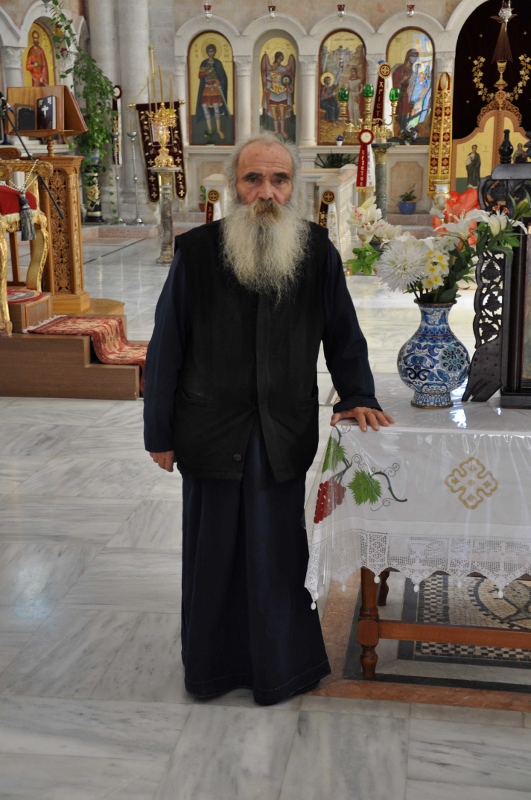
Jacob’s well, referenced in John 4, is very near the ruins of ancient Shechem. It is housed inside a Greek Orthodox Church, the interior of which was completed in 2007. We were able to visit the church and the well while at Shechem last month.

Shechem Jacob's Well Greek Orthodox church interior. Photo by Leon Mauldin.

Shechem Jacob’s Well Greek Orthodox church interior. Photo by Leon Mauldin.

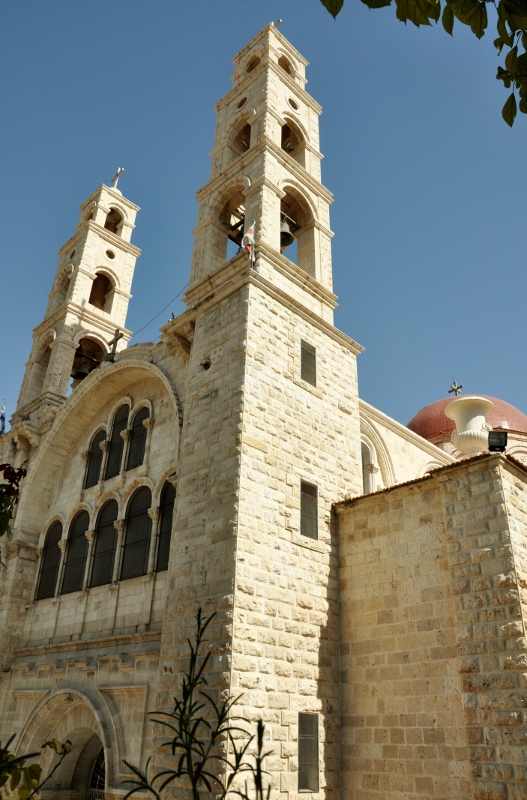
A very cordial Greek Orthodox Priest was on duty during our visit there. Here is a view of the church from the outside:

Jacobs Well Greek Orthodox Church Outside. Photo by Leon Mauldin.

Jacobs Well Greek Orthodox Church Outside. Photo by Leon Mauldin.

Click on images for larger view.


A View of the Sea of Galilee from Sea Level

November 2, 2013

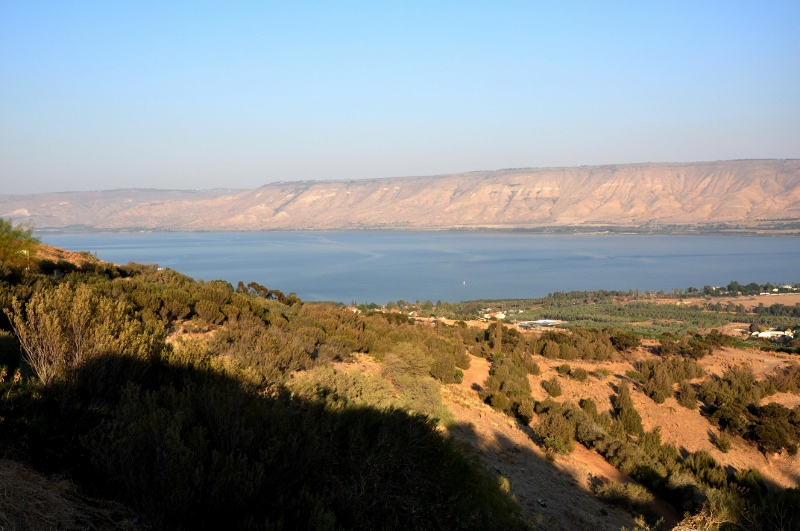
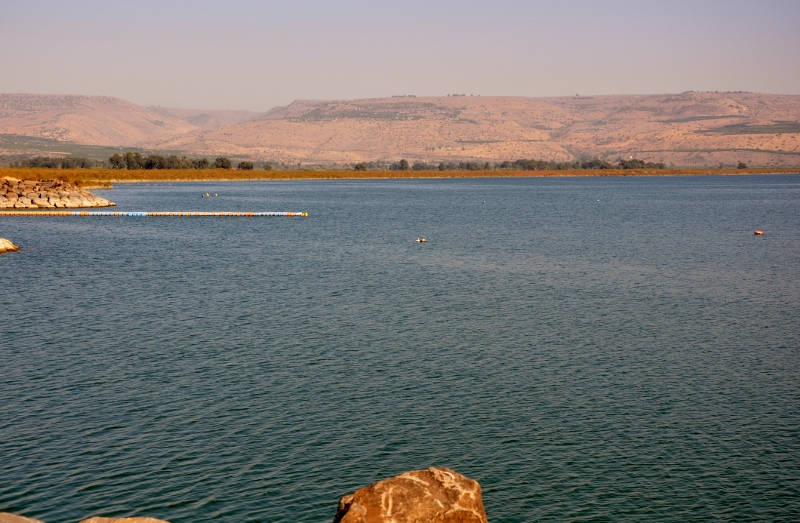
I never tire of seeing the Sea of Galilee, as it was so intertwined with the ministry of Jesus. On the approach to Tiberius from the west, there is a nice pull-off area where a bus or other vehicle can safely get off the road and have a good view of the Sea. One is at sea level at this point at the pull-off.

Sea of Galilee from Sea Level. Photo by Leon Mauldin.

Sea of Galilee from Sea Level. Photo by Leon Mauldin.

The Sea of Galilee is about 700 feet below sea level. It was considerably higher than on my last visit. In the distance you see what would have been the Decapolis during the ministry of Jesus.

I’ll never forget my first view of the Sea. All of my life I had read about it in the Bible, but to have the opportunity to see it was almost surreal. I wonder if on a much higher level, that’s the sort of thing God’s people will experience in heaven. We read about heaven, we believe the promises of God, but one day all the saved will be in heaven and see Him face to face. The precious things we read about will some day be seen and personally experienced. How I want to be among that number!

Recent posts on the Sea of Galilee may be seen here and here.

Click on image for larger view.


Jesus’ Promise at Caesarea Philippi

November 1, 2013

In our previous couple of posts we were looking at Caesarea Maritima, Herod’s capital city on the Mediterranean coast. Presently we are considering another Caesarea, up to the north at the foothills of Mt. Hermon, Caesarea Philippi. This area was ruled by Herod’s son Philip.

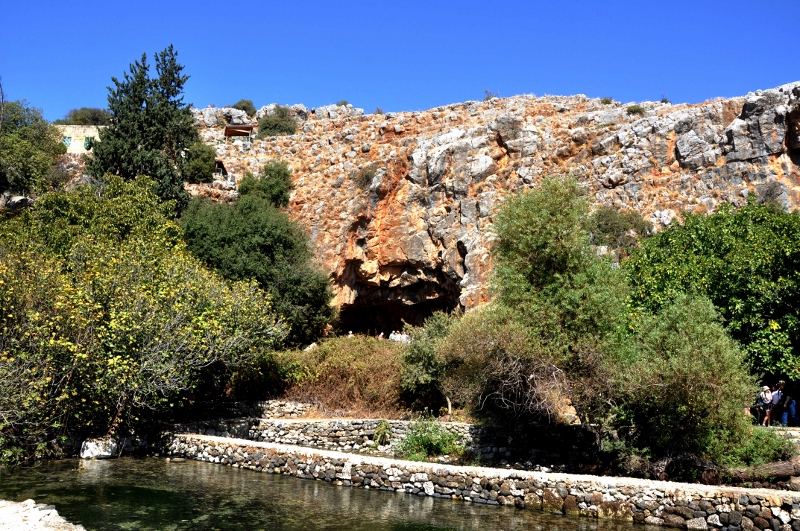
On-site Bible study can be a thrilling experience; to be able to walk in the steps of Jesus and various Bible characters is a wonderful opportunity. We had such an occasion in a visit a couple of weeks ago to Caesarea Philippi. It was in this region that Peter made his confession of the Christ, and Jesus promised to build His church.

Caesarea Philippi. Grotto of Pan, and Banias River. Photo by Leon Mauldin.

Caesarea Philippi. Grotto of Pan (center), and Banias River. Photo by Leon Mauldin.

The text does not specify that Jesus entered Caesarea Philippi, but that He came to the “region” (NKJV), “district” (NASB), “the area of” (NET) Caesarea Philippi (Matthew 16:13). It is interesting that Luke does not mention the place, but states, “Once when Jesus was praying by himself, and his disciples were nearby, he asked them, ‘Who do the crowds say that I am?'” (Luke 9:18, NET). Matthew gives the more complete record:

Now when Jesus came into the district of Caesarea Philippi, He was asking His disciples, “Who do people say that the Son of Man is?” 14 And they said, “Some say John the Baptist; and others, Elijah; but still others, Jeremiah, or one of the prophets.” 15 He said to them, “But who do you say that I am?” 16 Simon Peter answered, “You are the Christ, the Son of the living God.” 17 And Jesus said to him, “Blessed are you, Simon Barjona, because flesh and blood did not reveal this to you, but My Father who is in heaven. 18 “I also say to you that you are Peter, and upon this rock I will build My church; and the gates of Hades will not overpower it. 19 “I will give you the keys of the kingdom of heaven; and whatever you bind on earth shall have been bound in heaven, and whatever you loose on earth shall have been loosed in heaven” (Matt. 16:13-19 NASB).

A couple of observations:

1. This passage does not teach the primacy of Peter. What Jesus said here to Peter regarding his apostolic authority was said just two chapters later to all the apostles Matt. 18:1,18.

 2. Regarding the “binding” and “loosing:” the point is not that Peter or the other apostles would bind/loose something on earth and then God would bind/loose it in heaven. What they bound on earth was binding because God had bound it in heaven; what they loosed on earth had authority because God had loosed it in heaven. The rendering of the Christian Standard Bible (Holman) is, “I will give you the keys of the kingdom of heaven, and whatever you bind on earth is already bound in heaven, and whatever you loose on earth is already loosed in heaven” (Matt.16:19). The apostles did not have inherent authority; they were the instruments through which God’s revealed will was made known.

3. Jesus was anticipating the events of Pentecost, Acts 2. It was at that time the Spirit descended upon the apostles, empowering as Jesus had promised, and salvation through the crucified and resurrected Messiah was proclaimed. This was the beginning of the church, and the establishment of the kingdom, the reign/rule of Christ.

Click on image for larger view.


Hippodrome at Caesarea (cont’d)

October 31, 2013

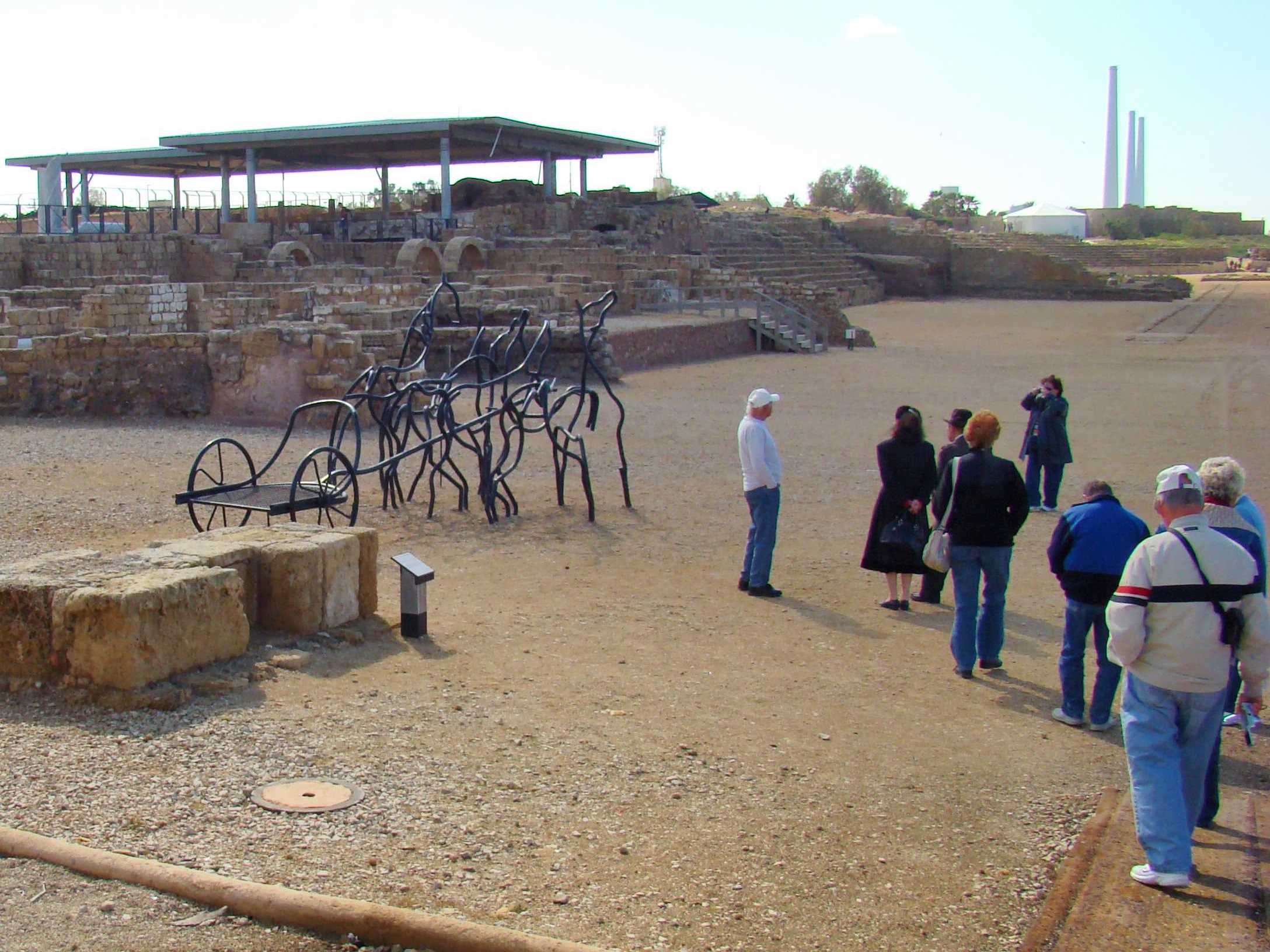
In regard to our previous post of Herod’s hippodrome, a reader writes, “Intriguing photos!  In the top (“dry”) picture, is the twisted metal in the center of the photo just a modern effort to prevent people from falling into ancient holes?  Do you know the function of the hole(s) (is it a Herodian well or cistern)?  Thanks so much for posting these images!”

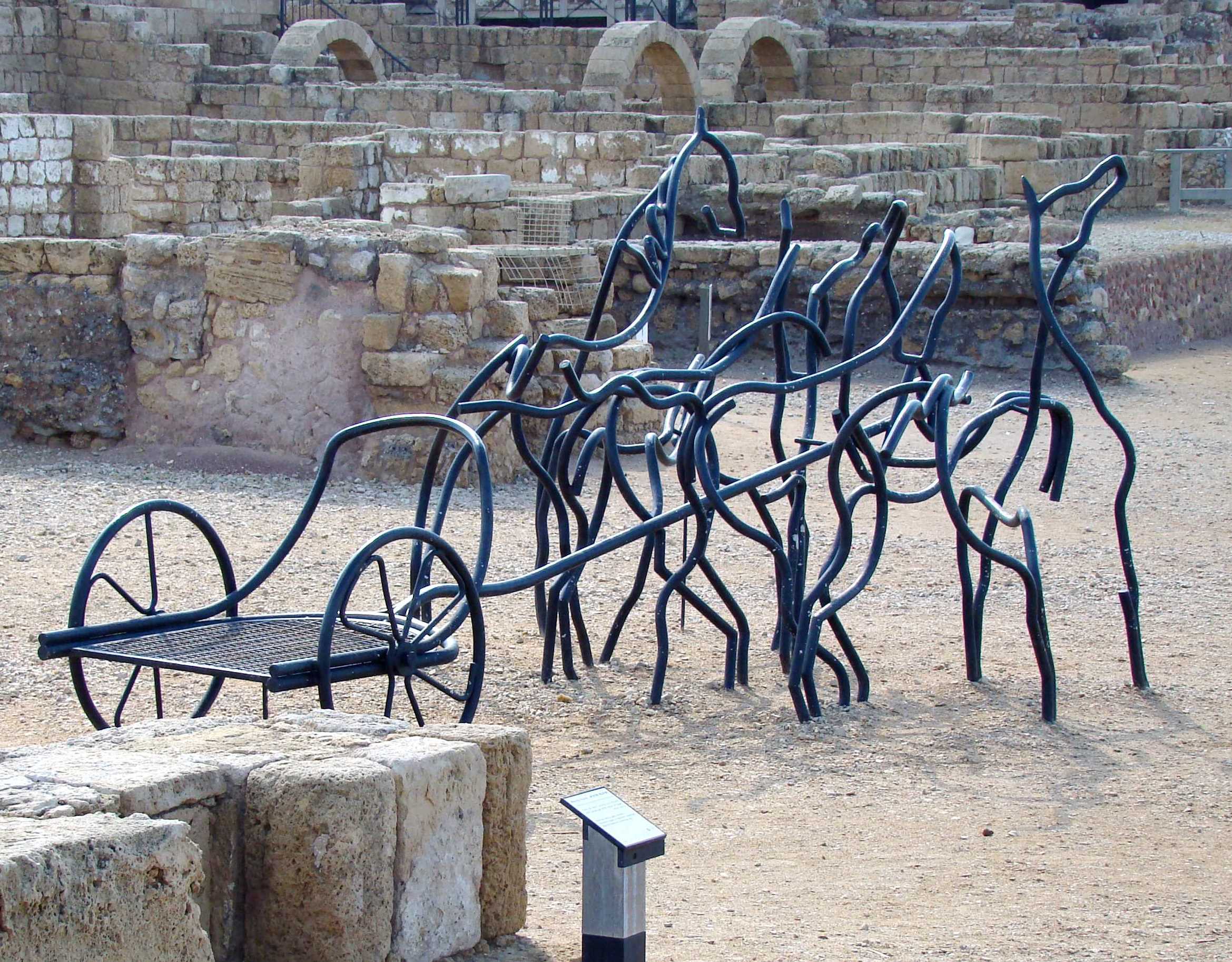
Though hard to distinguish in the photo he referenced (See that post here), the metal work is an artistic representation of the horses and chariots that would have been used here in the horse races. Caesarea, Herod’s capital, was a Roman city; the hippodrome with its horse races (and other events) was standard Roman entertainment. This view from the side perhaps helps. This photo I took in 2009.

Horses with chariot at hippodrome at Caesarea. Photo by Leon Mauldin.

Horses with chariot at hippodrome at Caesarea. Photo by Leon Mauldin.


The driver would have been standing up in the chariot during the race, urging the horses on in their speed. Here is a close-up:

Horses and chariot close-up. Photo by Leon Mauldin.

Horses and chariot close-up. Photo by Leon Mauldin.

I think the “holes” asked about were just shadows in the photo.

We welcome reader response.

Click on images for larger view.


Behold the Sower Went Forth to Sow

October 28, 2013

The setting of the kingdom parables of Mark 4 (parallels in Mt. 13 and Lk. 8) is on the Sea of Galilee.

Northern Sea of Galilee looking east. Photo by Leon Mauldin.

Northern Sea of Galilee looking east. Photo by Leon Mauldin.

One of the parables was the “Parable of the Sower:”

And again He began to teach by the sea. And a great multitude was gathered to Him, so that He got into a boat and sat in it on the sea; and the whole multitude was on the land facing the sea. 2 Then He taught them many things by parables, and said to them in His teaching: 3 “Listen! Behold, a sower went out to sow. 4 “And it happened, as he sowed, that some seed fell by the wayside; and the birds of the air came and devoured it. 5 “Some fell on stony ground, where it did not have much earth; and immediately it sprang up because it had no depth of earth. 6 “But when the sun was up it was scorched, and because it had no root it withered away. 7 “And some seed fell among thorns; and the thorns grew up and choked it, and it yielded no crop. 8 “But other seed fell on good ground and yielded a crop that sprang up, increased and produced: some thirtyfold, some sixty, and some a hundred.” 9 And He said to them, “He who has ears to hear, let him hear!” 10 But when He was alone, those around Him with the twelve asked Him about the parable. 11 And He said to them, “To you it has been given to know the mystery of the kingdom of God; but to those who are outside, all things come in parables, 12 “so that ‘Seeing they may see and not perceive, And hearing they may hear and not understand; Lest they should turn, And their sins be forgiven them.’ ” 13 And He said to them, “Do you not understand this parable? How then will you understand all the parables? 14 “The sower sows the word. 15 “And these are the ones by the wayside where the word is sown. When they hear, Satan comes immediately and takes away the word that was sown in their hearts. 16 “These likewise are the ones sown on stony ground who, when they hear the word, immediately receive it with gladness; 17 “and they have no root in themselves, and so endure only for a time. Afterward, when tribulation or persecution arises for the word’s sake, immediately they stumble. 18 “Now these are the ones sown among thorns; they are the ones who hear the word, 19 “and the cares of this world, the deceitfulness of riches, and the desires for other things entering in choke the word, and it becomes unfruitful. 20 “But these are the ones sown on good ground, those who hear the word, accept it, and bear fruit: some thirtyfold, some sixty, and some a hundred.” (Mark 4:1-20).

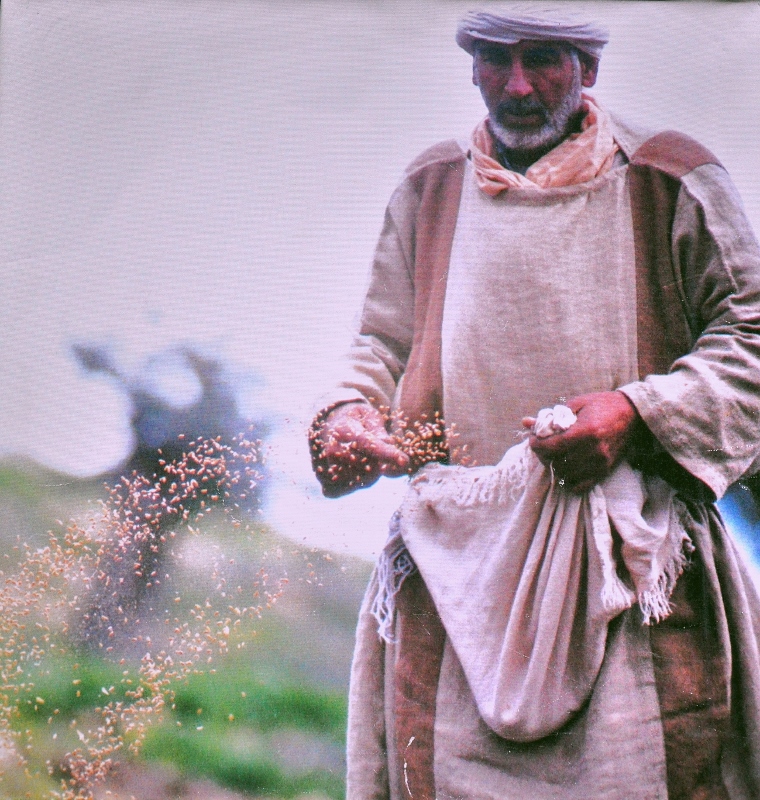
Photo at Nazareth Village. A sower sowing seed.

Photo at Nazareth Village. A sower sowing seed.

A photo of a sower sowing seed is featured on the wall inside an orientation room at the Nazareth village.

Things to remember regarding the parable:

The kingdom is the Lord’s. He is the king. The seed of His kingdom is the word of God.

When the seed is sown there are different results. Some people never respond. They are the wayside soil. Others respond enthusiastically, but fall away. These are represented by the rocky soil. Some are preocccupied and distracted and never bear fruit for the Lord. These are portrayed by the thorny ground. Then there are honest and good hearts that hold fast the word and bear fruit. This is the good ground.

Click on image for larger view.