Greetings from Sorrento

March 17, 2012

UPDATE: Now in Rome, able to upload photos. Inserting some photos to “catch-up.”

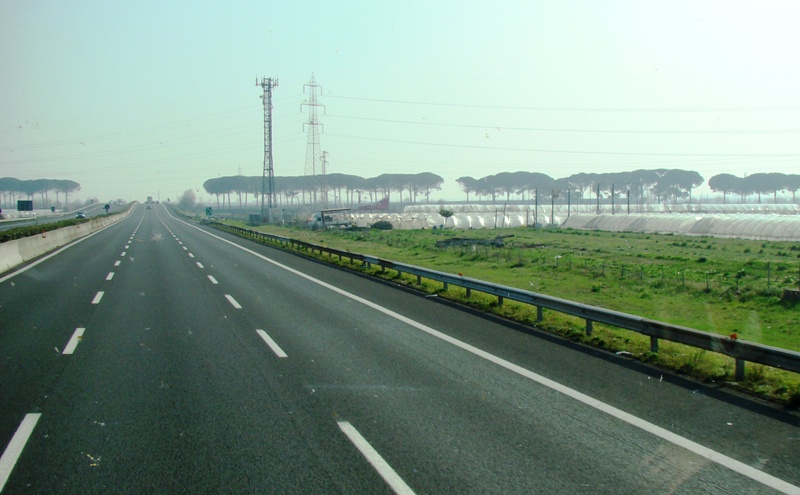
Today we traveled 300+ miles, from Florence to Sorrento. Along the way we were in the area of the ancient Appian Way. In Acts 28:18ff., Paul traveled a portion of the Appian Way when as a prisoner he was en route to Rome. The Appian way was one of the earliest and strategically most important roads of the Roman Republic.

That ancient route is marked with Umbrella Pines.

Appian Way Marked by Umbrella Pine Trees. Photo by Leon Mauldin.

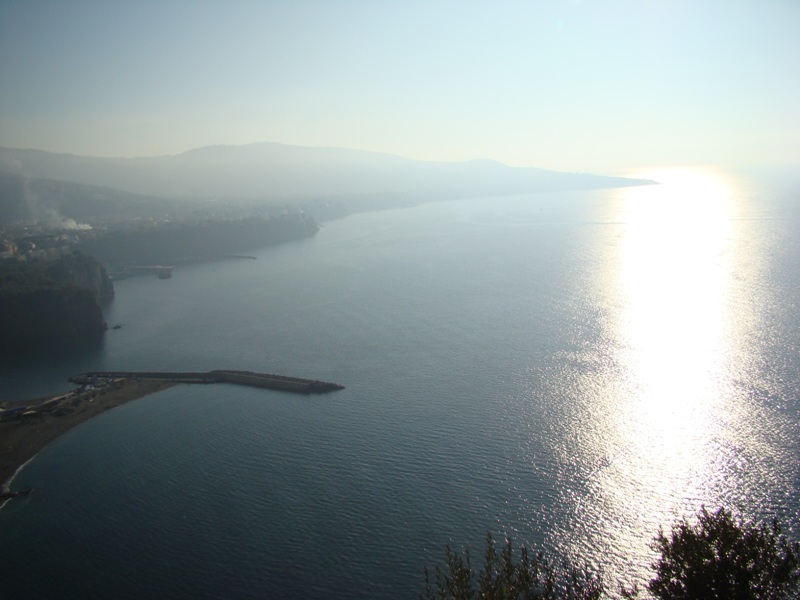
By late afternoon we arrived at Sorrento.

Sorrento in Southern Italy. Photo by Leon Mauldin.

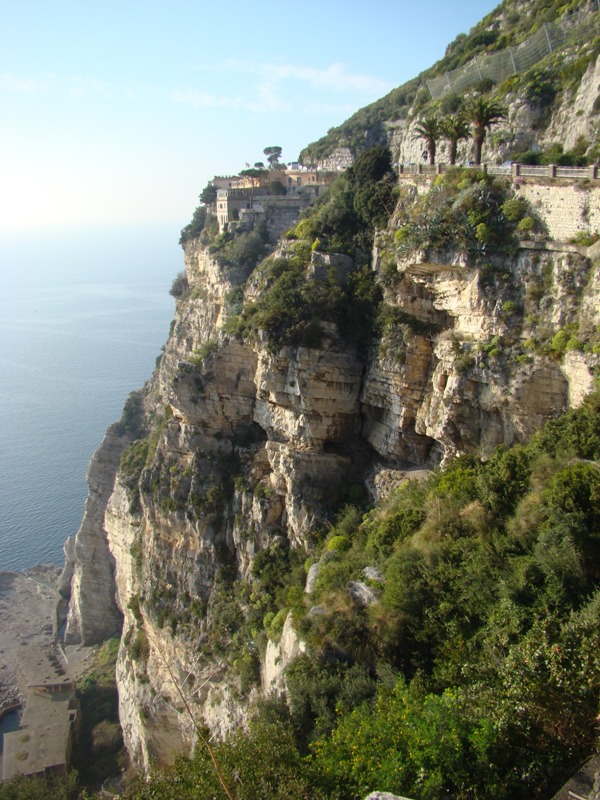
Natural Beauty in Sorrento Area. Photo by Leon Mauldin.

We are looking forward Sun AM to meeting with brethren who comprise Chiesa di Cristo at Poggiomarino. After a period of worship we are to visit the ruins of Pompeii.

The internet somehow is not cooperative in uploading photos tonight. Hopefully tomorrow.


From Venice to Florence Via Pisa

March 15, 2012

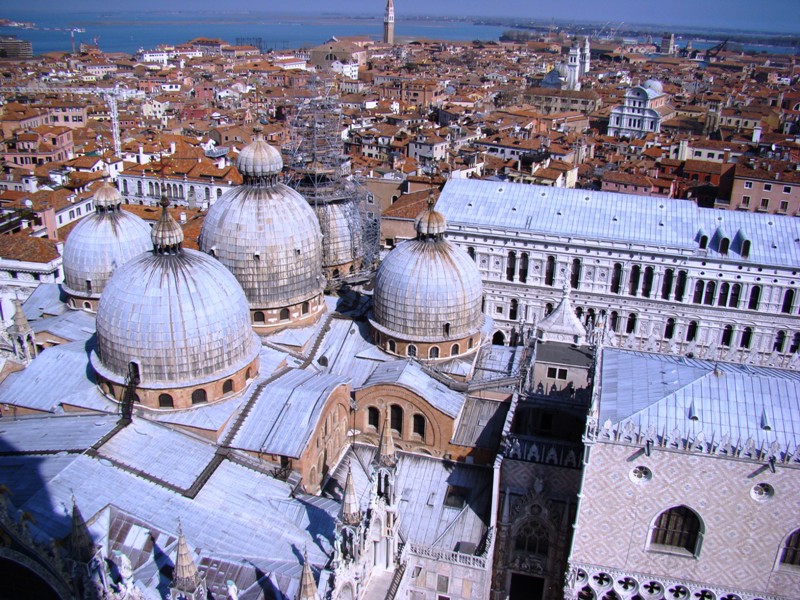
Today was a travel day, moving from southwest from Venice to Pisa. Yesterday afternoon I took several photos in Venice from the clock tower. Quite a view from there.

View of Venice from Clock Tower. Photo by Leon Mauldin.

View is northeast. You can see St. Mark’s Basilica at lower left.

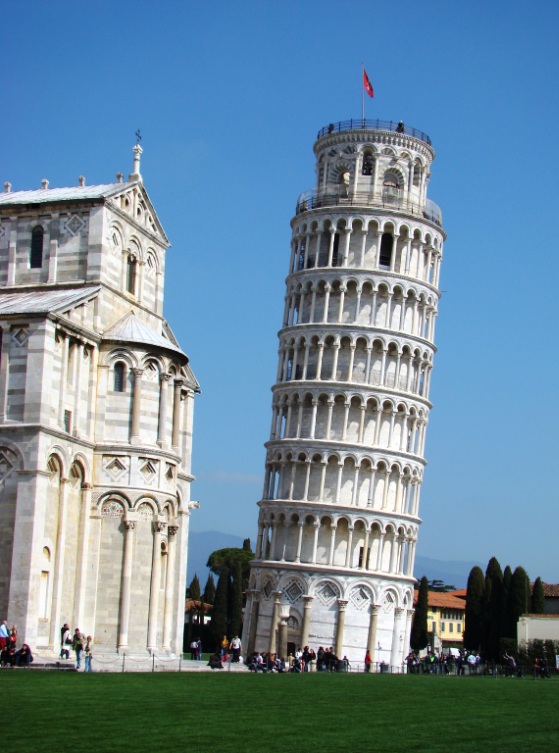
Our destination today was Florence. En route there we stopped for lunch at Pisa.

Leaning Tower of Pisa. Photo by Leon Mauldin.

Of course if you mention Pisa the first thing that comes to mind is the Leaning Tower. It is described as a “freakishly beautiful building” [how’s that for an oxymoron?] “a sight whose impact no amount of prior knowledge can blunt” (Rough Guide, 544). In fact it is but one of many components of Pisa’s architectural ensemble.

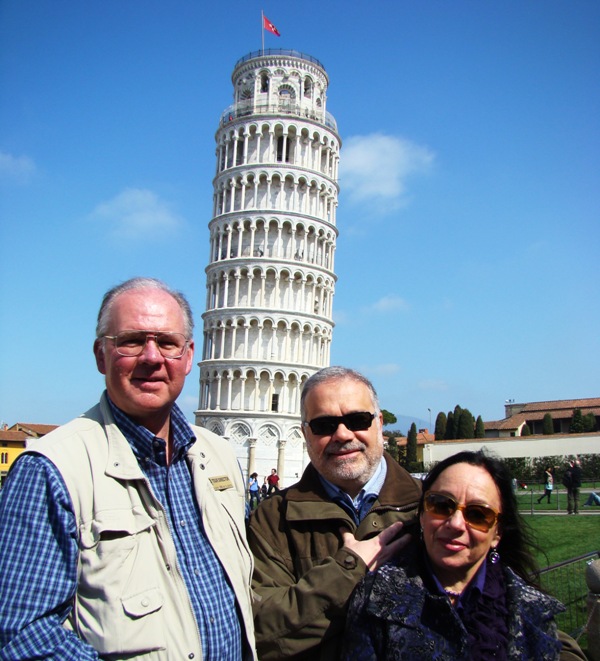
A treat for us was briefly meeting with Arrigo and Patrizia Corazza. Arrigo preaches for the church of Christ meeting about three miles distant from the tower.

Arrigo and Patrizia Corazza.

Among our group there were several that know and appreciate this couple.

Thanks for following our blog. Remember to click on images for larger view.


A Day in Venice

March 14, 2012

We started off the day at perhaps the most famous square in the world, St. Mark’s Square, which features the Basilica di San Marco.The Rough Guide describes it as “the most exotic of Europe’s cathedrals” and observes that it was

modeled on Constantinople’s Church of the Twelve Apostles, the shrine of St. Mark was consecrated in 832, but in 976 both the church and the Palazzo Ducale were ruined by fire during an uprising against the doge. The present basilica was originally finished in 1094 and embellished over the succeeding centuries (p.327)

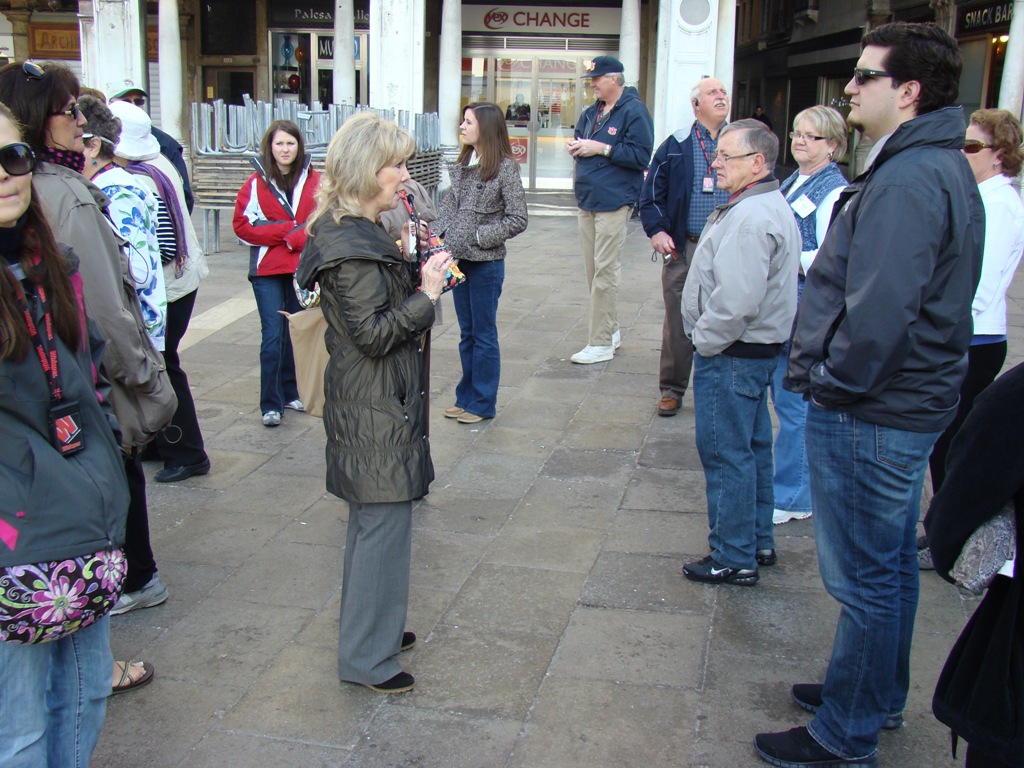
This shot shows some of our group at St. Mark’s Square as the morning began.

Group shot at St. Mark's Square. Photo by Leon Mauldin.

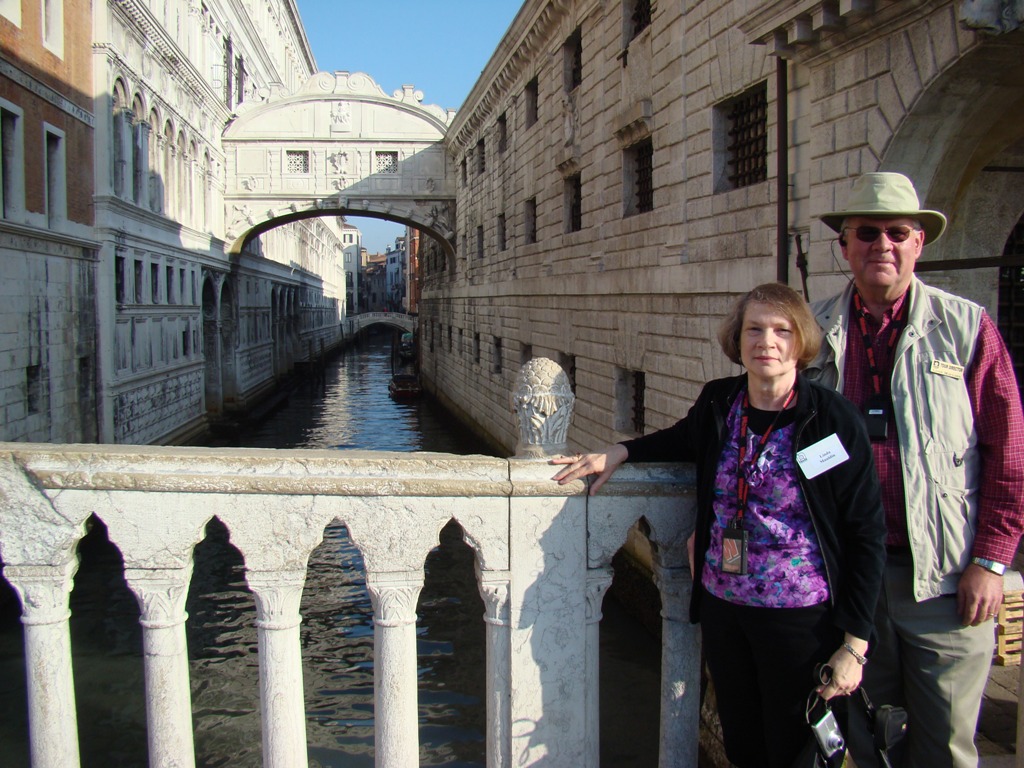
Among other sights we saw the Bridge of Sighs. From Wikipedia:

The enclosed bridge is made of white limestone and has windows with stone bars. It passes over the Rio di Palazzo and connects the old prisons to the interrogation rooms in the Doge’s Palace. It was designed by Antoni Contino (whose uncle Antonio da Ponte had designed the Rialto Bridge), and built in 1602.

One legend is that this bridge received it name from the prisoners sighing as they were walked across the bridge, seeing the outdoors, as well as breathing fresh air, for the last time.

Bridge of Sighs in background, with Linda and Leon Mauldin.

Tomorrow morning we are to travel to Florence, stopping at Pisa along the way.

Click on images for larger view.

UPDATE:
Nancy Picogna has downloaded some of her photos from the past two days. You may see there here and here.


Greetings From Italy

March 13, 2012

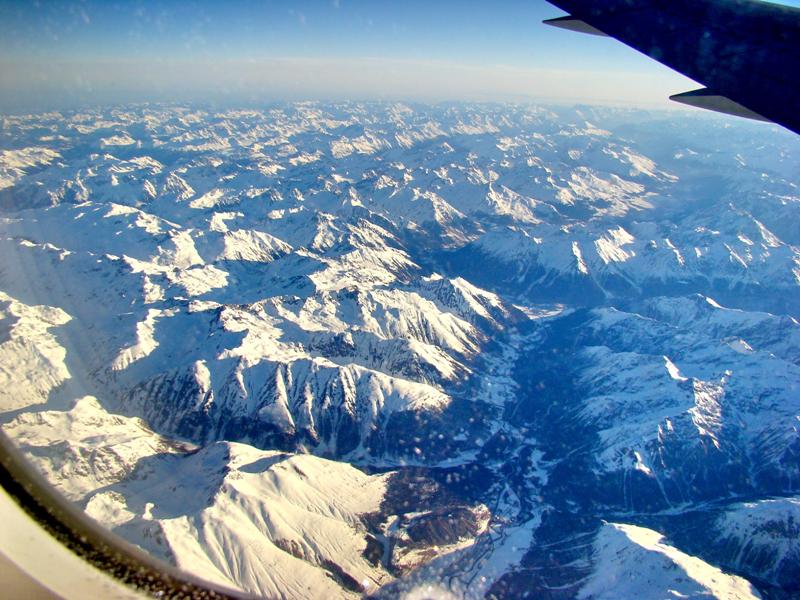
I’m happy to report that we arrived safely this morning at the Marco Polo Airport and are now in Venice. We had a nice view of the Alps this morning. The Alps form a natural border of northern Italy.

View of the Alps prior to descent at Marco Polo, Venice. Photo by Leon Mauldin.

Today begins our tour of Italy in which my group will see significant sites starting from the northwest, our current location, and working our way to the south of Rome.

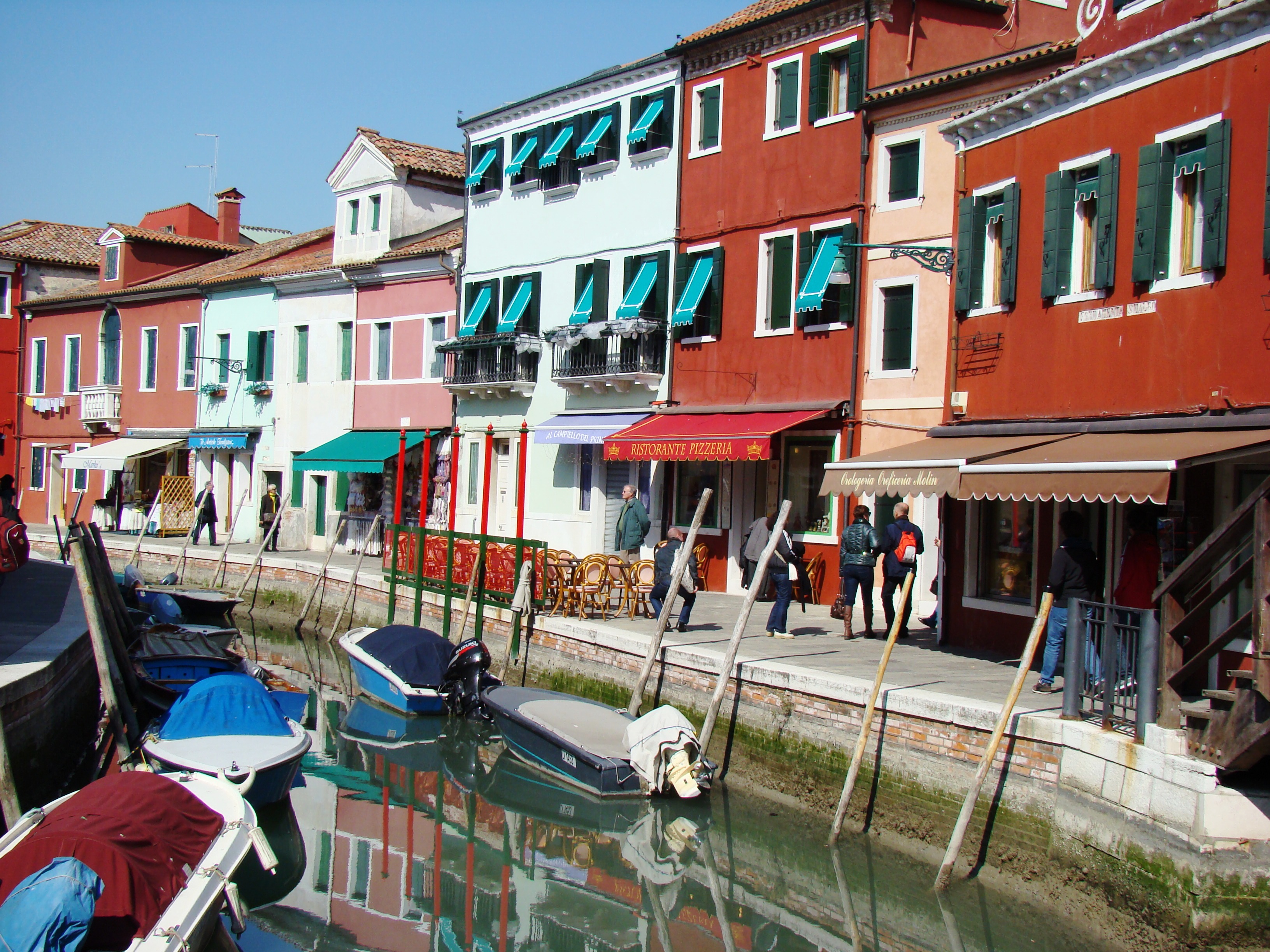
This morning we arrived ahead of schedule, and some hours before the rooms at our hotel would be ready. Our guide, Gloria Marchena, from London, suggested we might want to make use of that time by doing an excursion to the nearby island of Burano, one of the islands of the Venetian Lagoon. We opted to go there; about a 45 minute ride by a Venetian motorboat.

The island has a population of about 3,000, and is known for its brightly colored buildings and its lace.

Burano, colorful island near Venice. Photo by Leon Mauldin.

Wikipedia has this info re: Burano

The island was probably settled by the Romans, and in the 6th century was occupied by people from Altino, who named it for one of the gates of their former city. Two stories are attributed to how the city obtained its name. One is that it was initially founded by the Buriana family, and another is that the first settlers of Burano came from the small island of Buranello, c. 8 km to the south.

Although the island soon became a thriving settlement, it was administered from Torcello and had none of the privileges of that island or of Murano. It rose in importance only in the 16th century, when women on the island began making lace with needles, being introduced to such a trade via Venetian-ruled Cyprus. When Leonardo da Vinci visited in 1481, he visited the small town of Lefkara and purchased a cloth for the main altar of the Duomo di Milano. The lace was soon exported across Europe, but trade began to decline in the 18th century and the industry did not revive until 1872, when a school of lacemaking was opened. Lacemaking on the island boomed again, but few now make lace in the traditional manner as it is extremely time-consuming and therefore expensive.

Everyone is tired, but well. I hope to make posts each evening, so check back as we progress.

Click on images for larger view.


Arch of Titus

March 3, 2012

The Arch dedicated to Titus is in the Forum at Rome, located at the highest point of the Via Sacra. It was on this street that most of the religious processions took place.

Arch of Titus, located in Forum of Ancient Rome. Photo by Nancy Picogna.

The arch was built to commemorate the Roman defeat of Judea, including the destruction of Jerusalem and its Temple. Inside the arch, one side depicts the Roman soldiers removing the menorah, table of showbread and silver trumpets from the temple as it was destroyed in AD 70. Vespasian was Emperor and Titus was the commander of the Roman army at that time.  Titus was Emperor AD 79-81. After Titus’ death, the arch was constructed ca.AD 81 by Titus’ brother, the new Emperor Domitian.

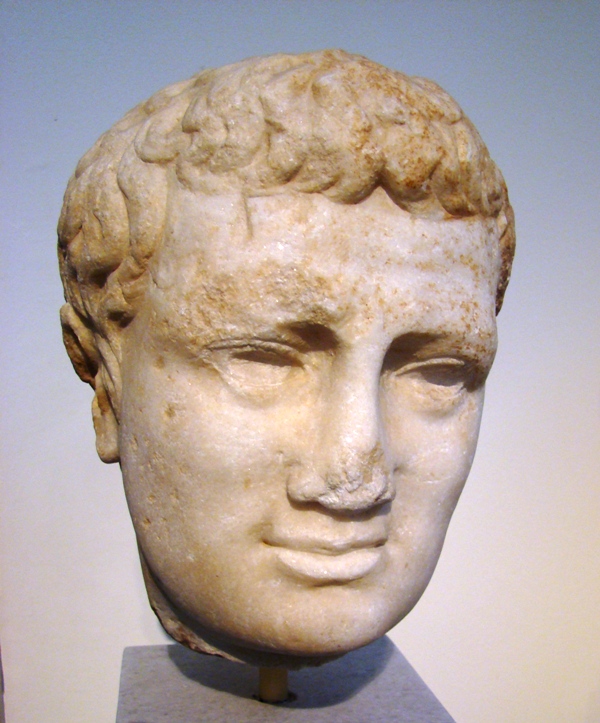
Emperor Titus, AD 79-81. Photo by Leon Mauldin.

This head of Titus (exhibit #348, Athens Museum), is made of Pentelic marble and was “probably found at Smyrna, Asia Minor. It is an earlier portrait head (possibly of the emperor Caligula) with parts reworked to render the features of Titus.”


Some (Brief) Features of Italian Geography

February 25, 2012

A resource I have found beneficial is The Cultural Atlas of the World series. There are several volumes in the series; one I’ve recently been gleaning is The Roman World, by Tim Cornell and John Matthews. The opening chapter, “A City Destined to Grow Great,” is obviously dealing with the city of Rome. But first an overview of the geography of Italy is given, including some reasons why the location was chosen for the foundation of this ancient city (ca. 753 BC).

The most important feature of the historical geography of Italy is the close interaction of plain, hill and mountain. Only about 1/5 of the total land surface of Italy is officially classified as plain (that is, land below 300 meters), and of this lowland area more than 70% is accounted for by the valley of the Po [north Italy, runs east-west, LM]. Of the rest, about 2/5 is classified as mountain (land over 1000 meters) and the remaining 2/5 as hill (land between 300 and 1000 meters). The alternation of these types of relief and their distribution throughout the country create a great diversity of climatic conditions and sharp contrasts in the physical appearance of the landscape from one region to another.

Italy is separated from central Europe by the great barrier of the Alps. In spite of their altitude these mountains have not kept Italy isolated from the rest of the continent. Although the winter snows make them impenetrable for more than half the year, most of the passes have been known since the earliest times; movements of people across the Alps have taken place throughout history, sometimes on a very large scale, for example during the incursions of the Celts and the Cimbri in the republican period and the barbarian invasions in the 5th and 6th centuries of our era.

In general the Tyrrhenian side [western side, LM] enjoys certain natural advantages over the Adriatic side . . . These differences relate largely to climate and to the nature of the soil . . . The Tyrrhenian coast is moreover fortunate in being served by relatively large rivers, at least two of which, the Tiber and the Arno, were navigable waterways in classical antiquity. The streams which flow into the Adriatic on the other hand are mostly dried up in the summer, and in winter become raging torrents which erode the thin soil from the upland slopes. The Adriatic coast is at a further disadvantage in having no good harbors.

The consequence of this natural imbalance has been that the western side of Italy has played a more prominent part in the history of civilization than the east, ever since the earliest Greek colonists rejected the desolate Adriatic coast and chose to make their homes on the Ionian and Tyrrhenian shores.

. . . Along the Tyrrhenian coast is a series of small alluvial plains, while the interior of the region is traversed by an interconnected chain of elevated basins which borders the eastern side; the most important of these alluvial valleys are the upper Arno between Florence and Arezzo, The Val di Chiana, the middle Tiber, and the Liri, Sacco and Volturno valleys which connect Latium and Campania.

These river valleys are also natural corridors of communication, and together they form the main longitudinal route along the western side of Italy which is followed today by the main railroad track and the Autostrada del Sole between Florence and Naples. The chief natural lines of communication from the coast to the interior also run along the river valleys, and above all along the Tiber. The lower Tiber valley is the nodal point of the network of natural communications of central Italy, and it was inevitable that the lowest available crossing of the Tiber, which occurs at Rome, should become an important center (emp. mine, LM). A defensible position with a good supply of fresh water, it dominated the crossing point at the Tiber island, where the first bridge, the Pons Sublicius, was constructed in the reign of King Ancus Marcius. In historical times, this part of the city comprised the commercial harbor (the Portus) and the cattle marker (the Forum Boarium). It was also the site of the “Great Altar” of Hercules. . . (pgs. 11-14).
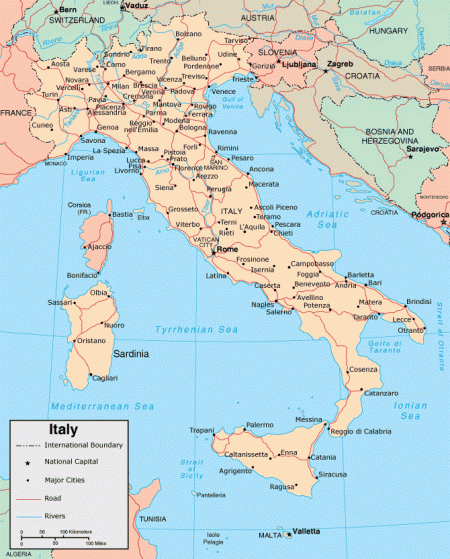
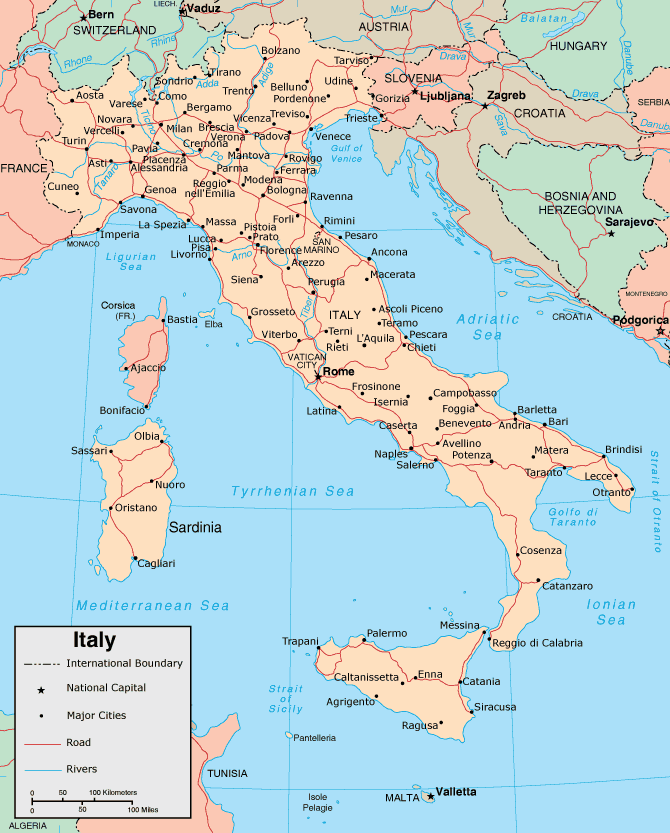
Map of Italy, by Wikipedia

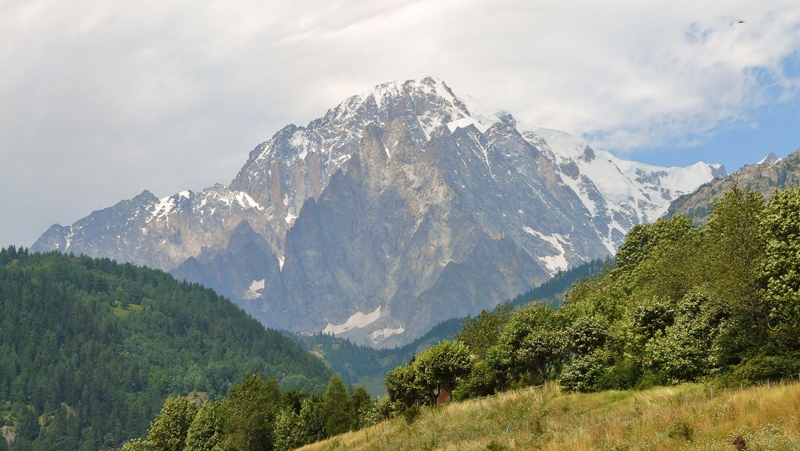
The highest point of elevation in Italy is Mont Blanc, in Aosta Valley.
Mont Blanc. Photo: Wikipedia Commons.

Italy is mentioned 4 times in the New Testament:

Acts 18:2 “And he [Paul] found a Jew named Aquila, a native of Pontus, having recently come from Italy with his wife Priscilla, because Claudius had commanded all the Jews to leave Rome.”

Acts 27:1 “When it was decided that we would sail for Italy, they proceeded to deliver Paul and some other prisoners to a centurion of the Augustan cohort named Julius.”

Acts 27:6 “There the centurion found an Alexandrian ship sailing for Italy, and he put us aboard it.”

Hebrews 13:24 “Greet all of your leaders and all the saints. Those from Italy greet you.”

There are several scriptural references to Rome, which we plan to consider at a later time.

Click on images for larger view.