The Name of the Star Is Called Wormwood

June 11, 2025

This morning while studying Revelation 8 for our Bible study tonight, I was giving attention to verses 10-11: “The third angel sounded, and a great star fell from heaven, burning like a torch, and it fell on a third of the rivers and on the springs of waters. The name of the star is called Wormwood; and a third of the waters became wormwood, and many men died from the waters, because they were made bitter.” Every passage has a context. Previously John saw the protection and care of those who have “the seal of the living God” (Rev. 7). Their prayers ascend “before God” and are heard (8:1-5). Here in our text (ch. 8) the imagery of trumpets sounding warning of judgments from God against those (rebellious) who “dwell on the earth” (8:13).

What does this imagery of wormwood portray? The text itself is helpful: “because they were made bitter” (8:11). Here is punishment/divine judgment which would be very bitter to those experiencing it. Further, the book will show that these warnings were the prelude of more (and worse) to come.
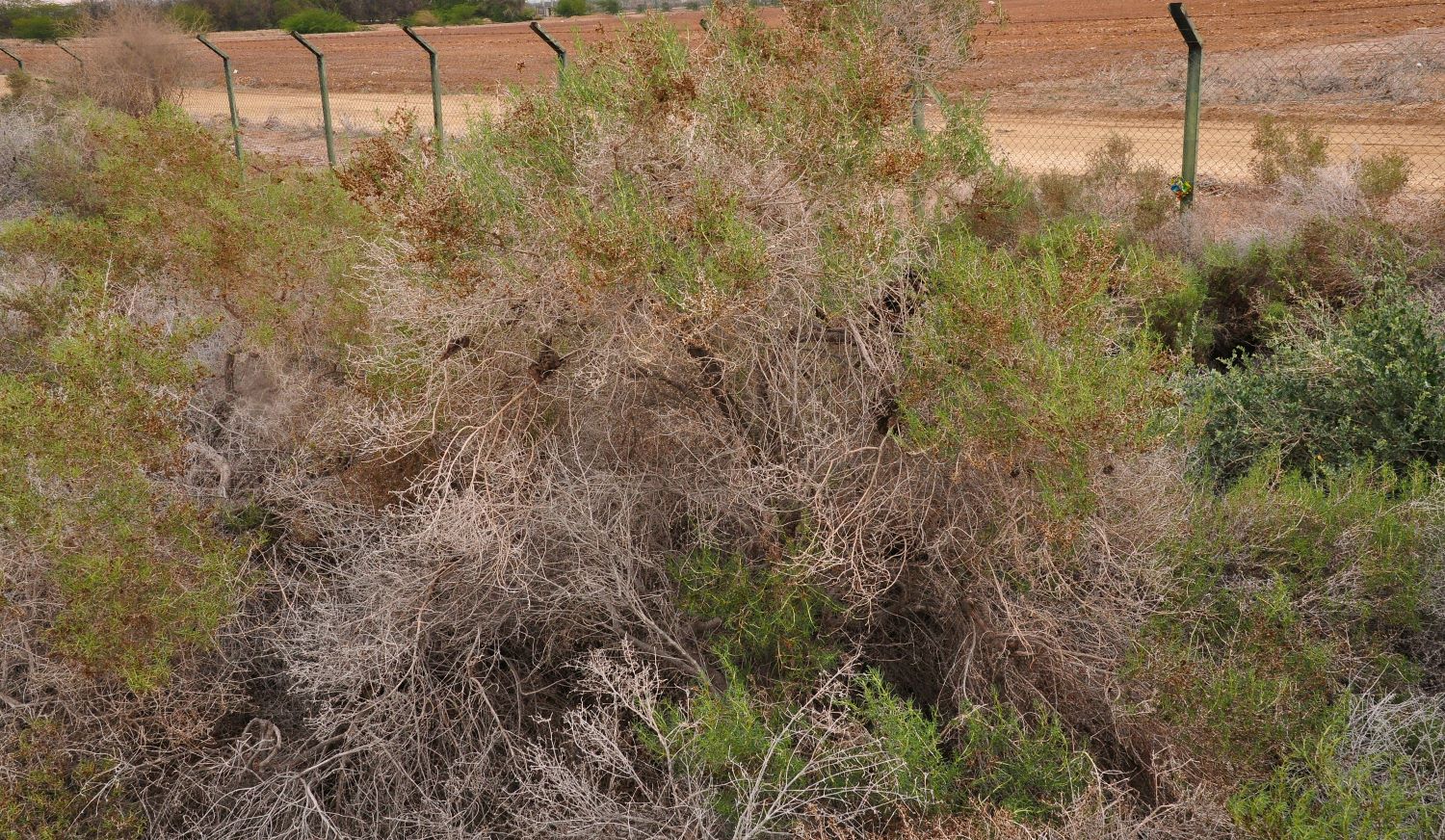
Wormwood in Jordan. Photo ©Leon Mauldin.

“Several plants in Palestine within the genus Artemisia, all of which are bitter in taste. Several species and varieties grow in Palestine, but those mentioned in the Bible are most likely Artemisia herba alba Asso, A. Judaica L., or A. absinthium” (ISBE, Vol. 4, p. 1117).

Another view of Wormwood in the country of Jordan. Photo ©Leon Mauldin.

“Several species of artemisia grow in Palestine. The common wormwood is Artemisia Absinthium. The name always implies wormwood or something more bitter than gall. The genus artemisia belongs to the natural order Compositæ.” (Balfour, J. H. The Plants of the Bible, p. 246).

Close-up shot of the biblical Wormwood shrub. Photo ©Leon Mauldin.

Consider the biblical references to wormwood, where its bitter, unpleasant character is alluded to.

  • Deut. 29:18: Moses warned Israel about a root bearing bitterness (see NIV: “bitter poison”): “Deuteronomy 29:18 “so that there will not be among you a man or woman, or family or tribe, whose heart turns away today from the LORD our God, to go and serve the gods of those nations; that there will not be among you a root bearing poisonous fruit and wormwood.
  • The young man is warned against the adulterous woman in Prov. 5:4: “But in the end she is bitter as wormwood, Sharp as a two-edged sword.”
  • Jeremiah warned God’s apostate people in Jerusalem, “therefore thus says the LORD of hosts, the God of Israel, “behold, I will feed them, this people, with wormwood and give them poisoned water to drink” (Jer. 9:15).
  • Later, Jeremiah wrote about his personal struggle as he witnessed the wrath of God upon Jerusalem by Babylon: “He has filled me with bitterness, He has made me drunk with wormwood” (Lam. 3:15). And he implores God, “Remember my affliction and my wandering, the wormwood and bitterness” (Lam. 3:19).
  • The prophet Amos rebuked the northern kingdom of Israel, describing them with the words, “For those who turn justice into wormwood And cast righteousness down to the earth” (Amos 5:7). And again, “Do horses run on rocks? Or does one plow them with oxen? Yet you have turned justice into poison And the fruit of righteousness into wormwood” (Amos 6:12).

The book of Revelation is filled with Old Testament allusions. These verses help provide the background for the imagery of wormwood in Revelation 8:11.


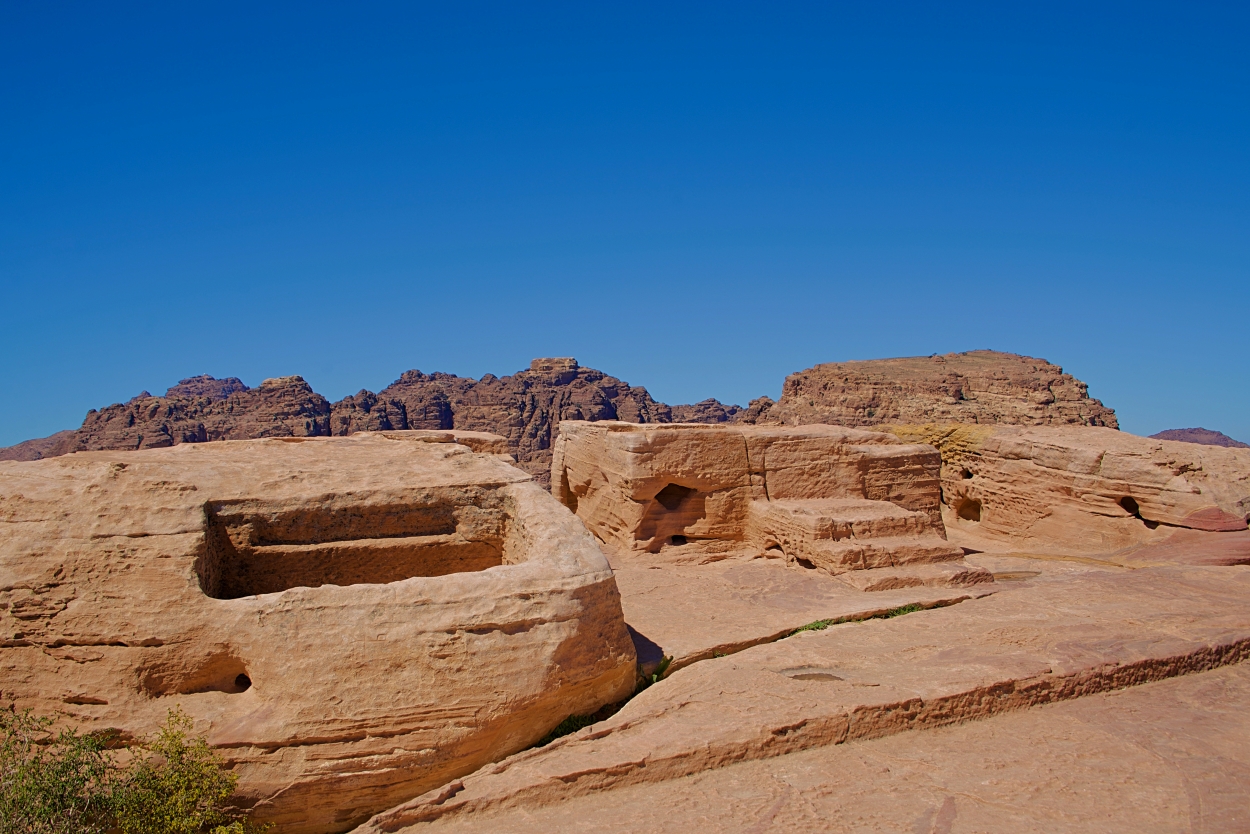
High Place at Petra, Edomite Territory

February 11, 2025

In doing some study in the prophet Malachi this morning I came across one of the many biblical references to Esau (from whom descended the Edomites). Malachi 1:2-3 illustrates the necessity of contextual biblical study: “Jacob I have loved, But Esau I have hated.” In short, this had nothing to do with the salvation of individual Edomites, or God’s personal like or dislike of Jacob or Esau, but rather underscores God’s sovereignty in choosing to provide salvation in that descendant of Jacob, Jesus the Christ.

The territory occupied by Edom included Petra. By Roman Times the Edomites had been displaced by a people known as the Nabateans. Petra was the capital of the Roman Province of Arabia.

One of the many interesting archaeological finds at Petra is the High Place, including the altar for sacrifice. The photo here was taken in 2019 by tour member David Deason.

High Place at Petra. Altar at center (and slight right). Photo by David Deason.

The High Place at Petra is one of the best preserved of all such sacred installations in the ancient Near East. Its location is imposing, approximately 3,400 feet above sea level and 625 feet above the temenos. The altar platform was approached by three steps. It is situated about 3 feet above the level of an adjoining courtyard area and is equipped with drains and basins for sacrifices and ablutions.

The Biblical World in Pictures; BAS Biblical World in Pictures. (2003). Biblical Archaeology Society.

We have previously posted on Petra here and here.

Click on image for larger view.


Lives Free from the Love of Money

February 1, 2024

The writer of Hebrews closes with several imperatives, including this admonition in 13:5: “Keep your life free from love of money, and be content with what you have, for he has said, “I will never leave you nor forsake you” (ESV). For comparison: “Make sure that your character is free from the love of money, being content with what you have; for He Himself has said, “I WILL NEVER DESERT YOU, NOR WILL I EVER FORSAKE YOU” (NASB). The NET renders, “Your conduct must be free from the love of money and you must be content with what you have, for he has said, “I will never leave you and I will never abandon you.”

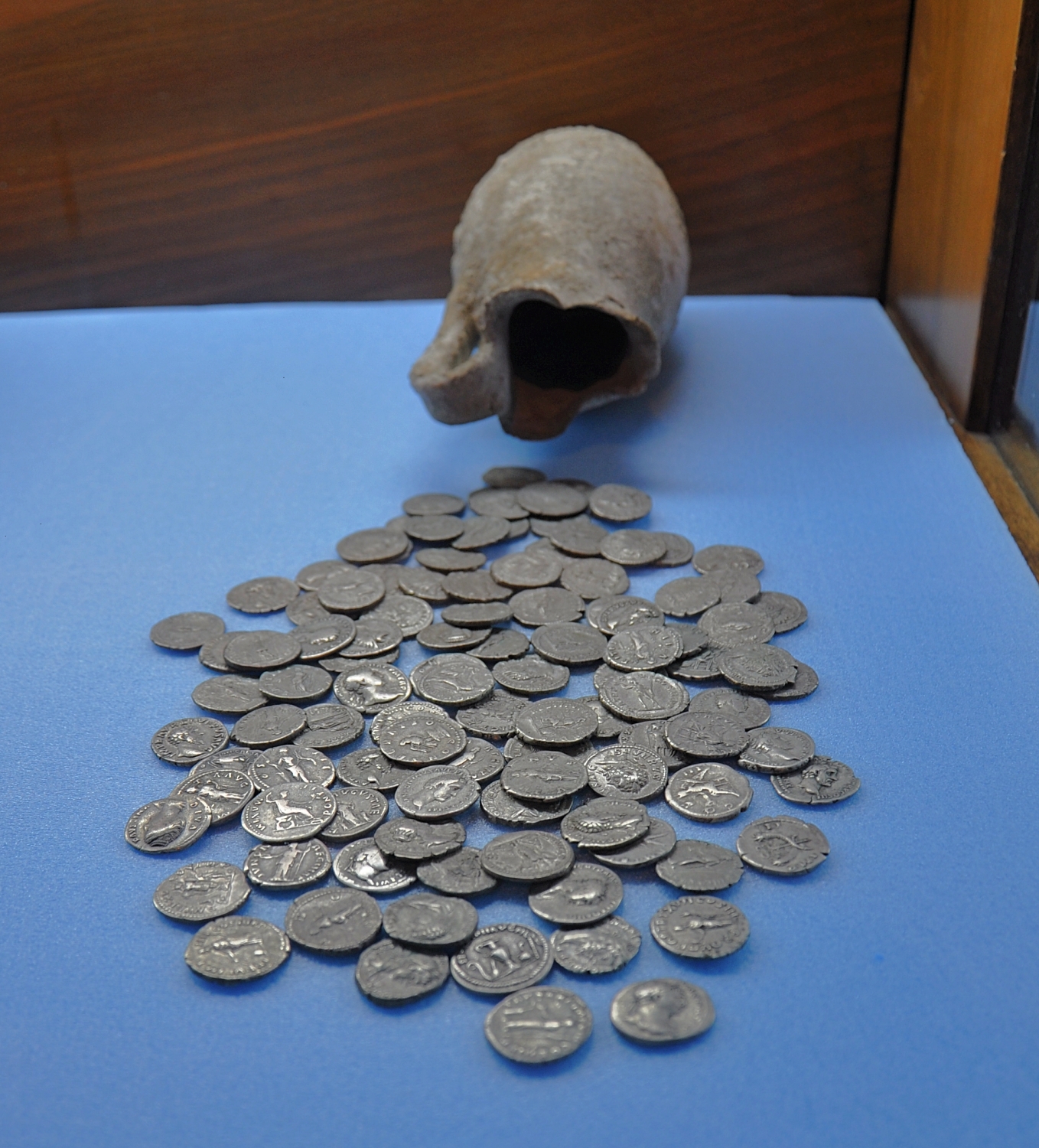
Some years ago, while at Samsun (Biblical Pontus) on the Black Sea, Ferrell Jenkins and I visited the Samsun Archaeology and Ethnography Museum there. Here are some photographs which might be helpful visuals in teaching this biblical text (Heb. 13:5):

Silver Treasure of Imperial Rome (AD 69-244). Samsun Archaeology and Ethnography Museum, Turkey. Photo ©Leon Mauldin.

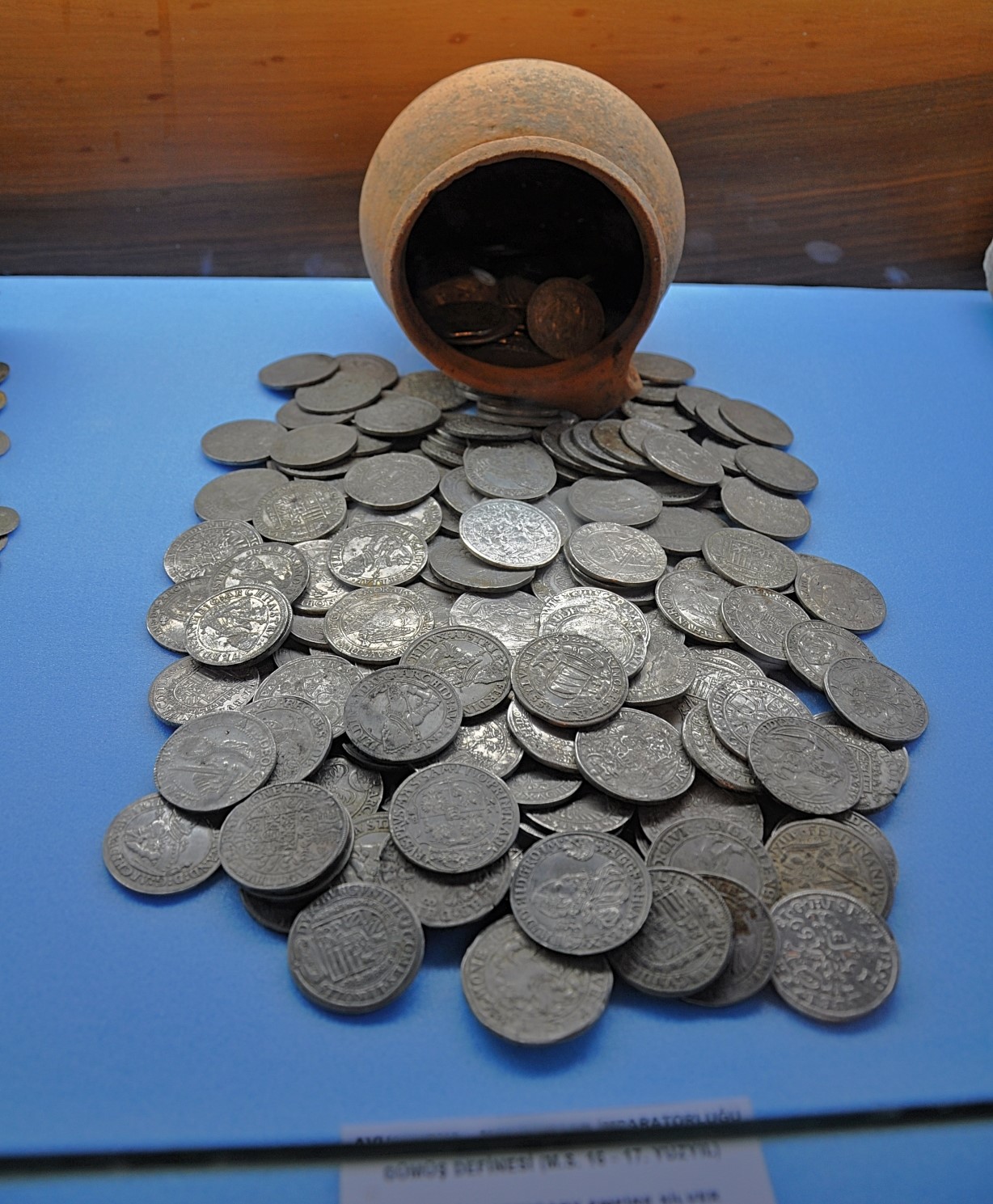
Another display includes this trove of coins:

Treasure of silver coins from the Austria-Hungary Empire (16-17th cent. AD). Photo ©Leon Mauldin.

One should note that it is not the money that is itself sinful, but the LOVE of money (compare 1 Timothy 6:10).

Also note the Hebrews 13:5 states what “He Himself” (God) has said. What follows is to be the Christian’s response: “So that WE may boldly say, ‘The LORD is my helper; I will not fear, What can man do to me?'” (v.6). This kind of “answering speech” runs throughout scripture: God takes the initiative, He speaks, He reveals Himself, and then there is to be the appropriate repsonse, the answer of faith on the disciple’s part. “Speak, LORD, thy servant heareth” (1 Samuel 3:9).

Pontus is mentioned three times in the New Testament. Jews from Pontus were present in Jerusalem on the Day of Pentecost (Acts 2:9). Aquila, one of Pau’s invaluable helpers, was from Pontus (Acts 18:2). Also the Apostle Peter addressessed Pontus (1 Pet. 1:).

Samsun (Amisus) was a leading city of Pontus. Regarding its biblical significance, Dr. Mark Wilson writes, “Amisus was at the northern terminus of the main road that ran across Asia Minor to Tarsus. Peter’s messenger undoubtedly disembarked at Amisus and initally made his way south along this route” (Biblical Turkey, pp. 334,336). Samsun is located between the deltas of the Kızıl and Yeşil rivers.

Samsun, port city of biblical Pontus. Photo ©Leon Mauldin.

Click images for larger view.


Adad-Nirari III, the Deliverer of Israel?

December 20, 2022

The study of the biblical books of 1-2 Kings is a study of inspired theological history. That is to say, it is history but with an emphasis always on the divine perspective. The concern of the narrative is consistently whether the king under consideration, whether in the northern kingdom of Israel, or in Judah’s kingdom to the south, did that which was “right in the sight of the LORD.”

The Lord had promised Israel’s King Jehu (r. 841-814 BC) that his sons would reign to the fourth generation (2 Kings 10:30). Meanwhile Syria was ravaging Israel, gobbling up the territory on the eastern side of Jordan. Israel was drastically reduced in size (2 Kings 10:32). Following Jehu’s death, his son Jehoahaz reigned (814-798), and the Aramaic oppression continued (2 Kings 13:3) with its terrible devastation. The fascinating thing about this northern king is that though he was “evil” (2 Kings 13:2), “Jehoahaz pleaded with the LORD” (v. 4). What is further amazing is the mercy of God: though God permitted the Arameans to punish Israel because of national covenant unfaithfulness, “the LORD listened to him; for He saw the oppression of Israel, because the king of Syria oppressed them (Ibid.).

The next verse tells us, “Then the LORD gave Israel a deliverer, so that they escaped from under the hand of the Syrians; and the children of Israel dwelt in their tents as before” (2 Kings 13:5, NKJV). The ESV reads, “Therefore the LORD gave Israel a savior, so that they escaped from the hand of the Syrians, and the people of Israel lived in their homes as formerly.” (Note: the KJV, NRSV also render מושיע as “savior”. Most translations have “deliverer.” The hiphil participle means to deliver, to save).

This is reminiscent of the language of the Judges, where in times of punishment for sin, Israel would cry out to the LORD for deliverance, and He would send the Judge would deliver/save Israel from its oppressor. The biblical text does not name who the deliverer/savior was at the time referenced in 2 Kings 13:5.

Many scholars believe that it is the Assyrian King Adad-Nirari III who is referenced here as Israel’s מושיע.

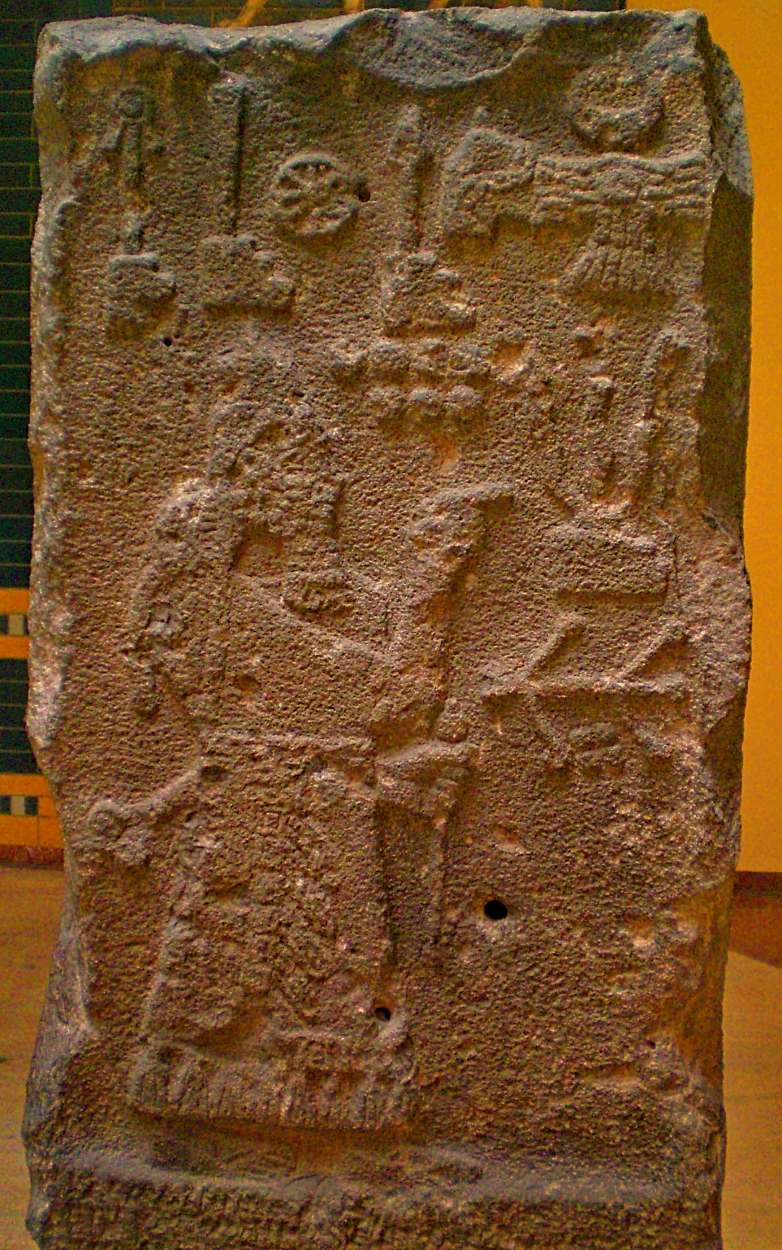
Adad-Nirari III praying before his gods. Istanbul Museum of the Ancient Orient. Photo ©Leon Mauldin

For example, “Adad-nirari III may have been the ‘savior’ bringing them freedom from Aramean oppression” (Gilboy, The Lexham Bible Dictionary). “Adad-nirari III may have been the ‘deliverer’ of Israel mentioned in 2 Kgs. 13:5” (Chavalas, Eerdmans Dictionary of the Bible, p. 18). “By intervening in the affairs of the Syrian kingdoms, Adad-nerari III put pressure on Damascus, thus relieving Israel from the heavy hand of the Arameans (Mordechai Cogan, The Raging Torrent, p. 41).

David T. Lamb, in a chapter entitled, “An Evil King Praying, Jehoahaz of Israel,” states, “Within the context of this narrative, the most reasonable deliverer for Jehoash is therefore Adad-nirari III of Assyria since, toward the end of Jehoahaz’s reign, he attacked Aram. Adad-nirari’s campaign would have diverted Aram’s attention away from Israel and toward the north. From the perspective of the text, Adad-nirari would play a similar role to Cyrus (Isa 45:1), as a foreign ruler who accomplishes a divinely appointed task” (Lamb, D. T., 1-2 Kings, T. Longman III & S. McKnight, Eds.; p. 399).

D. J. Wiseman supplies the following information regarding Adad-nirari:

Adadnirari III (810–783 B.C.) took five years to quell the widespread revolt led by nobles, high officials, and some provincial governors who, like Dayan-Aššur, the army commander of Shalmaneser, had accumulated much local power. He had to reassert Assyrian authority also over tribes to the north and east who had meanwhile withheld their taxes. This was the beginning of the internal resistance to the central authority of the king which was to recur and ultimately lead to Assyrian weakness in the following century.


When Šamši-Adad died, his queen Sammu-ramat (in part the legendary Semiramis) took over command as co-regent for five years during the minority of her son Adadnirari. In 806 B.C. the young king undertook an expedition to north Syria, reaching the Mediterranean (Arpad), and another the following year, when he took Hazazu and broke up the powerful coalition developing between Damascus and states as far afield as Malatya. In 804 he struck further southwest to Tyre and Sidon. Joash of Israel, anxious to annul the burdensome treaty imposed on him by Hazael, seems to have taken this opportunity, as had Jehu before him, to obtain Assyrian help. The evidence for this is a royal stele (from Tell ar Rimah, Iraq) in which Adadnirari lists tribute from “Joash of Samaria” (Yu’ asu mātSamerinā) before that of Tyre and Sidon. When the Assyrian entered Damascus and took spoil from Ben-hadad it is likely that Israel was allowed to strengthen trade relations with that city and recover some lost territory (2 K. 13:25).

Wiseman, D. J. (1979–1988). Assyria. In G. W. Bromiley (Ed.), The International Standard Bible Encyclopedia, Revised (Vol. 1, pp. 334–335). Wm. B. Eerdmans.

Similarly, the ESV Study Bible in its comments on our text says, “It seems likely that the ‘savior’ in question here is Assyria, whose interest in Syria-Palestine was rekindled in the closing years of the ninth century B.C., resulting in a measure of relief for Israel as the attention of Damascus necessarily turned tot he north.”

On the other hand, Keil & Delitzsch state, “but the Lord gave them the saviour in the two successors of Jehoahaz, in the kings Jehoash and Jeroboam, the former of whom wrested from the Syrians all the cities that had been conquered by them under his father (v. 25), while the latter restored the ancient boundaries of Israel (2 Kings 14:25).” (Keil, C. F., & Delitzsch, F. (1996). Commentary on the Old Testament (Vol. 3, p. 267).

Others have suggested Elisha, who foretold the three-fold victory over Aram, as the “deliverer” under consideration (2 Kings 13:14-19). Could the solution be that Elisha foretold the victory and enlargement of Israel (cf. the later reference to Jonah & Jeroboam II, 2 Kgs. 14:23-25), which was fulfilled in the days of Jehoash and Jeroboam, but was made possible by the role of Adad-nirari? Remember that God rules in the kingdoms of men (Dan. 4:17), and His providential use of the nations could well be under consideration here.


Paul’s Journey to Jerusalem and the Role of the Spirit

May 16, 2018

As Paul’s 3rd Missionary Journey draws to a close, the text states, “After looking up the disciples [at Tyre], we stayed there seven days; and they kept telling Paul through the Spirit not to set foot in Jerusalem” (Acts 21:4). At first glance it would seem that the Holy Spirit is instructing Paul not to go to Jerusalem. Is that what the passage means?

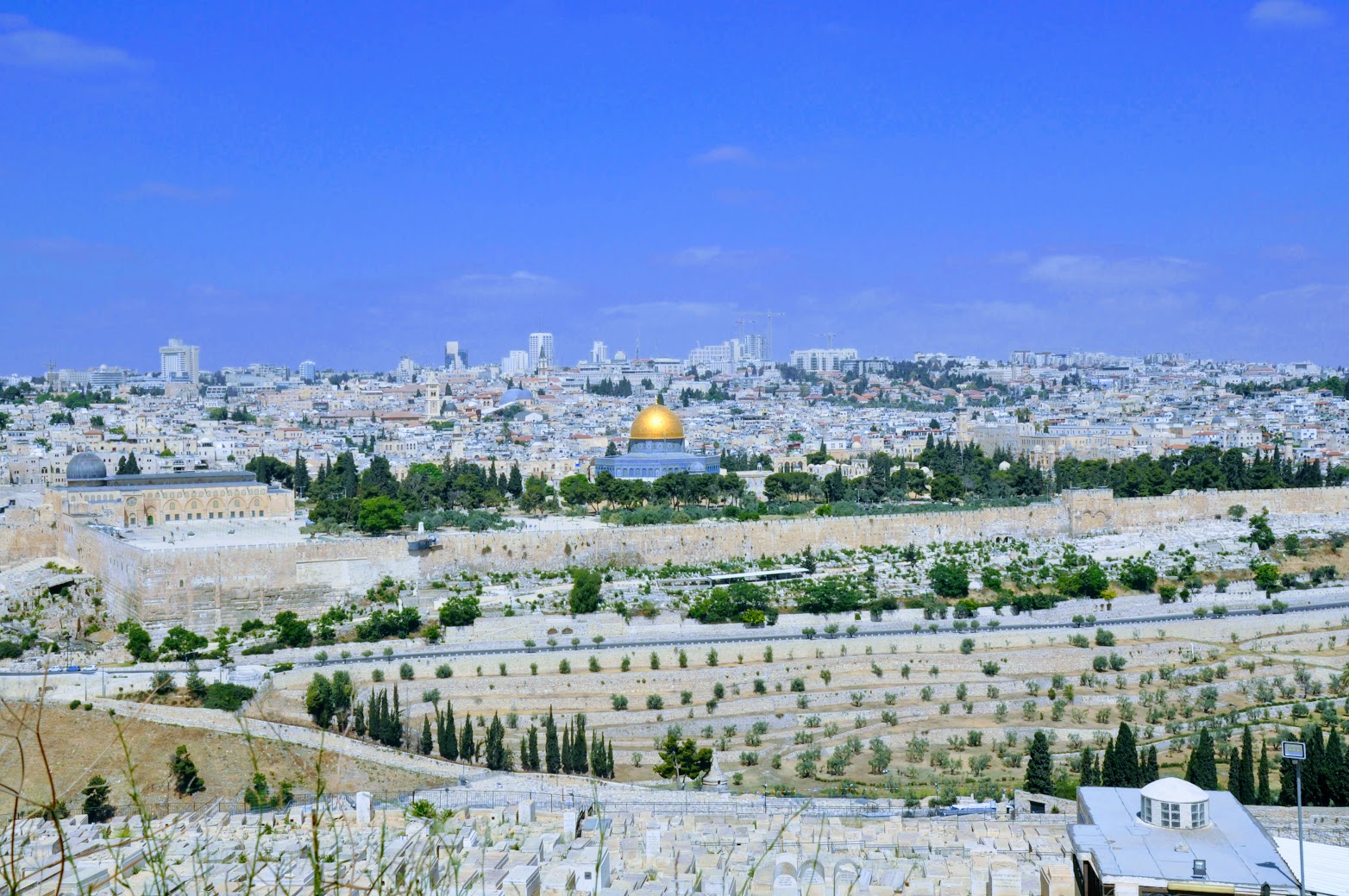
View of Jerusalem, looking west, from Mt. of Olives. Photo ©Leon Mauldin.

Every passage of Scripture has a context. Previously Luke recorded, “Now after these events Paul resolved in the Spirit to pass through Macedonia and Achaia and go to Jerusalem, saying, “After I have been there, I must also see Rome” (Acts 19:21, ESV). Then a few verses later, ” And now, behold, I am going to Jerusalem, constrained by the Spirit, not knowing what will happen to me there” (20:22, ESV). We know that capitalization is supplied by the translators but you see that the English Standard Version, along with many others, indicate this is the Holy Spirit, not Paul’s spirit, in these texts, Who is directing Paul. Further, that Paul’s journey to Jerusalem was clearly endorsed by the Lord is seen in 23:11, “The following night the Lord stood by him and said, “Take courage, for as you have testified to the facts about me in Jerusalem, so you must testify also in Rome” (ESV). Additionally, when Paul and his companions were forbidden by the Holy Spirit (on the 2nd Journey) to preach in Asia, Mysia and Bithynia, they did not resist the Spirit, but passed through those regions on to Macedonia (Acts 16:1-10). These passage furnish the surrounding context in which Acts 21:4 must be viewed.

J.W. McGarvey wrote, “We are not to understand that these entreaties [in our opening text, 21:4] were dictated by the Spirit; for this would have made it Paul’s duty to desist from his purpose; but the statement means that they were enabled to advise him not to go, by knowing, through the Spirit, what awaited him. The knowledge was supernatural; the advice was the result of their own judgment” (A Commentary on Acts of the Apostles, p.255).

Bob & Sandra Waldron explained, “The Spirit is telling Paul there will be trouble, but it is the people who are begging him not to go” (Go Tell the Good News, p.184).

I do believe that this gives the best explanation of Acts 21:4, as any other view would contradict the related texts immediately before and after the passage. I’m convinced this must be the approach when approaching a challenging text–explanations must be ruled out which contradict other plain passages of scripture.