Jerome of Bethlehem

May 18, 2017

We recently had the opportunity to visit Bethlehem, the town where Jesus was born. In addition to Bethlehem’s being important for that reason (Micah 5:2; Luke 2:1-20; Matt. 2:1-13), this location is also significant due to the work of Jerome (Eusebius Sophronius Hieronymus).

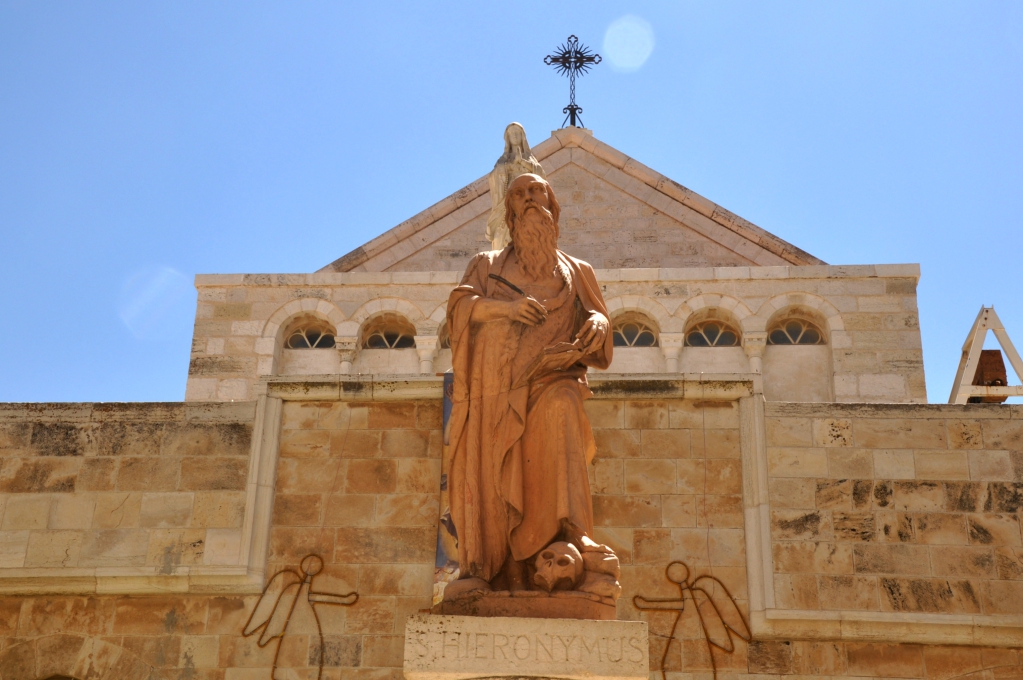
Statue of Jerome in Bethlehem, outside of the Church of St. Catherine. Photo by Leon Mauldin.

Jerome was born at Stridon, Dalmatia, ca. AD 347. He is especially noted for his translation of the Bible into Latin.

In 384 Jerome took up residence in Bethlehem, to be joined two years later by Paula and her daughter Eustochium. Together they made Bethlehem a great monastic centre; within this framework Jerome wrote prolifically, his most notable achievement being a new translation of the Old and New Testaments (the Vulgate) which remained the authoritative version of the Bible for Catholics until the C20. (Murphy-O’Connor, The Holy Land: An Oxford Archaeological Guide from Earliest Times to 1700, Oxford Archaeological Guides, p.233).

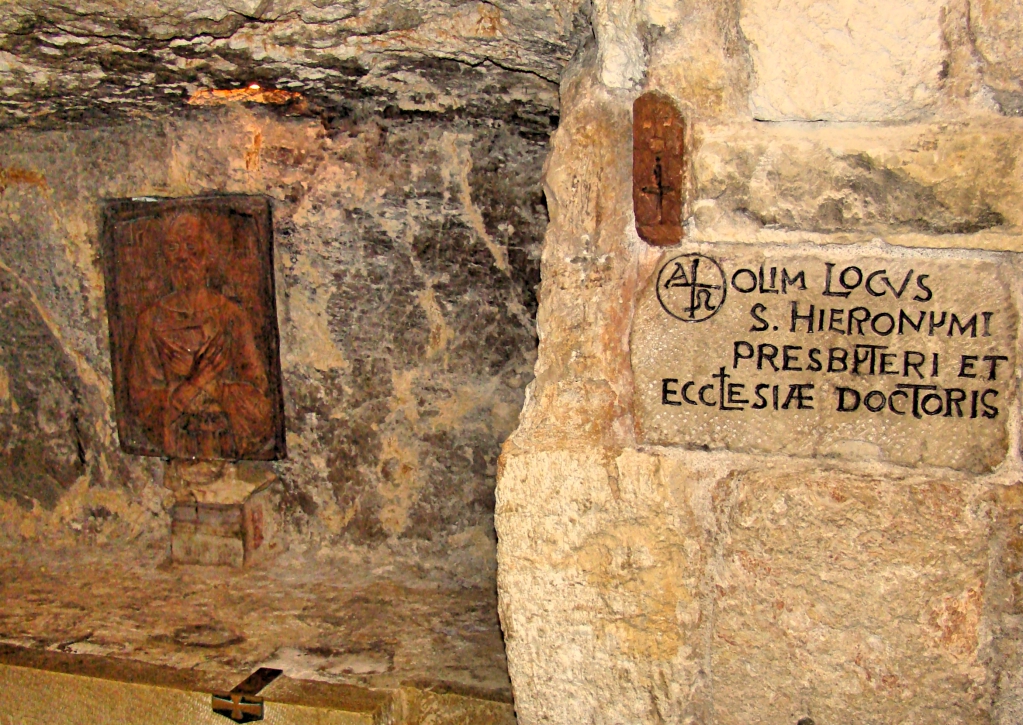
This cave is said to be Jerome’s study, where he did his monumental literary work.

Jerome’s study in Bethlehem. Photo by Leon Mauldin.

See Ferrell Jenkin’s article (Dec. ’08) on Jerome here.

Click on photos for larger view.


St. Stephen’s Gate

May 12, 2017

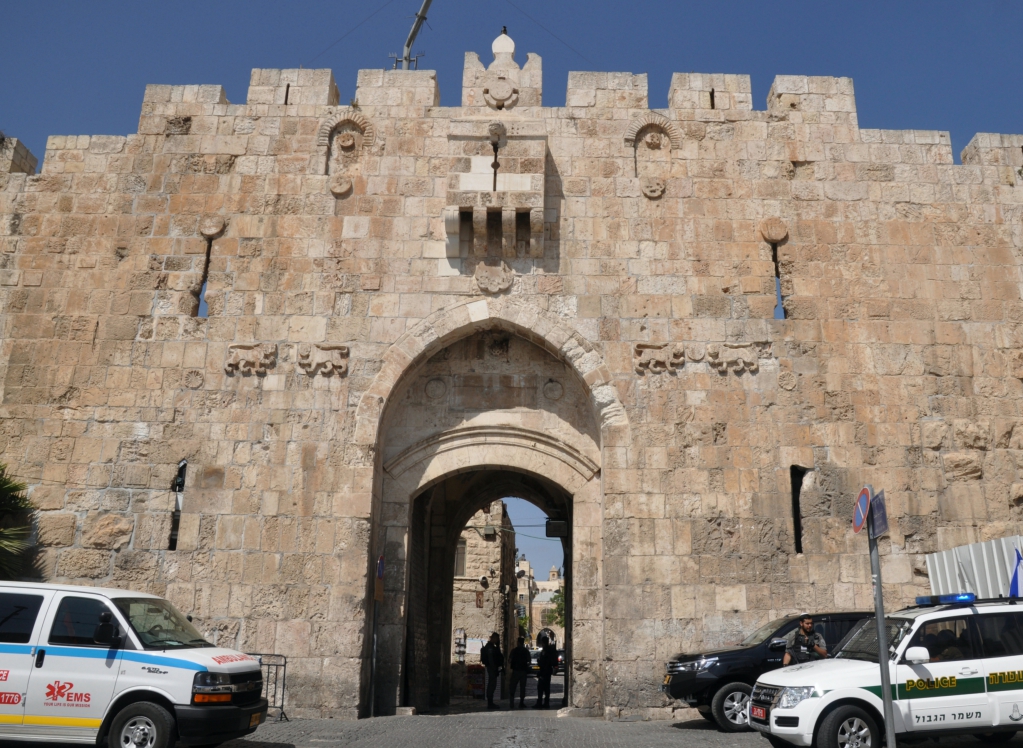
St. Stephen’s Gate, also known as the “Lion’s Gate,” is one of seven open Gates in Jerusalem’s Old City Walls. This gate is located on the Eastern Wall. It is  It is called “St. Stephen’s Gate” because of the tradition that Stephen, the first martyr of the church (Acts 6-7), was stoned to death at this location just outside the city walls.

St. Stephen’s Gate, located on Jerusalem’s Eastern Wall. Photo by Leon Mauldin.

In Acts 7, Luke records Stephen’s sermon to the Sanhedrin (the ruling council overseen by the High Priest), as well as the response:

“You stiff-necked people, uncircumcised in heart and ears, you always resist the Holy Spirit. As your fathers did, so do you. Which of the prophets did not your fathers persecute? And they killed those who announced beforehand the coming of the Righteous One, whom you have now betrayed and murdered, . . . you who received the law as delivered by angels and did not keep it.” Now when they heard these things they were enraged, and they ground their teeth at him. But he, full of the Holy Spirit, gazed into heaven and saw the glory of God, and Jesus standing at the right hand of God. And he said, “Behold, I see the heavens opened, and the Son of Man standing at the right hand of God.” But they cried out with a loud voice and stopped their ears and rushed together at him.Then they cast him out of the city and stoned him. And the witnesses laid down their garments at the feet of a young man named Saul. And as they were stoning Stephen, he called out, “Lord Jesus, receive my spirit.”  And falling to his knees he cried out with a loud voice, “Lord, do not hold this sin against them.” And when he had said this, he fell asleep (Acts 7:51-60).

Murphy-O’Connor notes, “The current Hebrew name, ‘Lions’ Gate’, is due to a mistake. The pairs of animals are in fact panthers, the heraldic emblem of the Mamluk sultan Baybars (1260–77), which Suliman’s architects set on either side of the gate to celebrate the Ottoman defeat of the Mamluks in 1517” (The Holy Land: An Oxford Archaeological Guide from Earliest Times to 1700 (Oxford Archaeological Guides, p.21).

I previously posted on this gate here.

Click image for larger view.


What Time Is It?

May 4, 2017

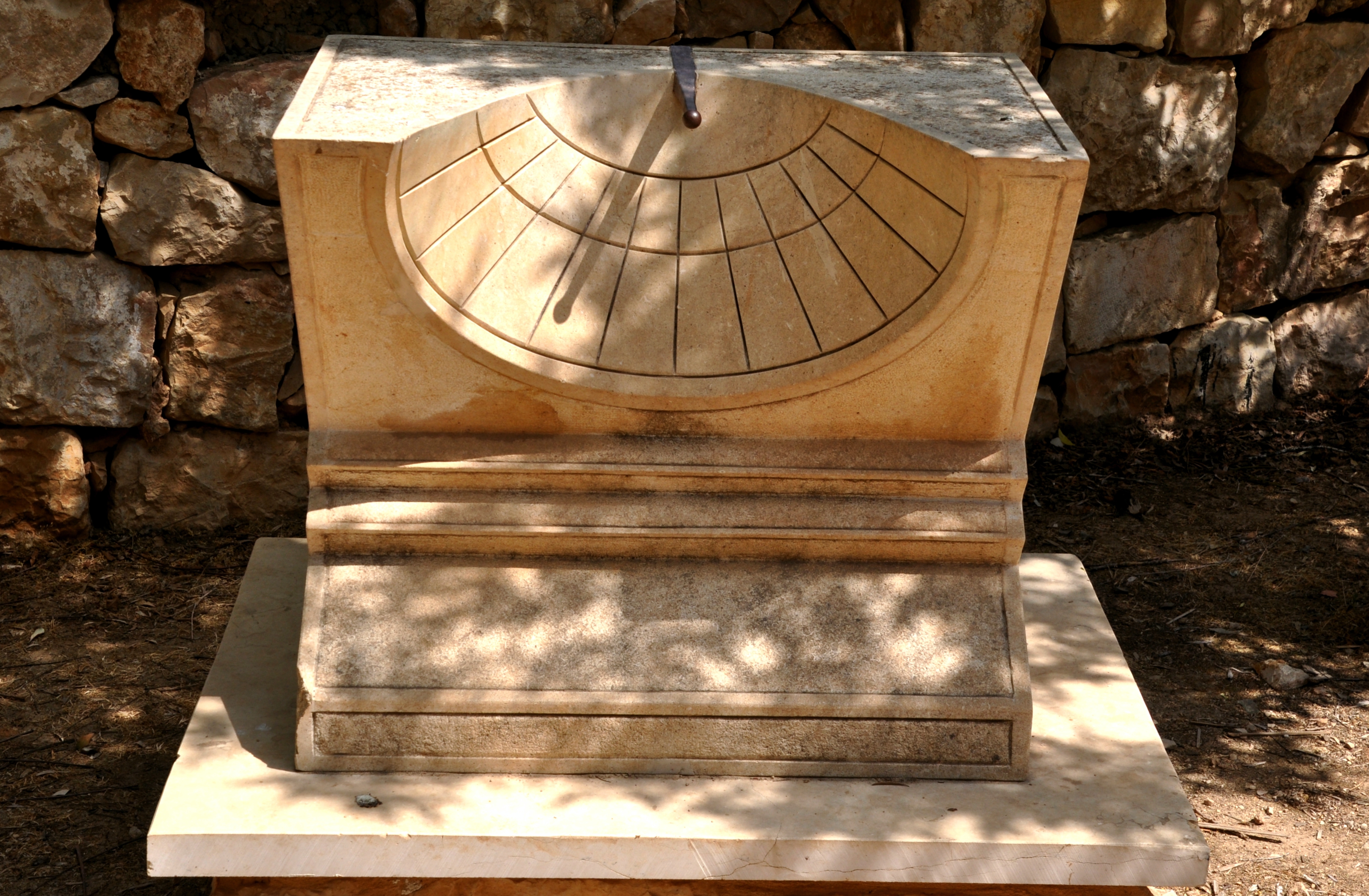
Today we were able to visit Ein Yael, Philip’s Spring, located on the ancient Jerusalem-Gaza route. A number of interesting artifacts were on the site, including this sundial.

Sundial at Ein Yael. Photo by Leon Mauldin.

This helps illustrate an event in the life of King Hezekiah of Judah, one of Judah’s best kings. He faithfully led the nation in very difficult times. Then he became sick and was near death. God sent the prophet Isaiah to Hezekiah with the message, “Set your house in order, for you shall die and not live” (Isaiah 38:1). Hezekiah fervently prayed to the Lord, his prayer was heard, and the Lord promised to add 15 years to his life. As a sign to confirm this promise, God said, “Behold, I will bring the shadow on the sundial, which has gone down with the sun on the sundial of Ahaz, ten degrees backward” (Isa. 38:7,8, NKJV).

Some translations render the Hebrew term maalah as “stairway” (see NAS, CSB). The NET Bible notes, “These steps probably functioned as a type of sundial.”

Whether the term means “steps” or “sundial,” certainly what is under consideration is a means of telling time by the moving shadow cast by the sun. The miraculous sign was that the shadow would return, it would go backward by 10 “steps” or “degrees.”

Whether what is intended in Isaiah 38 is this type of sundial, or another system (steps, stairway) is meant, the principle is the same. God miraculously returned the shadow to confirm to Hezekiah that He would extend his life as He had promised.

Click image for larger view.


Jerusalem’s Temple Mount

May 3, 2017

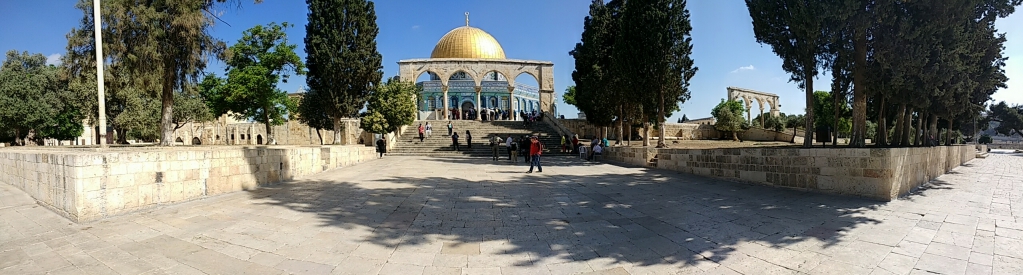
Today we had opportunity to visit the temple mount in Jerusalem. This is a wide-angle shot I made this morning:

Temple Mount in Jerusalem. Photo by Leon Mauldin.

The very recognizable Dome of the Rock at center approximates the site of Solomon’s temple, as well as the 2nd temple, built after the return from Babylonian Captivity and vastly renovated by Herod the Great.

This area is known as Mt. Moriah. This was the location where Abraham took Isaac in obedience to God’s command to offer him as a sacrifice, though He stopped Abraham prior to the actual event (Gen. 22:1-13). Years later, when Solomon built the temple, the Bible says, “Then Solomon began to build the house of the LORD in Jerusalem on Mount Moriah . . .” (2 Chron. 3:1, ESV).

The temple mount consists of about 36 acres. When the New Testament speaks of Jesus teaching in the temple, or of the early church meeting in the temple, those texts are not referring to the naos (holy place/most holy place) into which only the priests/Levites could enter; the most holy place only the high priest could enter, and that only once per year on the Day of Atonement. Rather, reference is made to the hieron, the greater temple area, consisting of its many courts and colonnades, etc.

Click image for larger view.


Sepphoris (Zippori), Capital of the Galilee

May 2, 2017

The Tetrarch Herod Antipas, son of Herod the Great, chose Sepphoris as his capital in Galilee (BC 4). (Later he would build Tiberias and move his capital there, 20 AD).

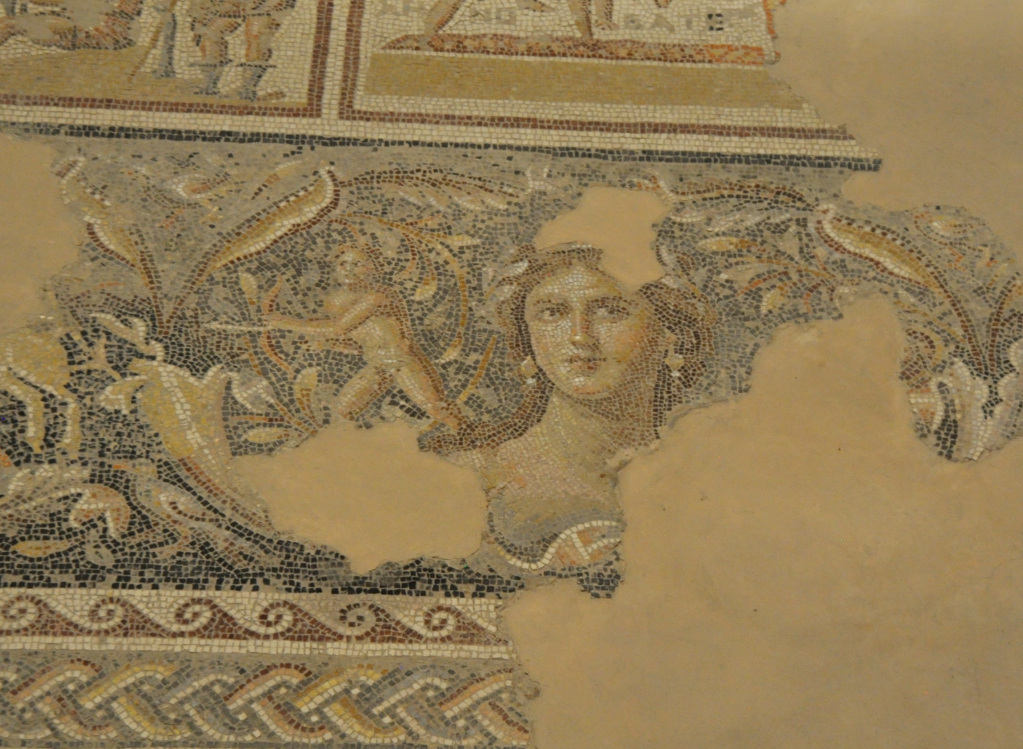
Much excavation, beginning in 1931, has been done in Sepphoris. In the house of Dionysus several mosaics were found, including this one featuring a woman often referred to as “Mona Lisa of the Galilee.”

The “Mona Lisa of the Galilee.” Photo by Leon Mauldin.

Sepphoris is only about an hour’s walk away from Jesus’ hometown of Nazareth. This was one of the sites I wanted to see on this current trip to Israel.

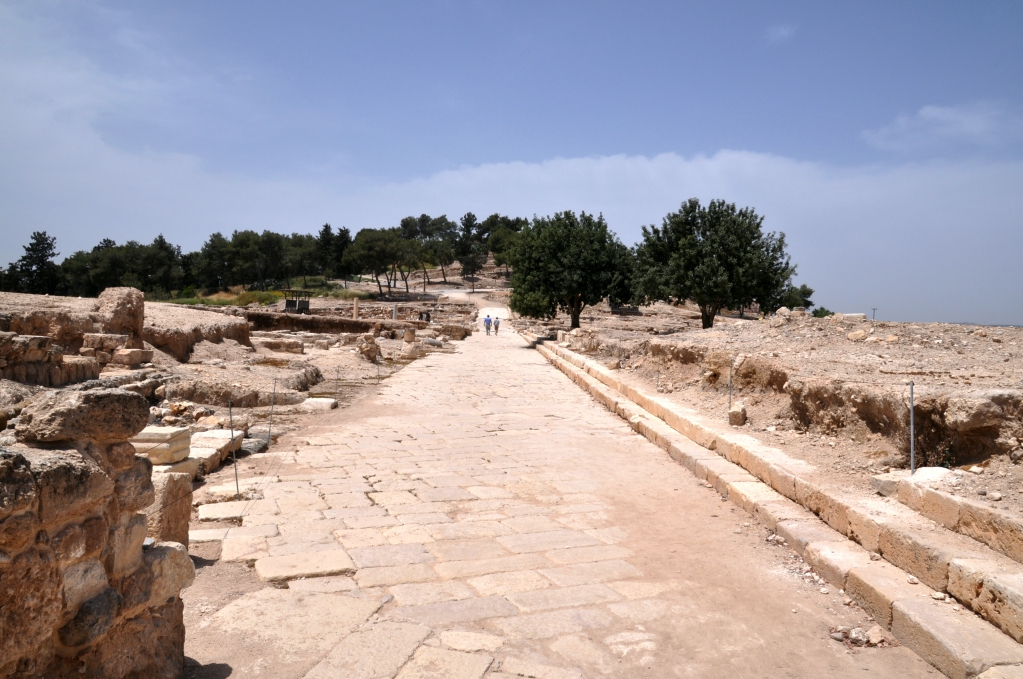
One of the main streets of Sepphoris. Photo by Leon Mauldin.

Click on images for larger view.


Fields White unto Harvest

April 30, 2017

Early in Jesus’ ministry, He traveled from Jerusalem to Galilee, and went through Samaria. It was at the well at Sychar (today’s Nablus) that Jesus had a conversation with a woman who had come to the well to draw water. Jesus skillfully led her from a starting point of a request for a drink of water, step by step, to the point of faith in Him as Messiah! (John 4:1-26).

Field of wheat in the Galilee. Photo by Leon Mauldin.

When the disciples returned, having gone into the city to buy food, this interesting conversation took place:

27 And at this point His disciples came, and they marveled that He talked with a woman; yet no one said, “What do You seek?” or, “Why are You talking with her?” 28 The woman then left her waterpot, went her way into the city, and said to the men, 29 “Come, see a Man who told me all things that I ever did. Could this be the Christ?” 30 Then they went out of the city and came to Him. 31 In the meantime His disciples urged Him, saying, “Rabbi, eat.” 32 But He said to them, “I have food to eat of which you do not know.” 33 Therefore the disciples said to one another, “Has anyone brought Him anything to eat?” 34 Jesus said to them, “My food is to do the will of Him who sent Me, and to finish His work. 35 “Do you not say, ‘There are still four months and then comes the harvest’? Behold, I say to you, lift up your eyes and look at the fields, for they are already white for harvest! 36 “And he who reaps receives wages, and gathers fruit for eternal life, that both he who sows and he who reaps may rejoice together. 37 “For in this the saying is true: ‘One sows and another reaps.’ 38 “I sent you to reap that for which you have not labored; others have labored, and you have entered into their labors.” (John 4:27-38, ESV).

Today I photographed this field of wheat in the Galilee, near the Horns of Hattin. Jesus used the image of fields that were ready for harvest to illustrate lost souls that will be receptive to the call of the Gospel, with its hope and promises!

Click image for larger view.


“Ye Kine of Bashan” (Amos 4:1)

April 29, 2017

The fearless prophet Amos was sent by Yahweh to the northern kingdom of Israel in the days of the Divided Kingdom. He cried out against the idolatry there. In this prosperous (albeit short-lived) time when Jeroboam II reigned (8th century BC), Amos also rebuked the luxury-loving women in Israel who cared nothing about God and His will: “Hear this word, ye kine of Bashan, that are in the mountain of Samaria, which oppress the poor, which crush the needy, which say to their masters, Bring, and let us drink.” (Amos 4:1, KJV).

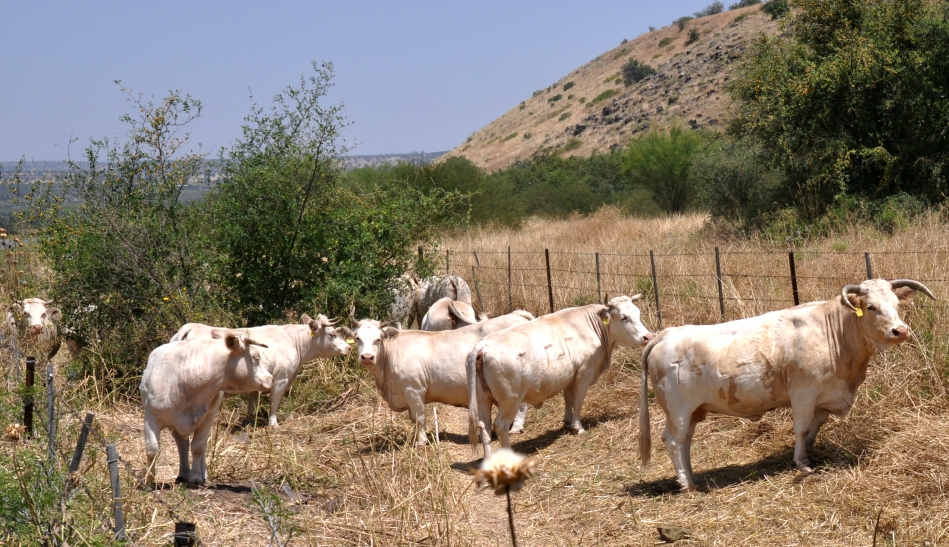
Cattle in Bashan, Israel. Photo ©Leon Mauldin.

The word kine as used in the KJV is old English; it is archaic plural for “cow.” The ESV renders the text, “Hear this word, you cows of Bashan, who are on the mountain of Samaria, who oppress the poor, who crush the needy, who say to your husbands, ‘Bring, that we may drink!'”

The women were not left in doubt as to the meaning of the imagery–they were behaving with no more concern for spiritual matters than a bunch of fat cows!

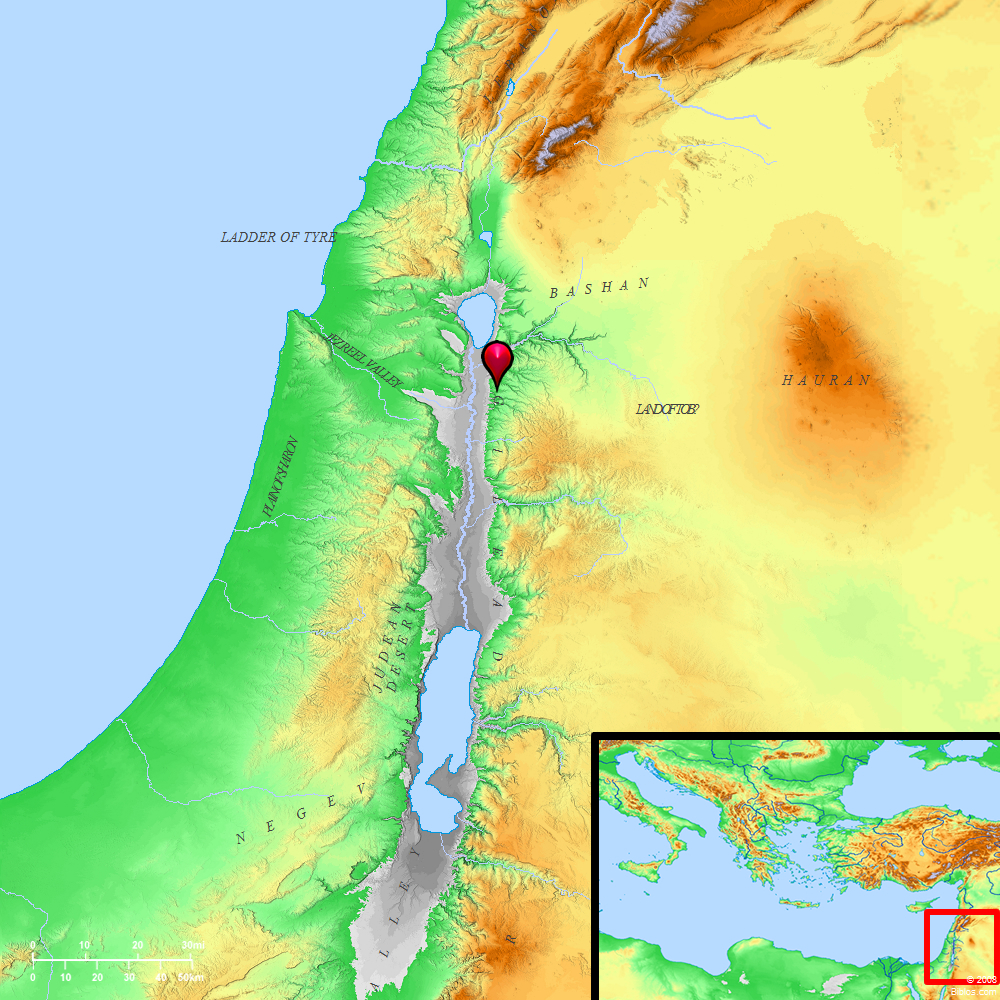
The background for Amos’ reference to cows of Bashan takes us back to Numbers 21, when Israel conquered the land of Og of Bashan, north and east of the Jordan (as well as the land of Sihon, to the south of Bashan). Then Numbers 32 tells how two and one half tribes (Reuben, Gad, and 1/2 tribe of Manasseh) asked that they might settle on the eastern side of the Jordan. That request was granted (conditioned upon the men of war helping with the conquest of Canaan). The reason given for the request: these lands “were ideal for cattle” (v.1, NET).

Land of Bashan, good for cattle. BibleAtlas.org.

The women Amos addressed did not live in Bashan, east of the Jordan. The text refers to their being in Samaria, which was the capital of Israel. But they were acting like cattle in that place which was so noted for its cattle.

Today I was in what was the OT land of Bashan when I photographed these cattle. I was put in mind of our text in Amos.

I do not know how the women in Israel responded to the preaching of Amos. We do know that the nation as a whole did not listen, and God would soon allow the Assyrians to destroy the northern kingdom. One can hope that at least some individuals may have responded appropriately and repented. Though they may have felt insulted, in reality Amos was their friend, their best friend.

“All Scripture is given by inspiration of God, and is profitable for doctrine, for reproof, for correction, for instruction in righteousness, that the man of God may be complete, thoroughly equipped for every good work” (2 Tim. 3:16,17).


Tel Lachish, where King Amaziah of Judah Was Killed

April 22, 2017

“From the time Amaziah turned from following the LORD, conspirators plotted against him in Jerusalem, so he fled to Lachish. But they sent assassins after him and they killed him there” (2 Chronicles 25:27, NET).

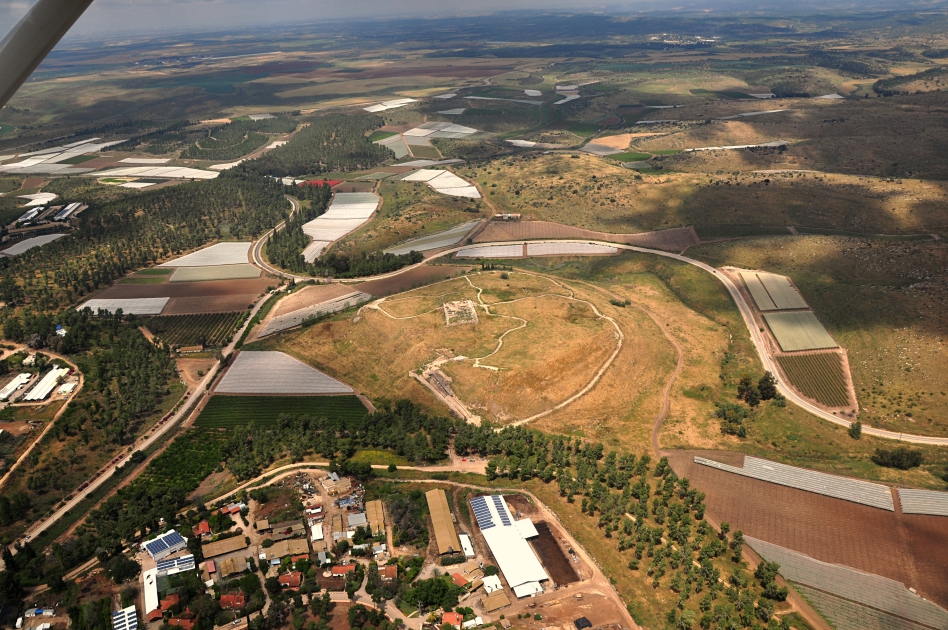
Tel Lachish at center. View is from the southwest. Photo ©Leon Mauldin.

Our photo gives the geographical setting for the biblical text, which tells of the assassination of one of Judah’s kings during the “Divided Kingdom” period. Amaziah reigned 796-767 BC. He is described by one author as “a mediocre king who suffered the consequences of his compromises” (Shepherds Notes, The Kings of Judah, p.79).

Later the city of Lachish would be one of 46 fortified cities captured by the Assyrian king Sennacherib, in 701 BC. His siege-mound formed for that invasion can still be seen at the southwest corner of tel Lachish.

Click photo for larger view.

We previously wrote about Lachish here and here.


At Rhegium, Italy, on the Way to Rome

April 3, 2017

Acts 28 narrates the Apostle Paul’s voyage to Rome, traveling as a prisoner. Having wintered at Malta due to a ship wreck, the journey continued: “We put in at Syracuse and stayed there three days. From there we cast off and arrived at Rhegium, and after one day a south wind sprang up and on the second day we came to Puteoli” (vv.12-13).

At Rhegium, Italy, looking across Strait of Messina to Sicily. Paul’s ship made a brief stop here. Photo by Leon Mauldin.

The Baker Encyclopedia of the Bible has this information on Rhegium:

Important Italian harbor visited by Paul in his journey to Rome (Acts 28:13). From Malta, Paul’s ship traveled north to the Sicilian capital of Syracuse; then in the absence of a south wind they may have tacked into the Strait of Messina, finding good harbor at Rhegium. Another south wind carried them from Rhegium to Puteoli in the Bay of Naples—the ship’s destination, since Puteoli was southern Italy’s chief port, receiving the great Alexandrian grain vessels.

The Strait of Messina was well known to every Roman navigator. Passage here was necessary in order to gain access to Italy’s west coast; but its obstacles were numerous. Obstructions, shallows, and the narrow width (c. seven miles from Rhegium to Messina) forced ships to stay at Rhegium until an adequate south wind arose.

The name “Rhegium” (modern Reggio or Reggio di Calabria) may have come from a Greek verb, meaning “to tear” or “rend.” Sicily, it seemed, had been “torn from the mainland” and Rhegium was the nearest Italian port. (Vol. 2, p. 1857).

Rhegium, on the “toe” of the “boot” of Italy, across from the island of Sicily. BibleAtlas.org.

Click images for larger view.


Valley of Beracah

March 24, 2017

Jehoshaphat (873-848 BC) was the fourth king of the southern kingdom of Judah during the Divided Kingdom period. His war with the combined forces of the Ammonites, Moabites and Edomites is described in 2 Chronicles 20. It was reported to the king that a great multitude was encamped at En-gedi (v.2), located on the western shore of the Dead Sea.

This good king prayed to God for deliverance (vv.4-13). God answered by a prophet named Jahaziel: “You will not need to fight in this battle. Stand firm, hold your position, and see the salvation of the LORD on your behalf, O Judah and Jerusalem. Do not be afraid and do not be dismayed. Tomorrow go out against them, and the LORD will be with you” (v.17, ESV).

Encouraged by this word, the text narrates what happened next: “And they rose early in the morning and went out into the wilderness of Tekoa. And when they went out, Jehoshaphat stood and said, ‘Hear me, Judah and inhabitants of Jerusalem! Believe in the LORD your God, and you will be established; believe his prophets, and you will succeed'” (v.20).

God overruled on Israel’s behalf:

And when they [Jehoshaphat and the people of Judah] began to sing and praise, the LORD set an ambush against the men of Ammon, Moab, and Mount Seir, who had come against Judah, so that they were routed. For the men of Ammon and Moab rose against the inhabitants of Mount Seir, devoting them to destruction, and when they had made an end of the inhabitants of Seir, they all helped to destroy one another (vv.22-23).

All that remained was for Israel to gather the spoil: “When Jehoshaphat and his people came to take their spoil, they found among them, in great numbers, goods, clothing, and precious things, which they took for themselves until they could carry no more. They were three days in taking the spoil, it was so much” (v.25).

The site where this occurred is known as the Valley of Beracah (meaning: Valley of Blessing).

Valley of Beracah, near Tekoa. Facing east toward the Dead Sea, and Edom & Moab. Photo ©Leon Mauldin.

The text reads, “On the fourth day they assembled in the Valley of Beracah, for there they blessed the LORD. Therefore the name of that place has been called the Valley of Beracah to this day” (v.26).

Photos such as this are helpful in visualizing the setting of the historical events narrated in Scripture. Click on photo for larger view.

Back in 2010 Ferrell Jenkins did a post on the Valley of Beracah. He and I visited this site in Dec. 2009.