Beth Guvrin at Mareshah, Israel

December 15, 2017

Beth Guvrin in Israel was a Roman city on the outskirts of biblical Maresha (see Josh. 15:44; Micah 1:15).

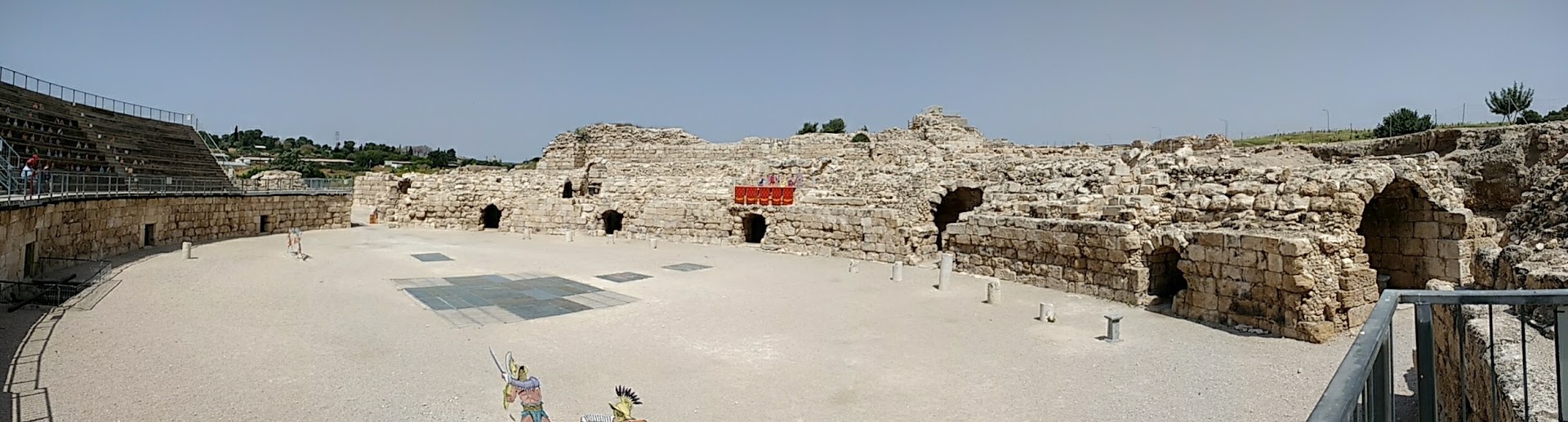
Emperor Septimus Severus turned Beth Guvrin into a major administrative center (ca. 200 AD). I took this photo of the amphitheater on April 27, 2017.

Panorama of amphitheater at Beth Guvrin. Photo by Leon Mauldin.

This amphitheater would have been used for animal and gladiator fights.

BTW: Often folks refer to theaters as “amphitheaters.” There is a difference: the amphitheater makes an oval shape while a theater only makes a half circle.

Click image for larger view.


Armageddon (Megiddo), where Good King Josiah Was Slain

May 19, 2017

Megiddo is mentioned several times in the Old Testament, and once in the NT (Rev. 16:16). In the Old Testament, nearing the close of the kingdom of Judah, good King Josiah (r. 640-609 BC) was mortally wounded there in battle by Pharaoh Neco of Egypt, who was en route to Carchemish to war against Babylon. The international highway, the Via Maris, connected Egypt to Mesopotamia, so Neco was on that route, which passed through the strategic site of Megiddo.

However, Josiah would not turn away from him, but disguised himself in order to make war with him; nor did he listen to the words of Neco from the mouth of God, but came to make war on the plain of Megiddo.  The archers shot King Josiah, and the king said to his servants, “Take me away, for I am badly wounded.”  So his servants took him out of the chariot and carried him in the second chariot which he had, and brought him to Jerusalem where he died and was buried in the tombs of his fathers. All Judah and Jerusalem mourned for Josiah.  Then Jeremiah chanted a lament for Josiah. And all the male and female singers speak about Josiah in their lamentations to this day. (2 Chron. 35:22-25, NAU).

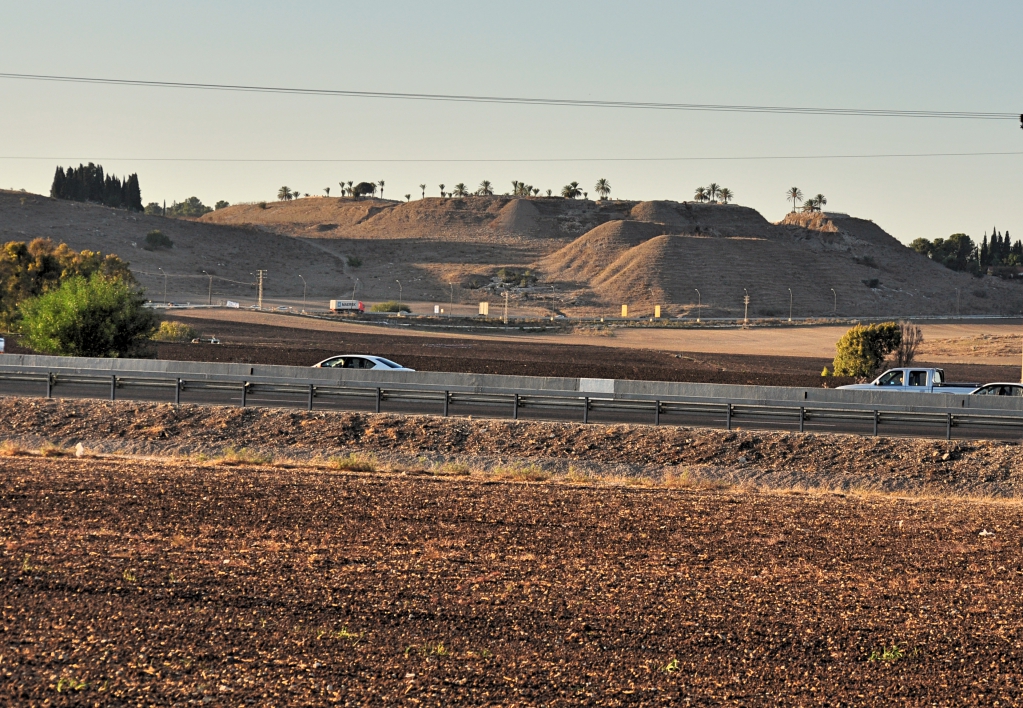
Tel Megiddo in distance. A portion of the “Plain of Megiddo” or the “Valley of Megiddo” is in foreground. Photo by Leon Mauldin.

One of the sites my group visited in November ’16 was Megiddo.

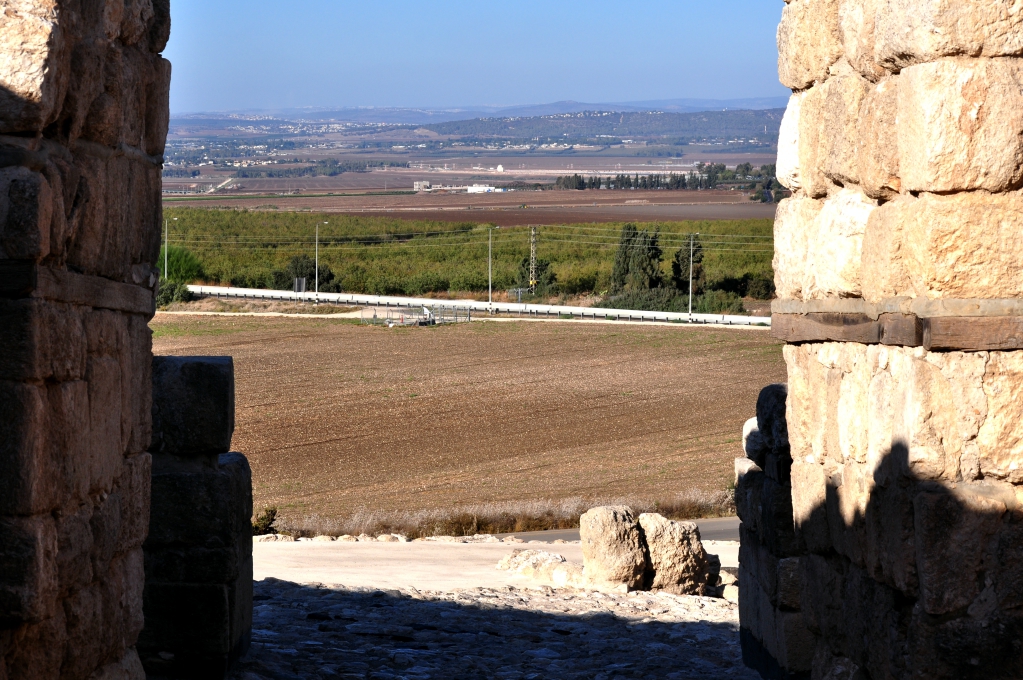
View from Megiddo through ancient gate looking to plain below. Photo by Leon Mauldin.

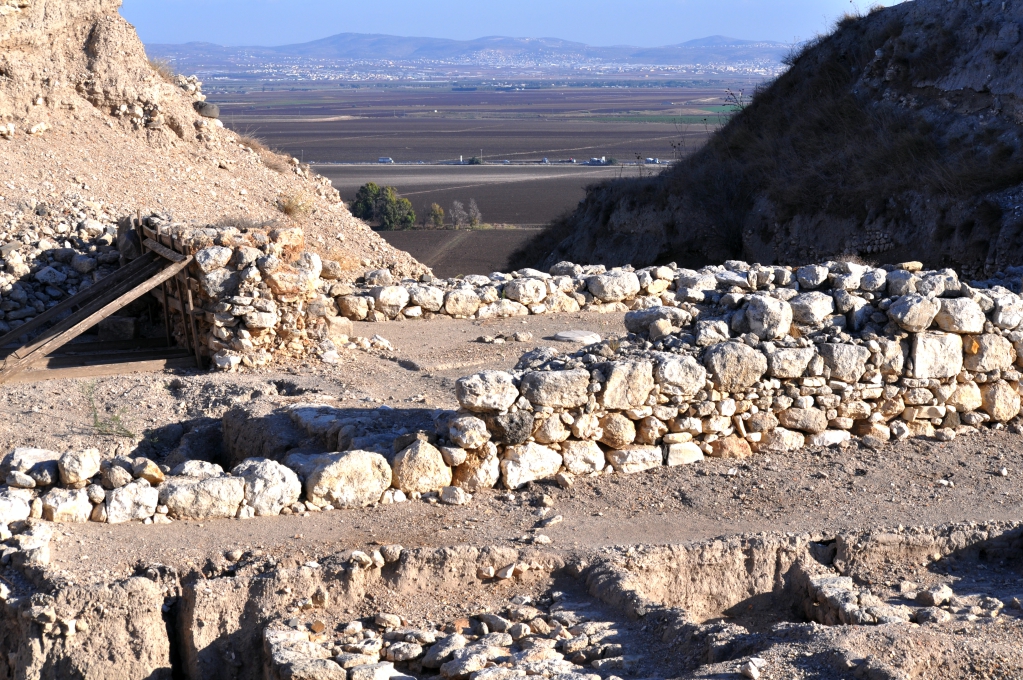
Here is a view of some of the archaeological excavations in foreground, with another view of the plain/valley below.

Excavations/view from Megiddo. Photo by Leon Mauldin.

These photos help provide the setting for the texts that mention biblical Megiddo.

I have made numerous posts on Megiddo; click here, here, herehere, here, and here.

Click images to enlarge.


Jerome of Bethlehem

May 18, 2017

We recently had the opportunity to visit Bethlehem, the town where Jesus was born. In addition to Bethlehem’s being important for that reason (Micah 5:2; Luke 2:1-20; Matt. 2:1-13), this location is also significant due to the work of Jerome (Eusebius Sophronius Hieronymus).

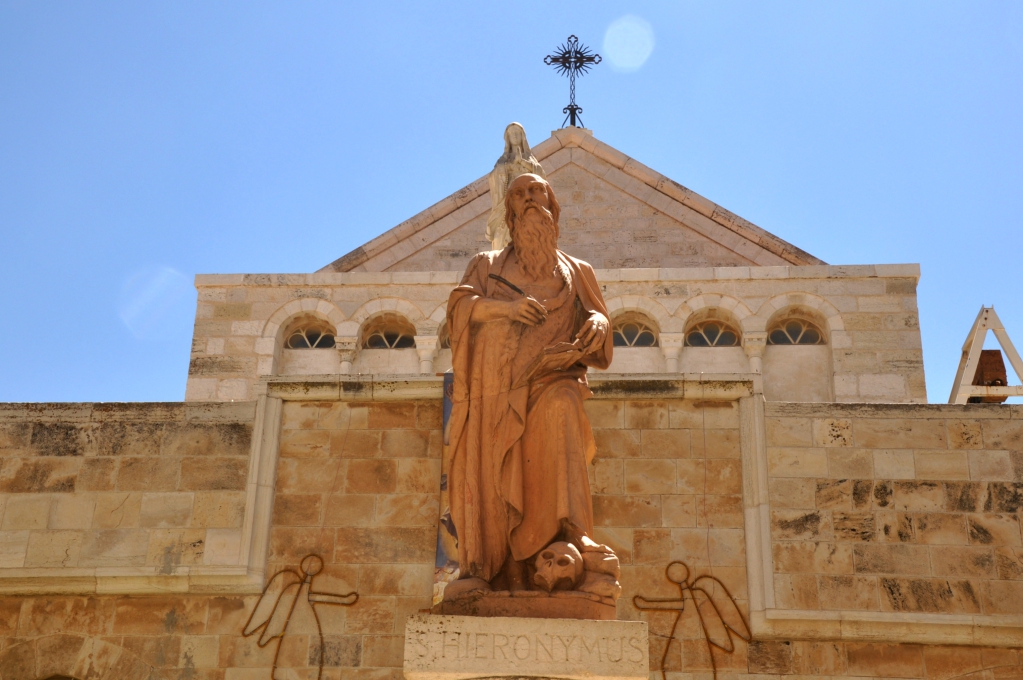
Statue of Jerome in Bethlehem, outside of the Church of St. Catherine. Photo by Leon Mauldin.

Jerome was born at Stridon, Dalmatia, ca. AD 347. He is especially noted for his translation of the Bible into Latin.

In 384 Jerome took up residence in Bethlehem, to be joined two years later by Paula and her daughter Eustochium. Together they made Bethlehem a great monastic centre; within this framework Jerome wrote prolifically, his most notable achievement being a new translation of the Old and New Testaments (the Vulgate) which remained the authoritative version of the Bible for Catholics until the C20. (Murphy-O’Connor, The Holy Land: An Oxford Archaeological Guide from Earliest Times to 1700, Oxford Archaeological Guides, p.233).

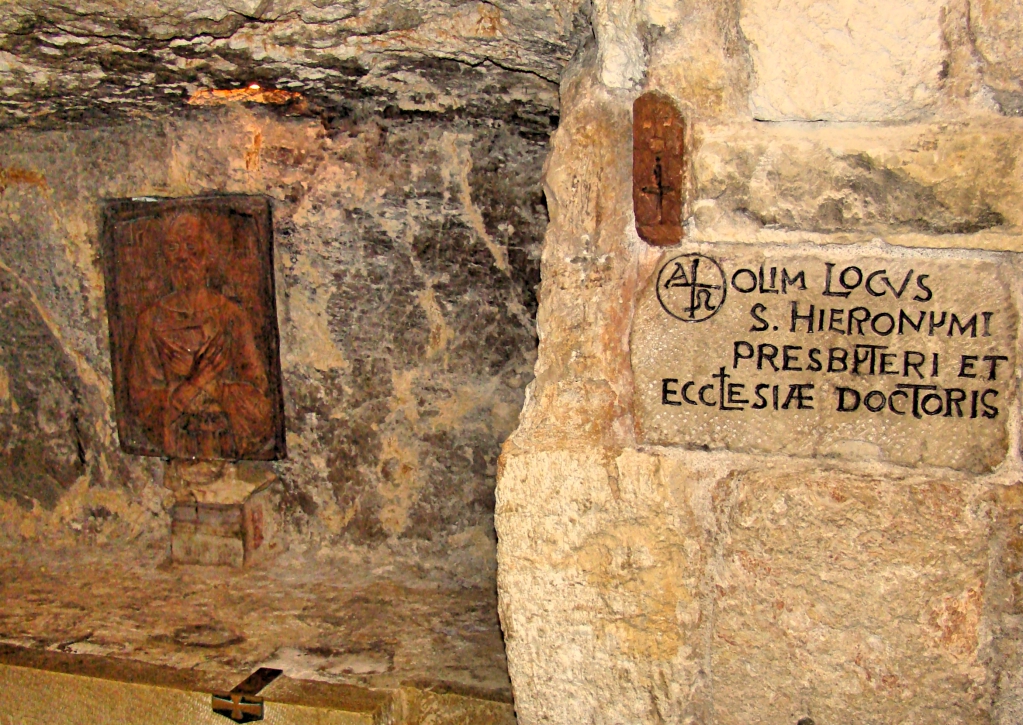
This cave is said to be Jerome’s study, where he did his monumental literary work.

Jerome’s study in Bethlehem. Photo by Leon Mauldin.

See Ferrell Jenkin’s article (Dec. ’08) on Jerome here.

Click on photos for larger view.


Herod’s Gate in Jerusalem

May 17, 2017

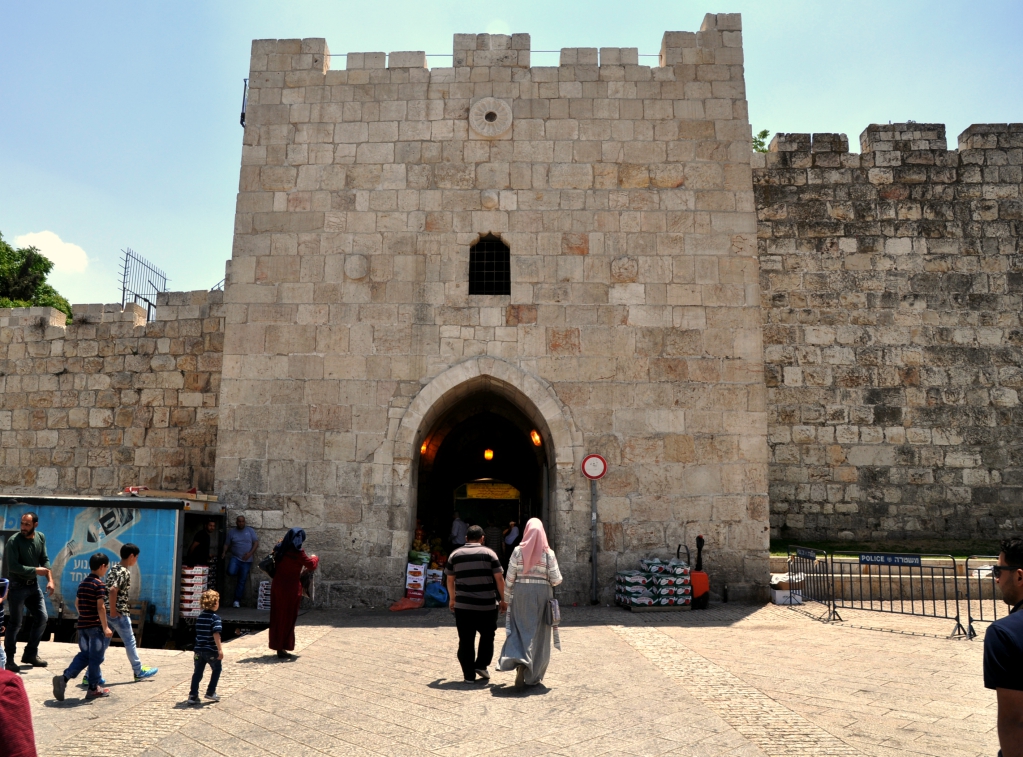
We continue to explore some of the gates of Jerusalem, as we share some our photos from our recent trip to Israel. Today’s post features Herod’s Gate.

Herod’s Gate in Jerusalem. Photo by Leon Mauldin.

Jerome Murphy-O’Connor writes:

The official name of this gate is Bab ez-Zahr, ‘the Flowered Gate’. It got its present name only in the C16 or C17 because pilgrims believed a Mamluk house inside near the Franciscan Monastery of the Flagellation to be the palace of Herod Antipas. The original entrance is in the east face of the tower. It was at this point that the Crusaders first established a bridgehead on the walls at noon on 15 July 1099. Just beside the west face of the first tower going towards Damascus Gate the channel of an aqueduct is marked by a series of irregular covering slabs. Pottery embedded in the plaster of the last repair show it to have been in use until the late C3AD or early C4. The ditch in which the present road runs must therefore be subsequent to this date, because it cuts the aqueduct. This suggests that the earliest wall on the present line at this point must be dated to the last years of Aelia Capitolina. Slightly further west the wall makes a curve inward and follows the rim of an ancient quarry which extended across the road into what is now the bus station; for details see SOLOMON’S QUARRIES (p. 162). The weight of the wall caused part of the roof of the quarry to cave in. The small walled section in the centre at ground level enshrines part of a sloping glacis of uncertain date. The wall of Herod Agrippa I (AD 41–4) linking Damascus Gate with the East Gate in the ECCE HOMO CONVENT (p. 35), must have turned south on the highest point to the west now occupied by the Spafford Hospital. (The Holy Land: An Oxford Archaeological Guide from Earliest Times to 1700, Oxford Archaeological Guides, p. 14).

We previously posted (in 2011) on Herod’s Gate here.

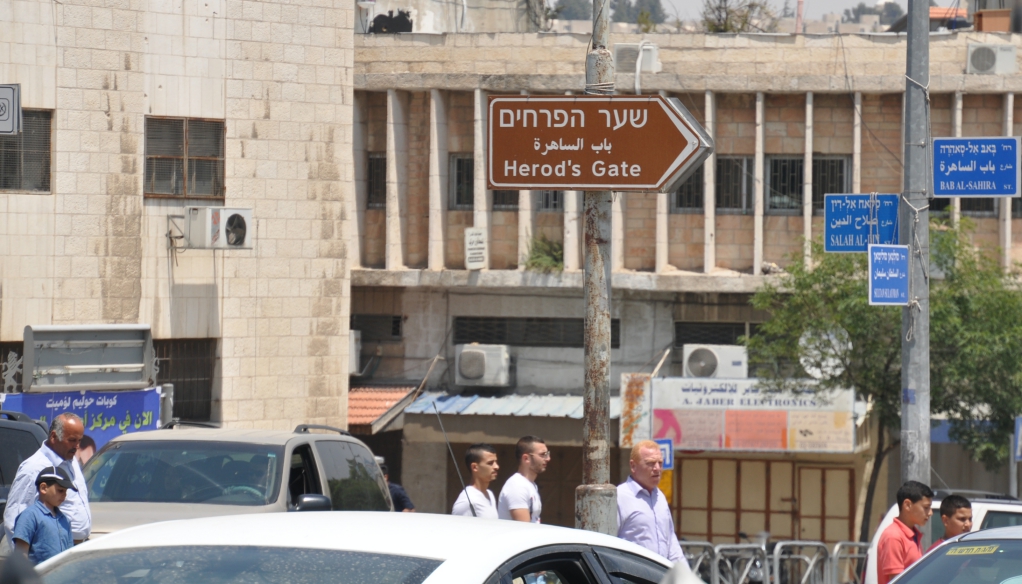
Sign pointing to Herod’s Gate. Photo by Leon Mauldin.

Click photo for larger view.


Making Friends in Jerusalem en route to Damascus Gate

May 16, 2017

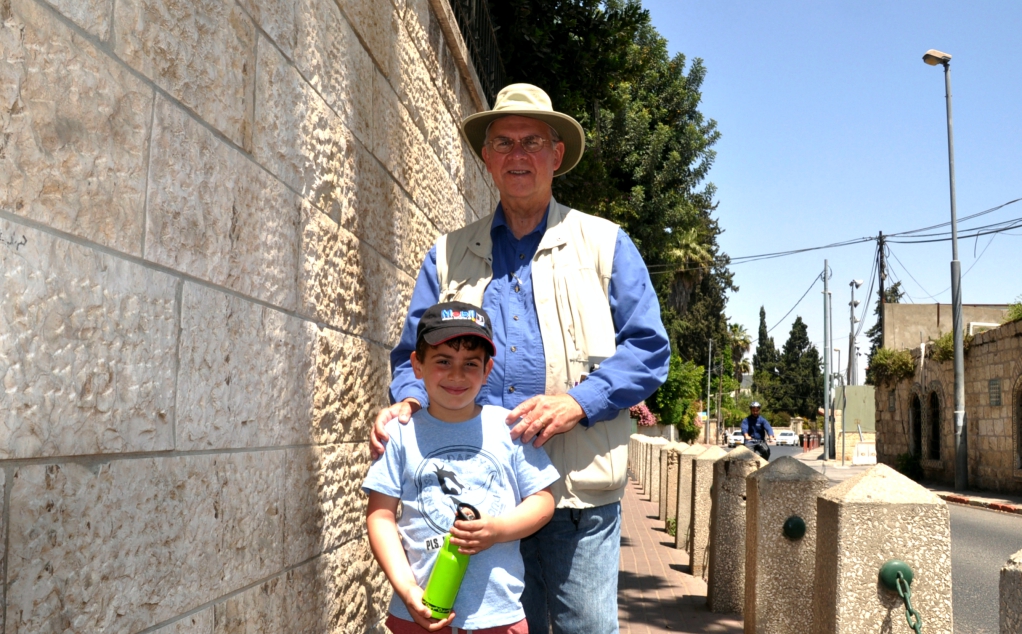
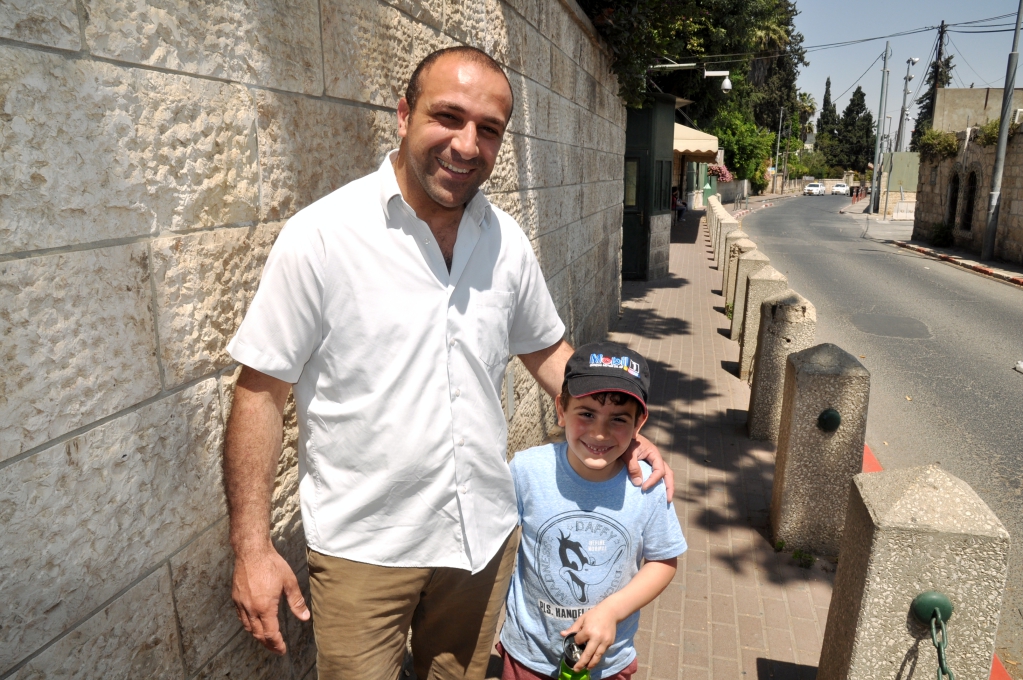
When traveling in the Bible lands I enjoy seeing family life there, parents with children engaging in various activities–often outdoors cooking, or playing, or just out walking. On my recent trip to Israel, this young man was walking with his Dad as I was making my way toward the Damascus Gate in Jerusalem. He was about the same age as one of my grandchildren.

A new friend in Jerusalem.

The two caught up with me from behind, and the Dad told me his son wanted to ask me where I was from. I answered him, “the United States,” and “Alabama.” A broad smile resulted. I asked permission to take his photo, and it was granted; one of me with my new friend and one of father and son.

Local father and son in Jerusalem, wanting to make my acquaintance. Photo by Leon Mauldin.

I gave the father my card with URL for this blog, and told him to check it out to see their photo.

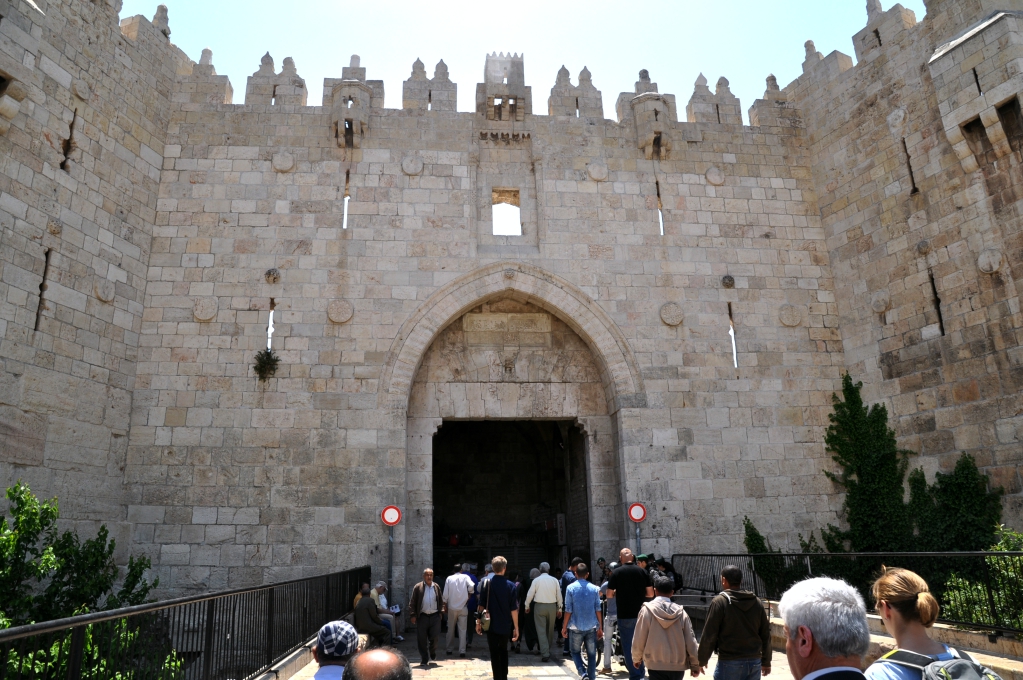
The Damascus Gate is located on the north side of Jerusalem, so named because this would be the direction going out of Jerusalem to Damascus, ca. 150 miles NNW. The Jews call this gate the Shechem Gate, and the Arabs call it Bab el-Amud.

Damascus Gate in Jerusalem. Photo by Leon Mauldin.

This entrance gate along the present north wall dramatically accents the spot that has been the main north entrance to Jerusalem for almost two millennia. R. W. Hamilton’s sounding here in 1937 and Basil Hennessey’s excavations in the 1960s; have revealed, below the modern entrance, layer upon layer of earlier gateways, reaching back through Arab, Crusader and Byzantine constructions to Roman Age foundations. The earliest certain construction here dates to Aelia Capitolina, the second to fourth-century C.E. city of Hadrian, but both Hamilton and Hennessey felt they found evidence that Hadrian’s gateway was built on foundations that went back to the Second Temple period. BAS Biblical World in Pictures. (2003).

Click photos for larger view.


What Time Is It?

May 4, 2017

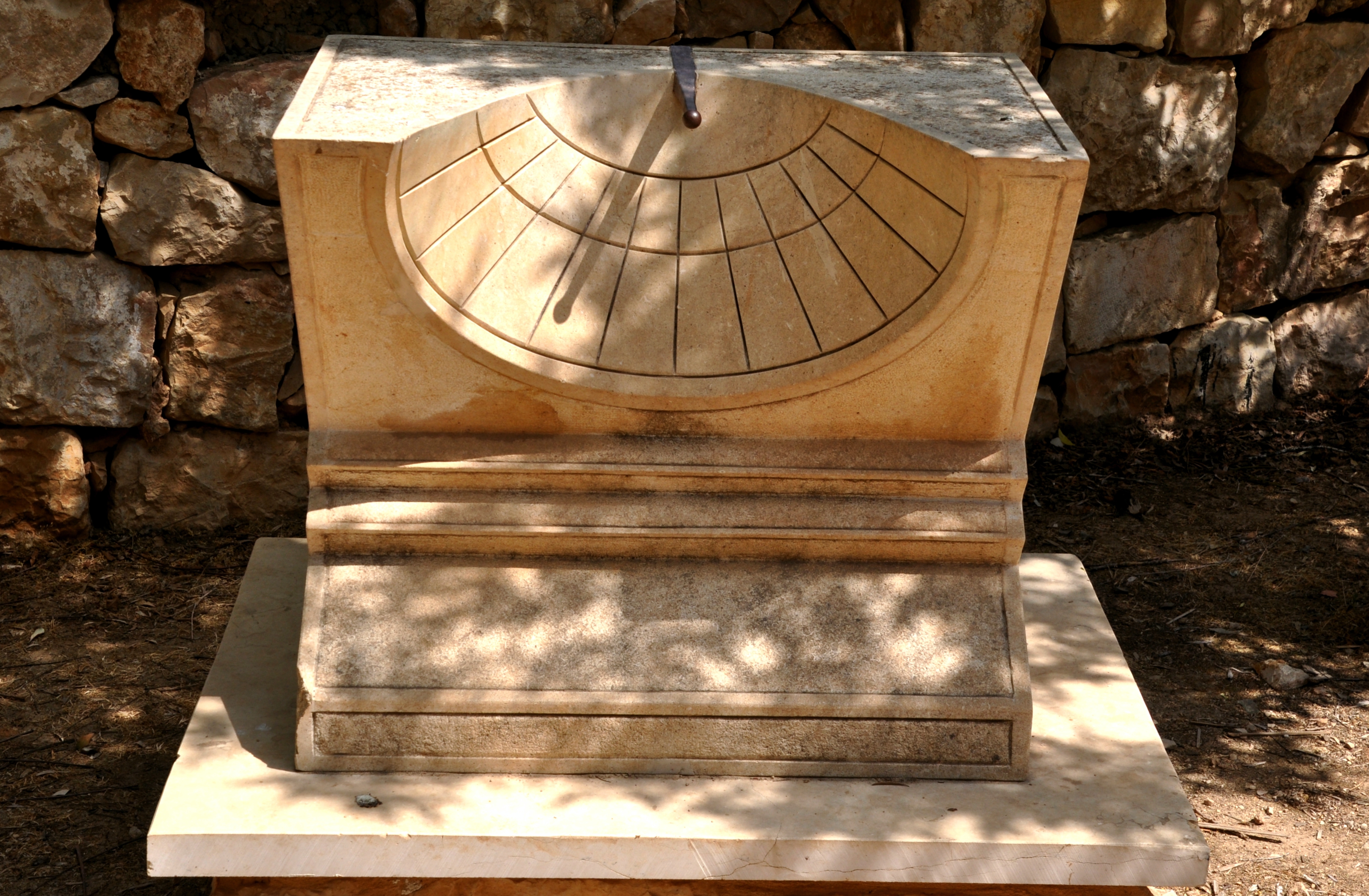
Today we were able to visit Ein Yael, Philip’s Spring, located on the ancient Jerusalem-Gaza route. A number of interesting artifacts were on the site, including this sundial.

Sundial at Ein Yael. Photo by Leon Mauldin.

This helps illustrate an event in the life of King Hezekiah of Judah, one of Judah’s best kings. He faithfully led the nation in very difficult times. Then he became sick and was near death. God sent the prophet Isaiah to Hezekiah with the message, “Set your house in order, for you shall die and not live” (Isaiah 38:1). Hezekiah fervently prayed to the Lord, his prayer was heard, and the Lord promised to add 15 years to his life. As a sign to confirm this promise, God said, “Behold, I will bring the shadow on the sundial, which has gone down with the sun on the sundial of Ahaz, ten degrees backward” (Isa. 38:7,8, NKJV).

Some translations render the Hebrew term maalah as “stairway” (see NAS, CSB). The NET Bible notes, “These steps probably functioned as a type of sundial.”

Whether the term means “steps” or “sundial,” certainly what is under consideration is a means of telling time by the moving shadow cast by the sun. The miraculous sign was that the shadow would return, it would go backward by 10 “steps” or “degrees.”

Whether what is intended in Isaiah 38 is this type of sundial, or another system (steps, stairway) is meant, the principle is the same. God miraculously returned the shadow to confirm to Hezekiah that He would extend his life as He had promised.

Click image for larger view.


Jerusalem’s Temple Mount

May 3, 2017

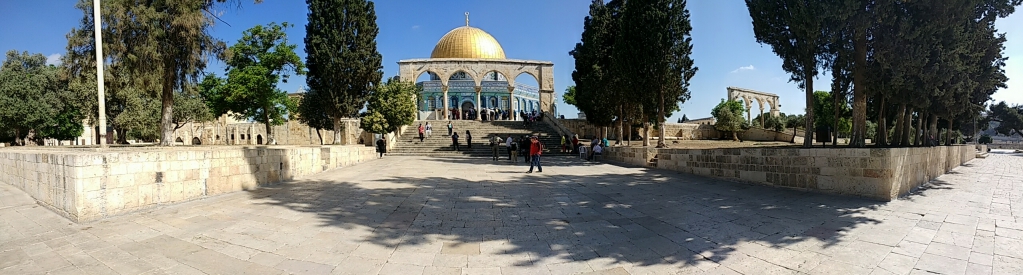
Today we had opportunity to visit the temple mount in Jerusalem. This is a wide-angle shot I made this morning:

Temple Mount in Jerusalem. Photo by Leon Mauldin.

The very recognizable Dome of the Rock at center approximates the site of Solomon’s temple, as well as the 2nd temple, built after the return from Babylonian Captivity and vastly renovated by Herod the Great.

This area is known as Mt. Moriah. This was the location where Abraham took Isaac in obedience to God’s command to offer him as a sacrifice, though He stopped Abraham prior to the actual event (Gen. 22:1-13). Years later, when Solomon built the temple, the Bible says, “Then Solomon began to build the house of the LORD in Jerusalem on Mount Moriah . . .” (2 Chron. 3:1, ESV).

The temple mount consists of about 36 acres. When the New Testament speaks of Jesus teaching in the temple, or of the early church meeting in the temple, those texts are not referring to the naos (holy place/most holy place) into which only the priests/Levites could enter; the most holy place only the high priest could enter, and that only once per year on the Day of Atonement. Rather, reference is made to the hieron, the greater temple area, consisting of its many courts and colonnades, etc.

Click image for larger view.


Hippos, a City of the Decapolis

May 1, 2017

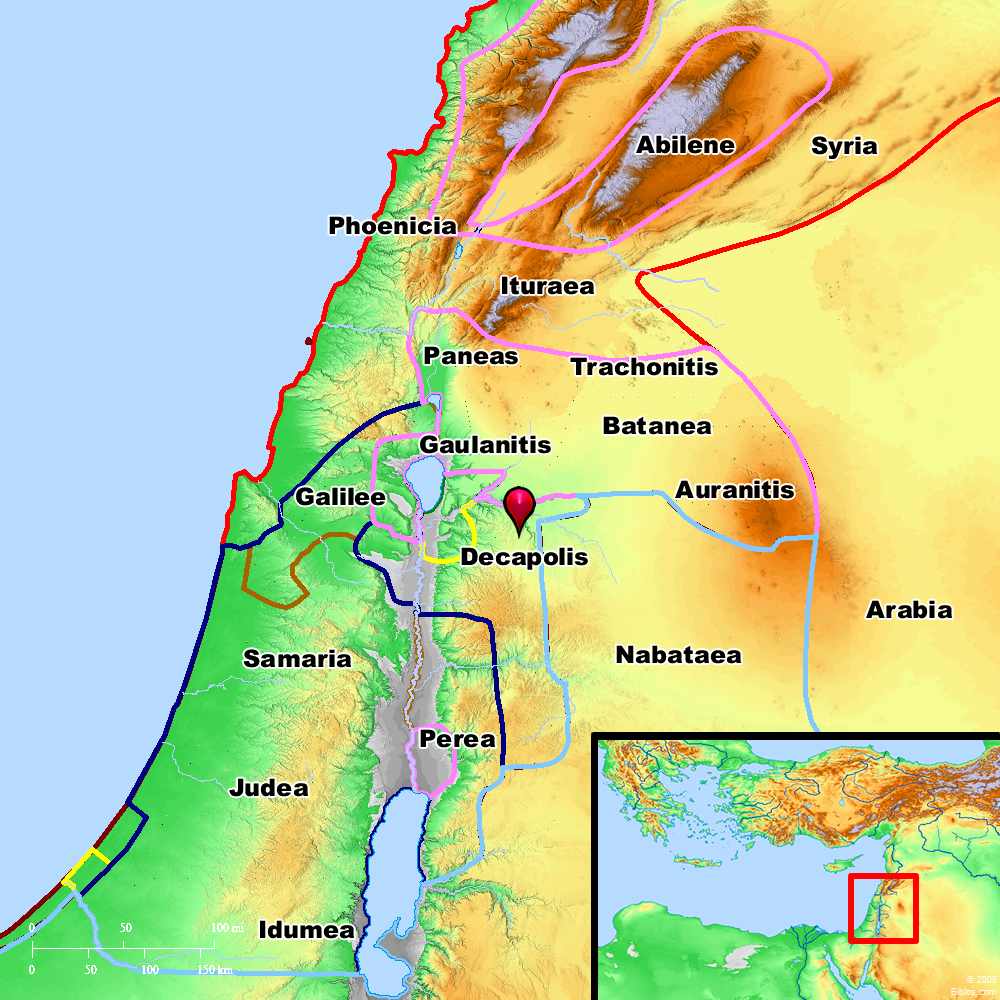
Matthew tells us that during Jesus’ Galilean Ministry, “great crowds followed him from Galilee and the Decapolis, and from Jerusalem and Judea, and from beyond the Jordan (4:25, ESV).

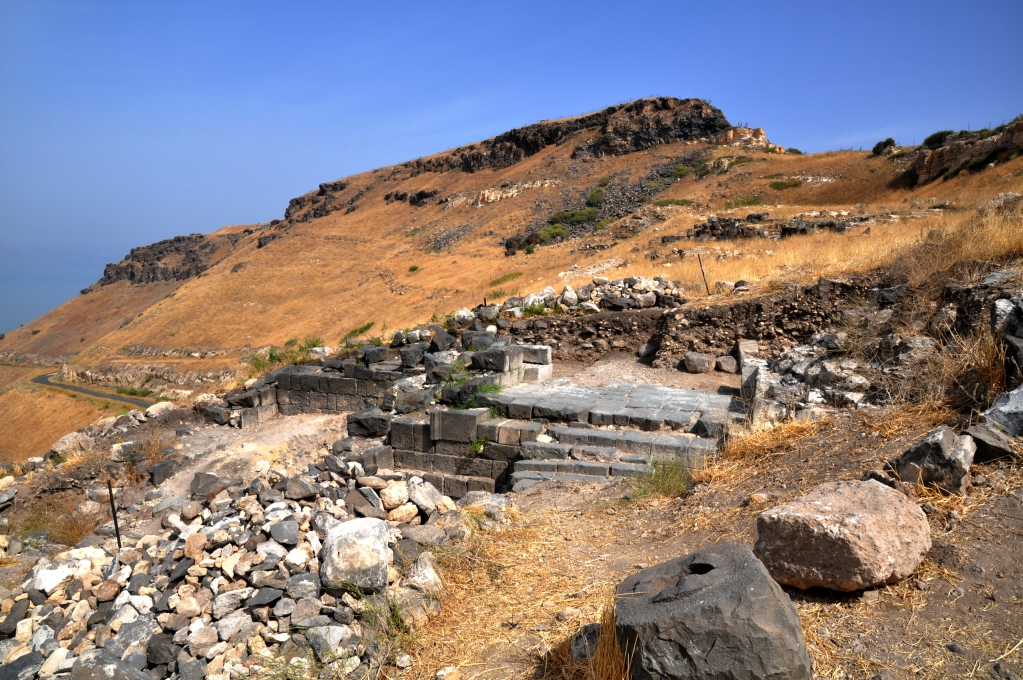
I had the opportunity today to visit Hippos, one of the ten cities of the Decapolis.

Hippos, one of the cities of the Decapolis. Photo by Leon Mauldin.

In the foreground you can see the ancient ruins of a temple. If you look carefully to the left center you can get a glimpse of the Sea of Galilee.

Though Jesus would later go to the Decapolis (Mark 5, Mark 7), the text in Matthew is saying that people from all the areas listed, including the Decapolis, traveled to Galilee to see and hear Jesus when He was engaged in the Galilean Ministry.

The cities of the Decapolis are ordinarily listed as follows:

  1. Gerasa (Jerash) in Jordan.
  2. Scythopolis (Beth-Shean) in Israel, the only city west of the Jordan River.
  3. Hippos (or Sussita) in Israel (Golan Heights).
  4. Gadara (Umm Qais) in Jordan.
  5. Pella (West of Irbid) in Jordan.
  6. Philadelphia, modern-day Amman, the capital of Jordan.
  7. Capitolias, also Dion, today Beit Ras in Jordan.
  8. Canatha (Qanawat) in Syria.
  9. Raphana in Jordan.
  10. Damascus, the capital of modern Syria.

The city of Hippos (Sussita) was the central city of the Golan during the Hellenistic and Roman/Byzantine periods. It is located on a diamond (or horse) shaped mountain which rises 350M above the Sea of Galilee. Recent excavations revealed the impressive plan and structures of the city. During the Byzantine period there were eight churches, indicating its importance for Christians. The city was devastated by a massive earthquake in 749 AD which left it in ruins since then. (http://www.biblewalks.com/Sites/Hippos.html)

The Decapolis. Ten cities given autonomy by Rome. BibleAtlas.org.

Click image for larger view.


“Ye Kine of Bashan” (Amos 4:1)

April 29, 2017

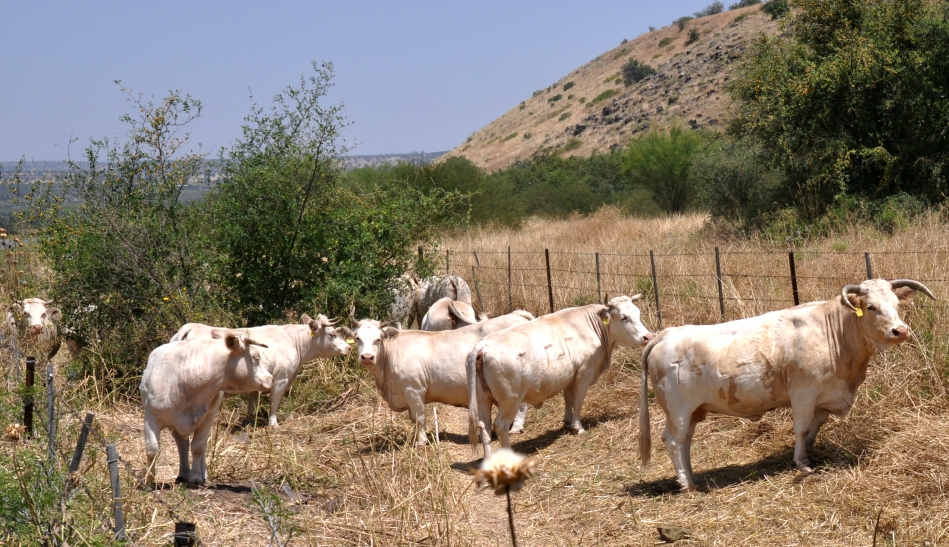
The fearless prophet Amos was sent by Yahweh to the northern kingdom of Israel in the days of the Divided Kingdom. He cried out against the idolatry there. In this prosperous (albeit short-lived) time when Jeroboam II reigned (8th century BC), Amos also rebuked the luxury-loving women in Israel who cared nothing about God and His will: “Hear this word, ye kine of Bashan, that are in the mountain of Samaria, which oppress the poor, which crush the needy, which say to their masters, Bring, and let us drink.” (Amos 4:1, KJV).
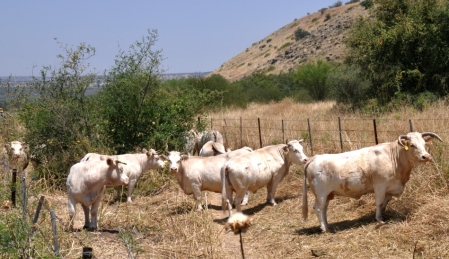
Cattle in Bashan, Israel. Photo ©Leon Mauldin.

The word kine as used in the KJV is old English; it is archaic plural for “cow.” The ESV renders the text, “Hear this word, you cows of Bashan, who are on the mountain of Samaria, who oppress the poor, who crush the needy, who say to your husbands, ‘Bring, that we may drink!'”

The women were not left in doubt as to the meaning of the imagery–they were behaving with no more concern for spiritual matters than a bunch of fat cows!

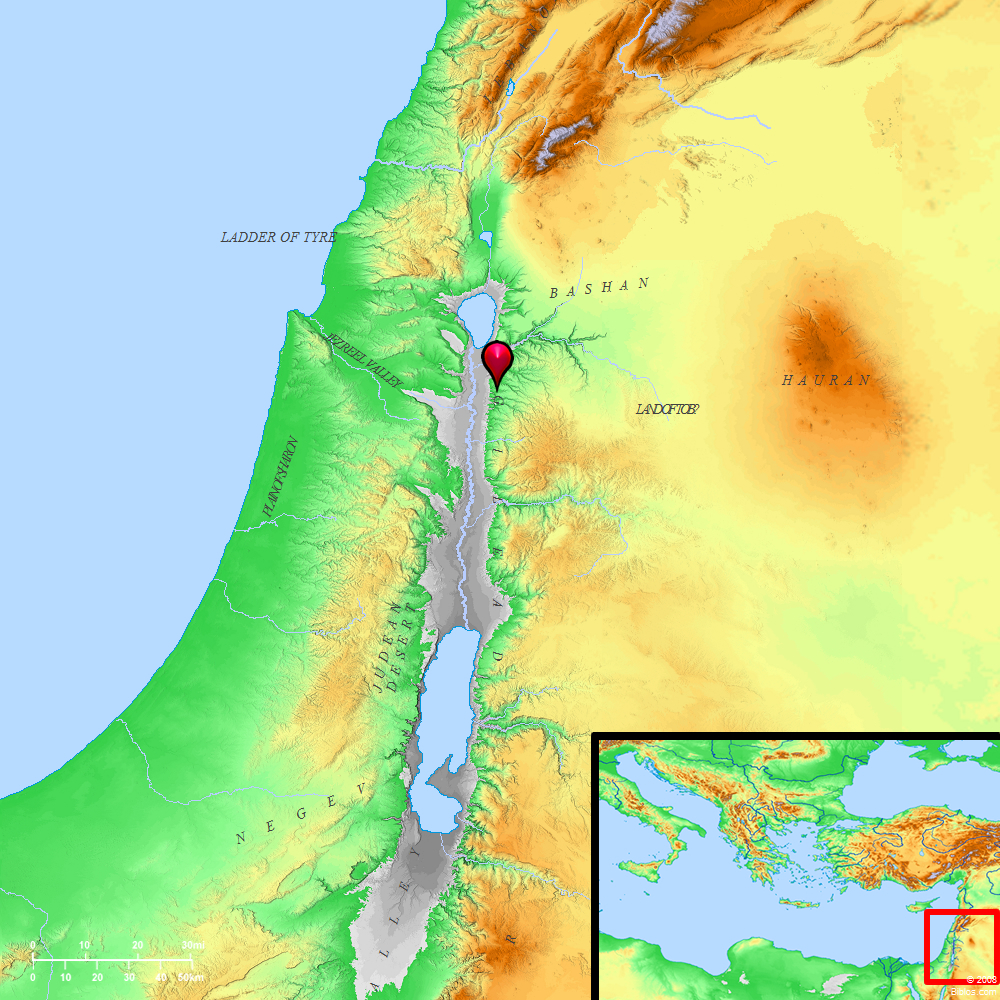
The background for Amos’ reference to cows of Bashan takes us back to Numbers 21, when Israel conquered the land of Og of Bashan, north and east of the Jordan (as well as the land of Sihon, to the south of Bashan). Then Numbers 32 tells how two and one half tribes (Reuben, Gad, and 1/2 tribe of Manasseh) asked that they might settle on the eastern side of the Jordan. That request was granted (conditioned upon the men of war helping with the conquest of Canaan). The reason given for the request: these lands “were ideal for cattle” (v.1, NET).
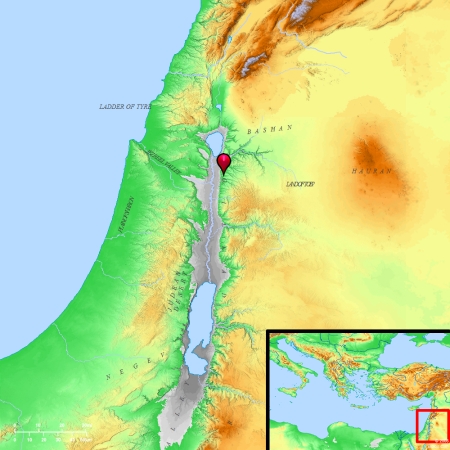
Land of Bashan, good for cattle. BibleAtlas.org.

The women Amos addressed did not live in Bashan, east of the Jordan. The text refers to their being in Samaria, which was the capital of Israel. But they were acting like cattle in that place which was so noted for its cattle.

Today I was in what was the OT land of Bashan when I photographed these cattle. I was put in mind of our text in Amos.

I do not know how the women in Israel responded to the preaching of Amos. We do know that the nation as a whole did not listen, and God would soon allow the Assyrians to destroy the northern kingdom. One can hope that at least some individuals may have responded appropriately and repented. Though they may have felt insulted, in reality Amos was their friend, their best friend.

“All Scripture is given by inspiration of God, and is profitable for doctrine, for reproof, for correction, for instruction in righteousness, that the man of God may be complete, thoroughly equipped for every good work” (2 Tim. 3:16,17).

The Jordan River

April 28, 2017

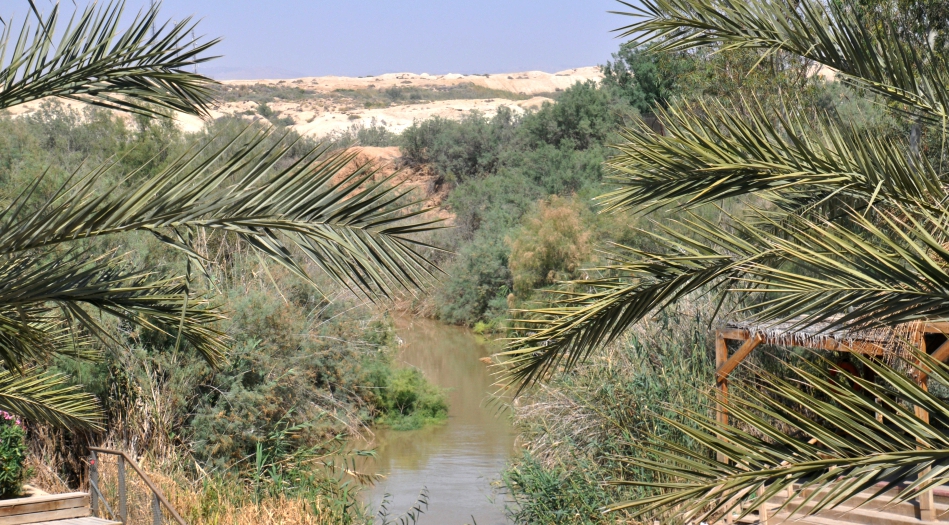
Today after leaving Jerusalem I made a stop at the Jordan before heading up the Rift Valley for the Galilee. This location is thought by many to be the area in the Jordan River where Jesus was baptized by John.

Jordan River. Traditional location of Jesus’ baptism. Photo by Leon Mauldin.

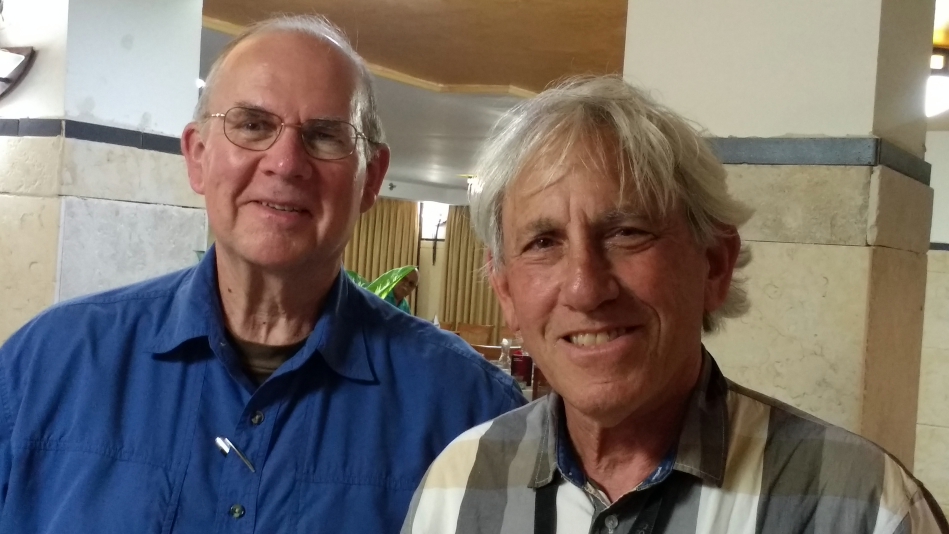
We had a safe late afternoon arrival at Tiberias, situated on the Sea of Galilee. While having dinner, Zachary Shavin, who is presently directing a tour, came by to visit a while and “talk shop.” Zack served as our guide for my Israel tour in November. His website is www.landofisraeltours.com

Leon Mauldin and Zachary Shavin.

To view my previous posts about the Jordan River, go up to search box and enter “Jordan.”

Click images for larger view.