Jerusalem’s Golden Gate

July 7, 2011

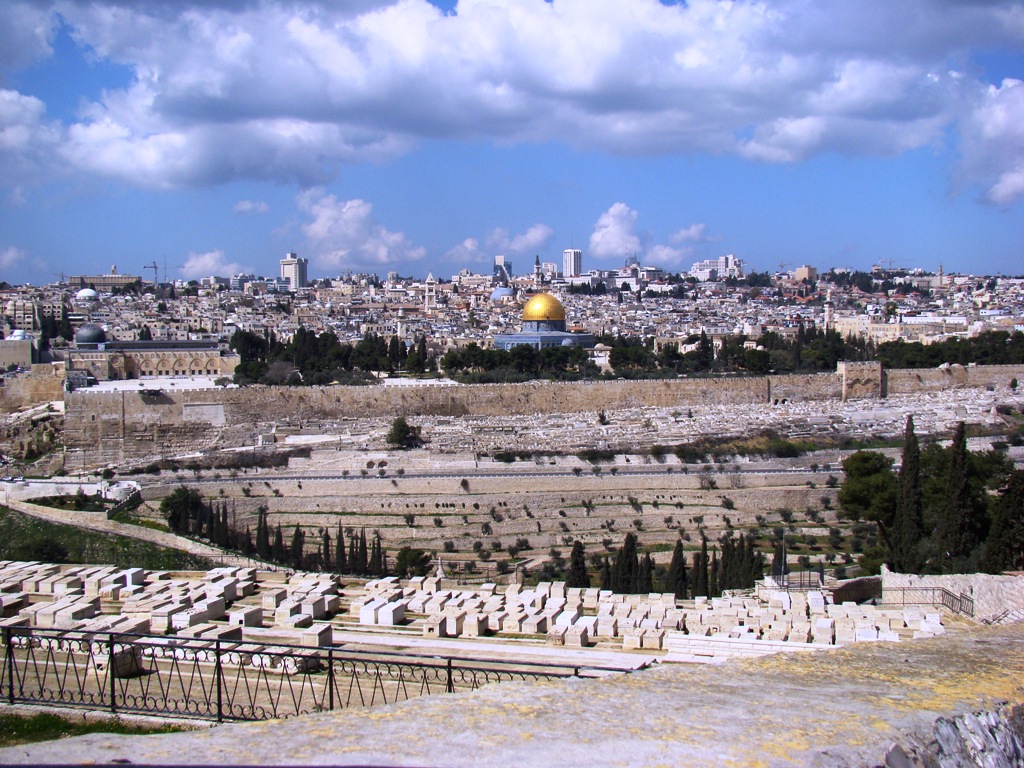
The golden gate is located in the middle of Jerusalem’s eastern wall. In photo below follow the wall to your right, and you will see the sealed gate.

Jerusalem's Eastern Wall. Golden Gate is on your right. Photo ©Leon Mauldin.

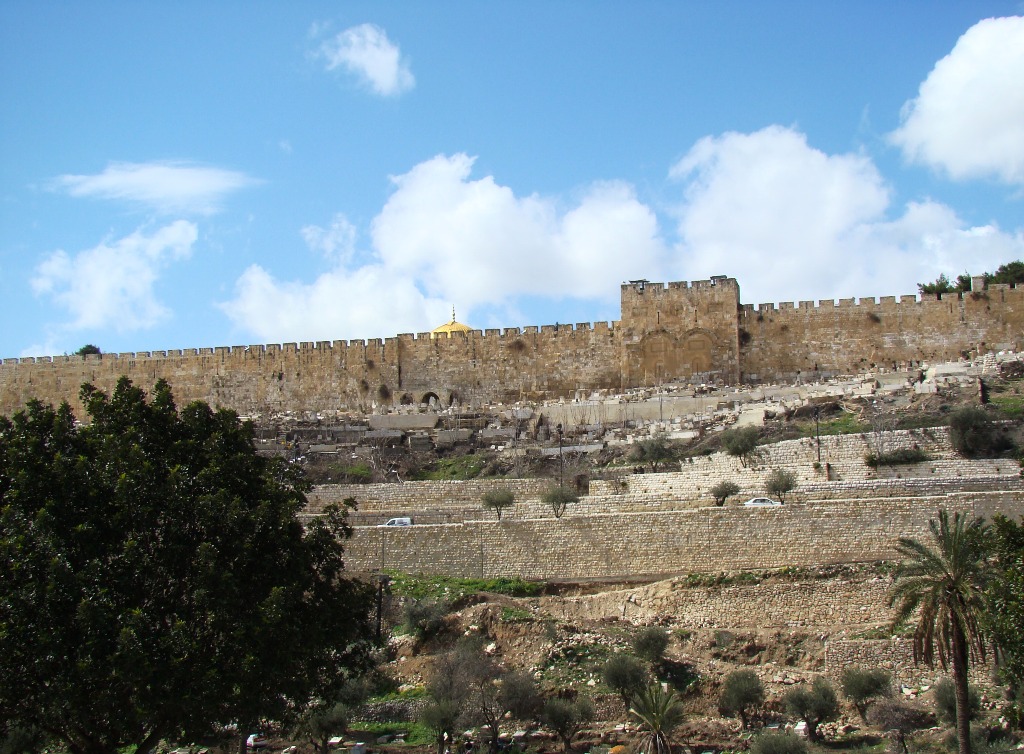
The gate was built ca. AD 640, on top of the ruins of an older gate. Some of the nearby stones in this portion of the wall date back to Nehemiah’s day. Photo below shows the view from the Kidron Valley, with Gethsemane/Mt. of Olives to our back.

Golden Gate in Jerusalem. View looking up from Kidron Valley. Photo ©Leon Mauldin.

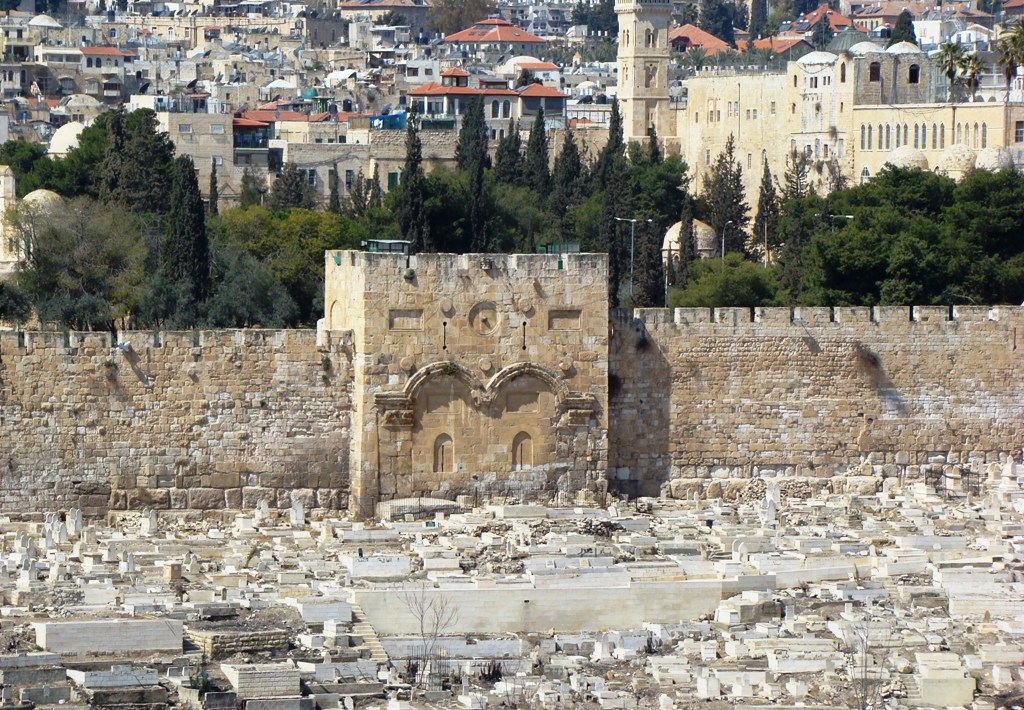
Finally, here is a close up view:

Golden Gate closeup. Photo ©Leon Mauldin

Why was the gate sealed? It was sealed in 1541 during the reign of Ottoman Sultan Suleiman I. The reasoning being that it was believed that the Messiah would enter Jerusalem through that gate; therefore it was sealed off to prevent His having access. Further, some Arabs have dug graves in the area immediately in front of the gate to desecrate the spot and thus render it as unholy for the Messiah’s approach.

Our observations:

1. If Jesus is Almighty God (and He is) there is no amount of bricks and mortar which can prevent His going anywhere that it is His will to go.

2. I believe the tradition that the Messiah will enter through the wall is based on misunderstanding of Scripture. When Jesus returns He will return as Judge. The earth and the works therein will be destroyed (2 Pet. 3). He will receive the saved into heaven, and the lost will be banished from His presence. He is presently reigning as King, and has done so since Pentecost of Acts 2 (see v. 36).

Click on images for higher resolution.


The Biblical Winepress

June 28, 2011

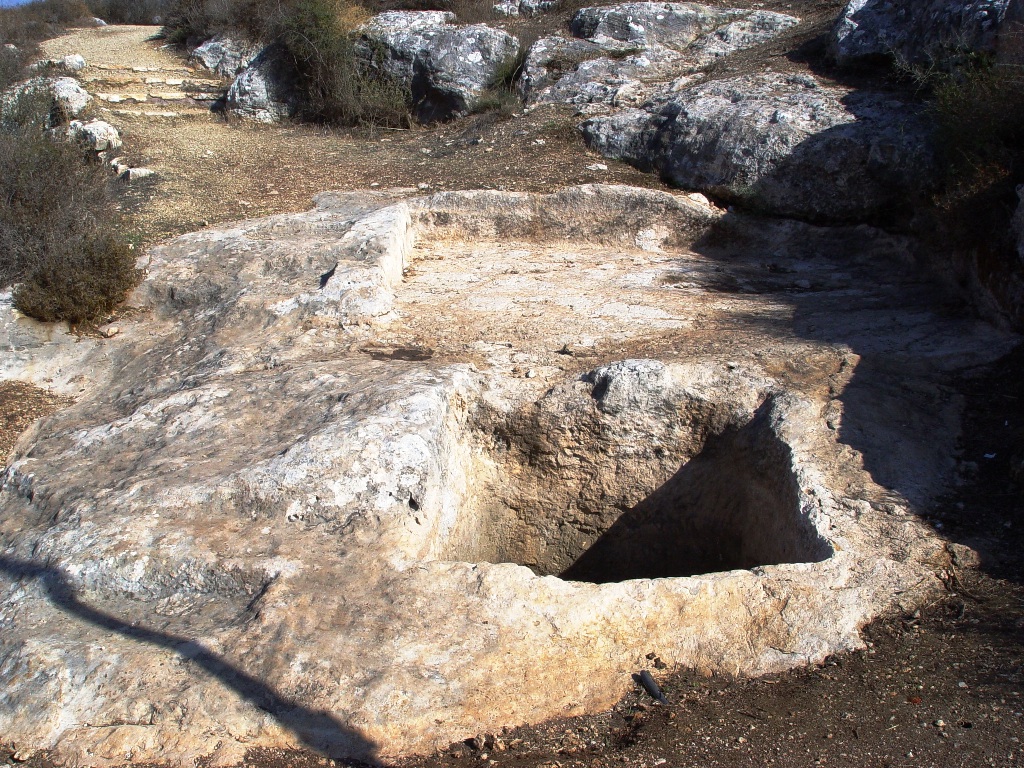
One of our readers asked about either artwork or archaeological dig of a winepress in order to help visualize the situation described in the account of Gideon: “The LORD’s angelic messenger came and sat down under the oak tree in Ophrah owned by Joash the Abiezrite. He arrived while Joash’s son Gideon was threshing wheat in a winepress so he could hide it from the Midianites” (Judges 6:11, NET).

At Neot Kedumim there is a good example of a biblical winepress.

A Winepress at Neot Kedumim. Photo ©Leon Mauldin.

Neot Kedumim, the Biblical Landscape Reserve in Israel, is located halfway between Jerusalem and Tel Aviv. This unique recreation of the physical setting of the Bible in all its depth and detail allows visitors to see life as it was lived by our ancestors 3,000 years ago. More than a “garden” showing various plants, Neot Kedumim embodies the panorama and power of the landscapes which shaped the values of the Bible and provided the rich vocabulary for expressing those values. (http://www.neot-kedumim.org.il/)

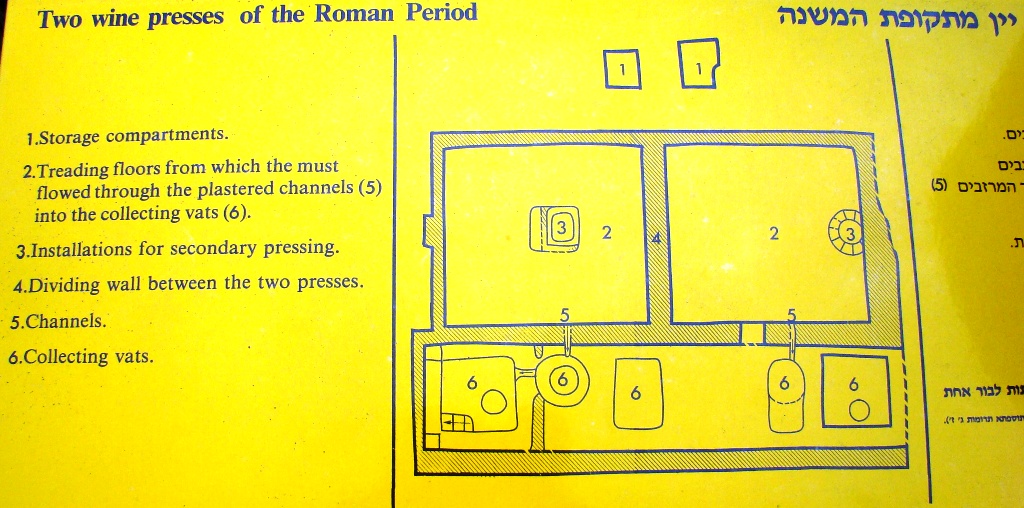
There is also a winepress at Tel Qasile, which dates back to Roman times. Here is a diagram:

Diagram for winepress at Tel Qasile. Photo ©Leon Mauldin.

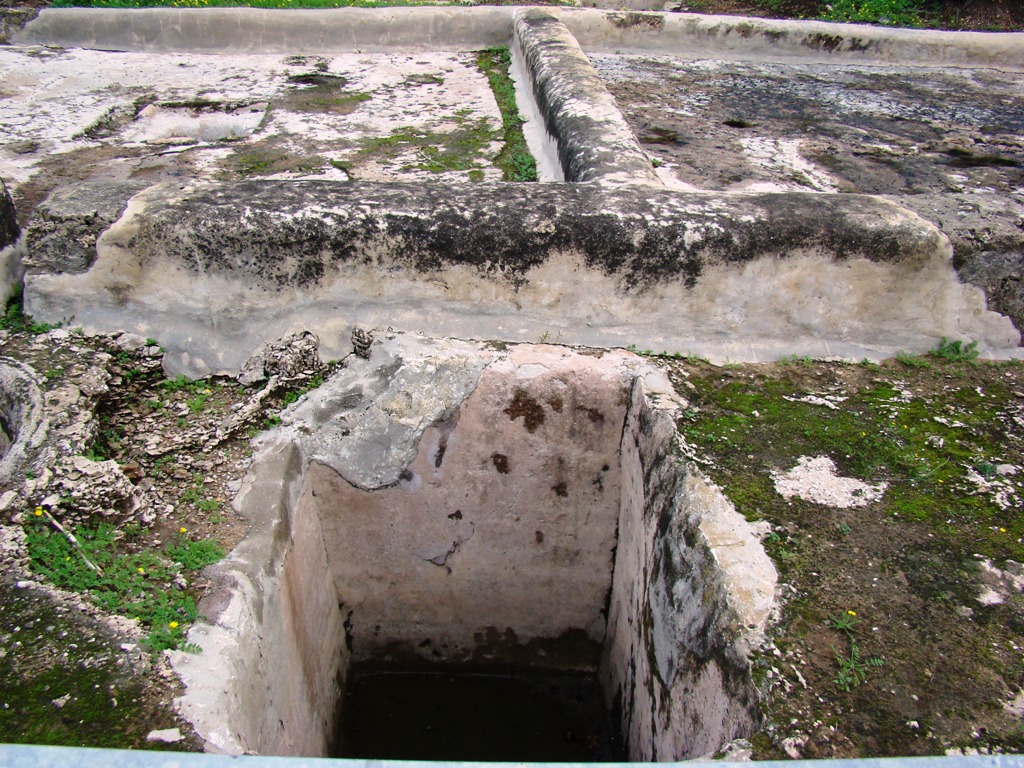
Here is a photo of the winepress:

Winepress at Tel Qasile. Dates back to Roman times. Photo ©Leon Mauldin.

Though this would be much later than the period of the Judges it is still helpful for illustration purposes.

Click on images for larger view.


Sinai Wilderness

June 22, 2011

The inspired writer of the New Testament book of Hebrews calls that letter “a word of exhortation” (13:22). Hebrew Christians were tiring of standing against opposition to their faith, and were in danger of leaving their commitment to Christ.

The approach in chapter 3 is to remind them of the children of God under the former dispensation, and how they had allowed great opportunities to enjoy the promises of God slip right through their hands:

12 See to it, brothers and sisters, that none of you has an evil, unbelieving heart that forsakes the living God. 13 But exhort one another each day, as long as it is called “Today,” that none of you may become hardened by sin’s deception. 14 For we have become partners with Christ, if in fact we hold our initial confidence firm until the end. 15 As it says, “Oh, that today you would listen as he speaks! Do not harden your hearts as in the rebellion.” 16 For which ones heard and rebelled? Was it not all who came out of Egypt under Moses’ leadership? 17 And against whom was God provoked for forty years? Was it not those who sinned, whose dead bodies fell in the wilderness? 18 And to whom did he swear they would never enter into his rest, except those who were disobedient? 19 So we see that they could not enter because of unbelief (Heb. 3:12-19, NET).

We would do well to remember that the warnings of God are always given for good reason.

When the writer spoke of the Israelites who left Egypt under Moses’ leadership only to rebel against God and refuse to obey, he said their “dead bodies fell in the wilderness.” This would be a reference to the wilderness of Sinai.

Sinai Wilderness. Photo ©Leon Mauldin.

Photos such as this give the setting of some of the territory Israel would have occupied during that period of 40 years when God was waiting for that unbelieving generation to die.

When you see palm trees such as these it is an indication that there is water.

Sinai Wilderness with Palm Trees. Photo ©Leon Mauldin.

Click on images for larger view.


David’s Mighty Men

June 14, 2011

It would seem that much of the material in 2 Sam. 23:8ff. is “appendix” kind of information, supplemental to the narrative that has preceded it. v. 13 reads, “Then three of the thirty chief men went down at harvest time and came to David at the cave of Adullam. And the troop of Philistines encamped in the Valley of Rephaim.” It would seem that this incident occurred early in David’s reign, and is to be identified with one of the two campaigns of Israel vs the Philistines recorded in 2 Sam. 5:17-25.

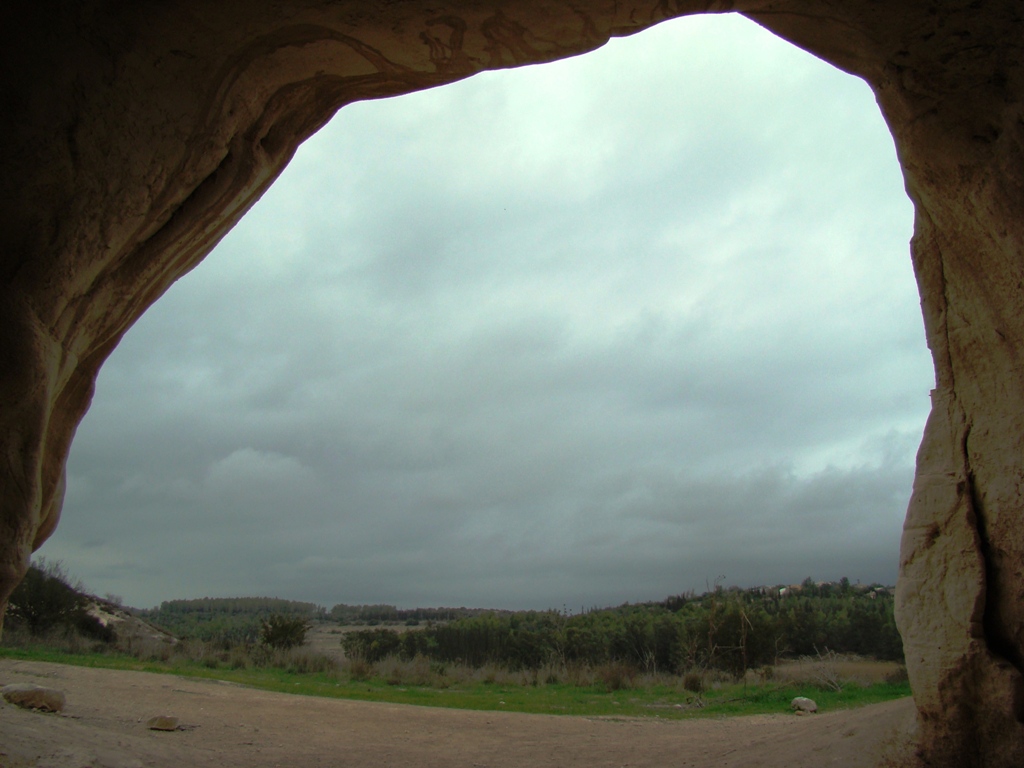
Looking out through entrance of a cave in Adulum Grove National Park. Photo ©Leon Mauldin.

At this time referenced in 2 Sam. 23, a garrison of Philistines was in Bethlehem (v.14). “And David said longingly, ‘Oh, that someone would give me water to drink from the well of Bethlehem that is by the gate!'” (v.15, ESV).

Bob Waldron writes, “David made an offhand remark how he would love a drink of water from the well of Bethlehem by the gate. He did not dream that anyone would take his wish as a command and go get water for him.”

But go they did. “So the three elite warriors broke through the Philistine forces and drew some water from the cistern in Bethlehem near the gate. They carried it back to David, but he refused to drink it. He poured it out as a drink offering to the LORD” (v.16, NET).

The word rendered “broke” is baqa, which means to cleave, divide; to break or lay open. Waldron writes,

They fought their way, killing every Philistine who tried to stop them, until they got to the well. Drawing the water, they fought their way out, and made their way back to David and gave him the drink of water he longed for. We admire the love of these three men for David, and their devotion to him that made his wish their command.

The 2 Sam. texts shows that David was so moved by the devotion of these men that “he would not drink it, but poured it out to the Lord” (v.16). Again, Waldron observes,

David felt that is would be sacrilege before the Lord to drink water purchased at the risk of his men’s lives. He felt that it was essentially the blood of his men since they had hazarded their lives to get him the water. The only thing he could do with the water that would be worthy of the price paid for it was to give it to the Lord, so he poured it out as a solemn drink offering to God.

Lesson: All these men cared about was David. It was enough to know what he wanted, and they were willing to die to make it happen. Is Jesus worthy of any less love and loyalty?

Our photo above looks out through the entrance of a cave at Adulum Grove National Park. Click on image for larger view. Quotes from my friend Bob Waldron are from his commentary on 1-2 Samuel in the Truth Commentary series.


Columbarium Caves

June 13, 2011

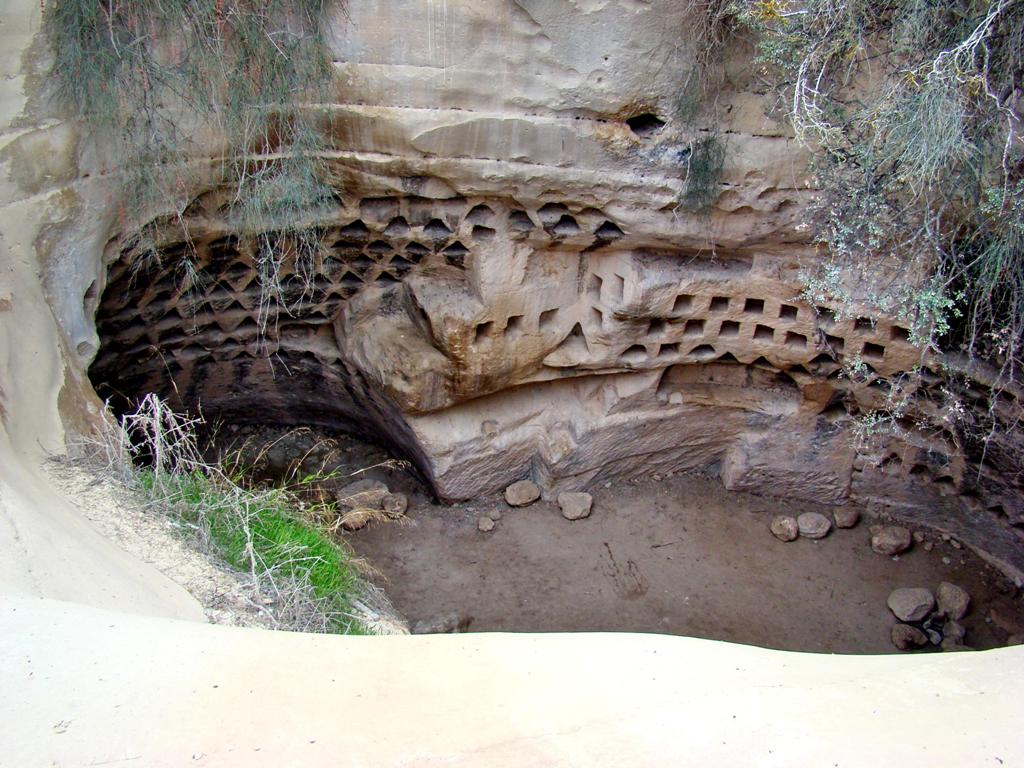
In the biblical lowlands of Judea, the Shephelah, there are numbers caves. Some of these were used for raising doves. The Midras ruins, where our photo below was taken, are located in the Adulum Grove Nature Reserve.

Columbarium at Midras Ruins, Adulum Grove National Park in Southern Israel. Photo ©Leon Mauldin.

On site there is a sign with the following info:

Columbarium means dovecote in Greek. Hundreds of caves of this type were found in the Judean lowlands, usually in the vicinity of ancient settlements. Dozens of small niches of various sizes, ranging in depth from 15 to 25 cm, were carved into the wall of the columbarium. Scholars believe that doves were raised in these niches for food, and to use their dung as fertilizer. The doves may also have been used for ritual purposes. The raising of doves was apparently a significant part of the economy of the Judean lowlands during the Hellenistic and Roman periods.

This area would be the general context for 2 Sam. 23, an event during the life of David: “And three of the thirty chief men went down and came about harvest time to David at the cave of Adullam, when a band of Philistines was encamped in the Valley of Rephaim”(v.13).


Beersheba

June 8, 2011

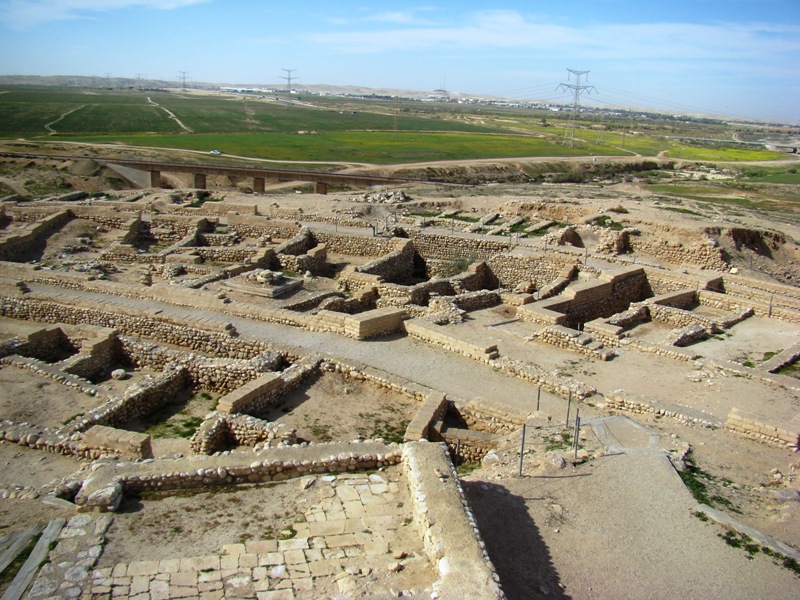
As I make use of photos of Bible places in teaching/preaching and writing, I tend to select shots of the biblical sites themselves without people (whenever possible). For example, this photo shows Beersheba of the Negev, home of the patriarchs and later designated as the southernmost border of Israel.

Beersheba, southernmost city of Israel. Photo ©Leon Mauldin.

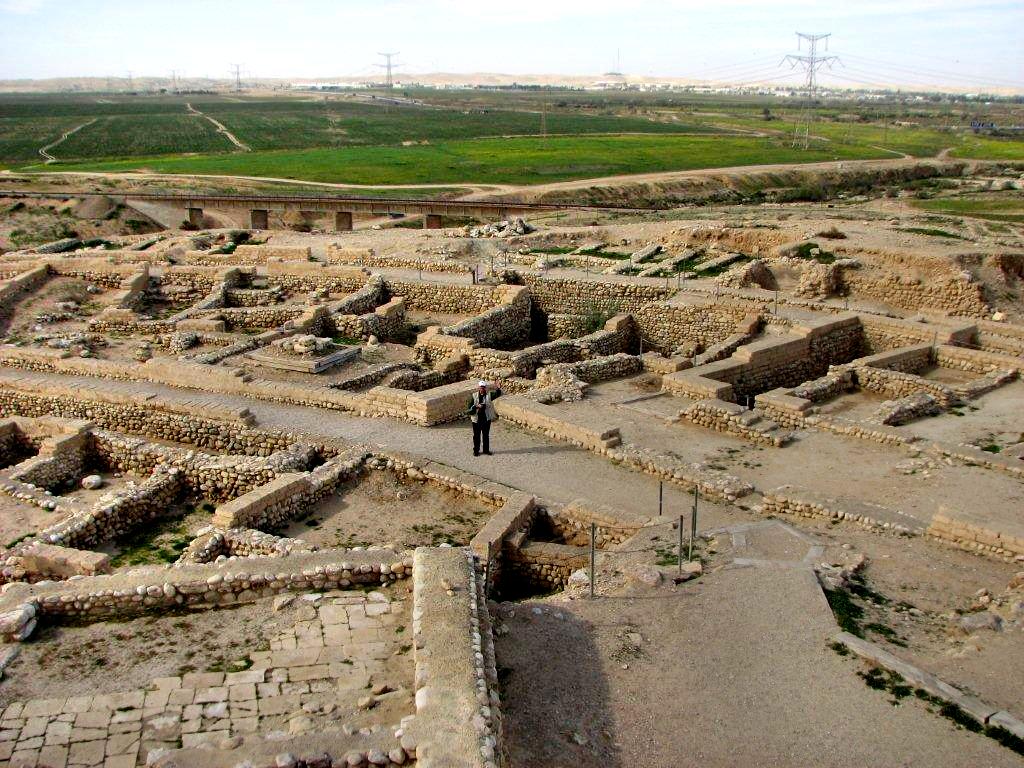
Sometimes, however, it is helpful to have someone(s) in the photo to give a sense of scale and proportion.

Beersheba w/Mauldin in photo center. Gives sense of proportion. Photo by Sandy Parker.

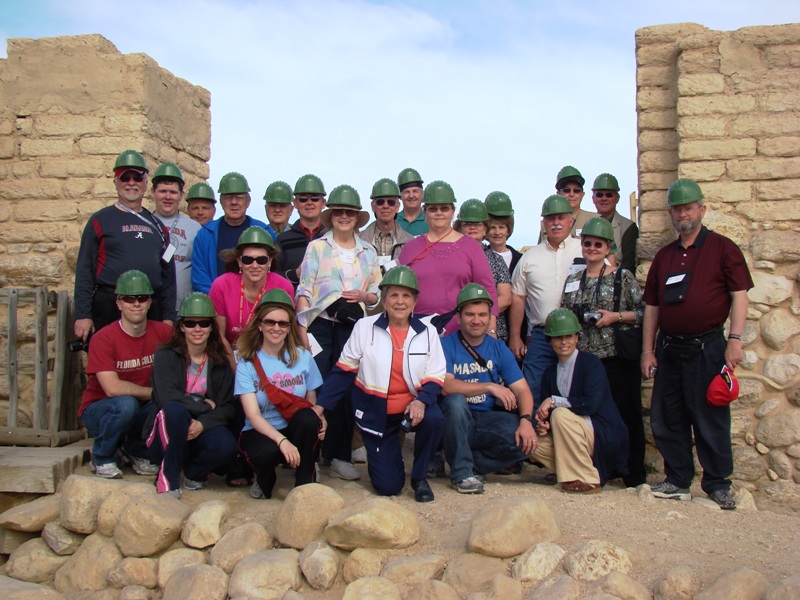
While visiting Beersheba (Tel Sheva) in March ’11, we took a group shot. Hardhats are required for one to walk through Beersheba’s water system. This photo was taken at the city’s gate.

Beersheba. Group shot at City Gate. Photo ©Leon Mauldin.

Now I wouldn’t say that my group was hard-headed, but they were in fact hard-hatted 🙂

Click on images for larger view. Previous posts of Beersheba may be found here and here.

I am enjoying the meeting with the Kimberly church of Christ, speaking there each night at 7:30 through Fri.


Gods of Egypt: Imhotep

June 4, 2011

In previous posts we have noted that the plagues of Egypt in Exodus were judgments against the gods of Egypt (Exodus 6:6; 12:12). See here and here.

In the plagues God was showing that the false gods were impotent and that Yahweh alone was the true and living God.

In some of the plagues it is possible that more than one Egyptian god may have been targeted. Some scholars believe that Imhotep, the god of medicine, was shown to be powerless with such plagues as the boils.

Imhotep, god of medicine. Brooklyn Museum. Photo by Leon Mauldin.

Imhotep, the polymath and architect of genius employed by Djoser, was deified soon after his death. Imhotep and Amenophis-sa-Hapu, who was Amenophis III’s architect, became a popular pair of gods for the everyday cares of the man in the street, especially in the field of medicine. In common with Thoth, Imhotep became the special tutelary god of scribes and learned men. The Greeks equated him with Asclepius (Egypt, Phaidon, 403-404).

Tomorrow morning I am to begin a 6-Day meeting at Kimberly, north of Birmingham, AL.


The Jordan River

May 26, 2011

In his book, J.W. McGarvey Sermons, McGarvey states,

The river Jordan is the most famous river on the earth.  It does not owe its fame, like our own Mississippi, to its great length, or to the rich commerce that flows upon its bosom … It does not owe its fame, like the Nile, to the fact that its overflow every year makes fertile a land which would otherwise be a desert…Neither does it owe its fame, like the Tiber or the Seine or the Thames, to the fact that some great city like Rome or Paris or London has stood on its banks … To what, then, does this most famous of all the rivers of the face of the globe owe its fame? To three considerations: first, to its peculiar physical characteristics; second, to the historic events that are connected with it; and third, to an association of thought connected with it in the minds of believers (pp. 297-298).

I think we would concur that it is especially number reason number two that makes the Jordan famous–the historical, biblical events which occurred there. Jesus was baptized there (Mt. 3:13-17)!  John baptized with his baptism of repentance there (Mt. 3:5,6) in keeping with the counsel of God (Lk. 7:29-30).  Naaman was cleansed from his leprosy by the God of Israel there (2 Kings 5).  Israel crossed this river on dry land at flood stage to receive the promised land of Canaan (Josh. 3:17).

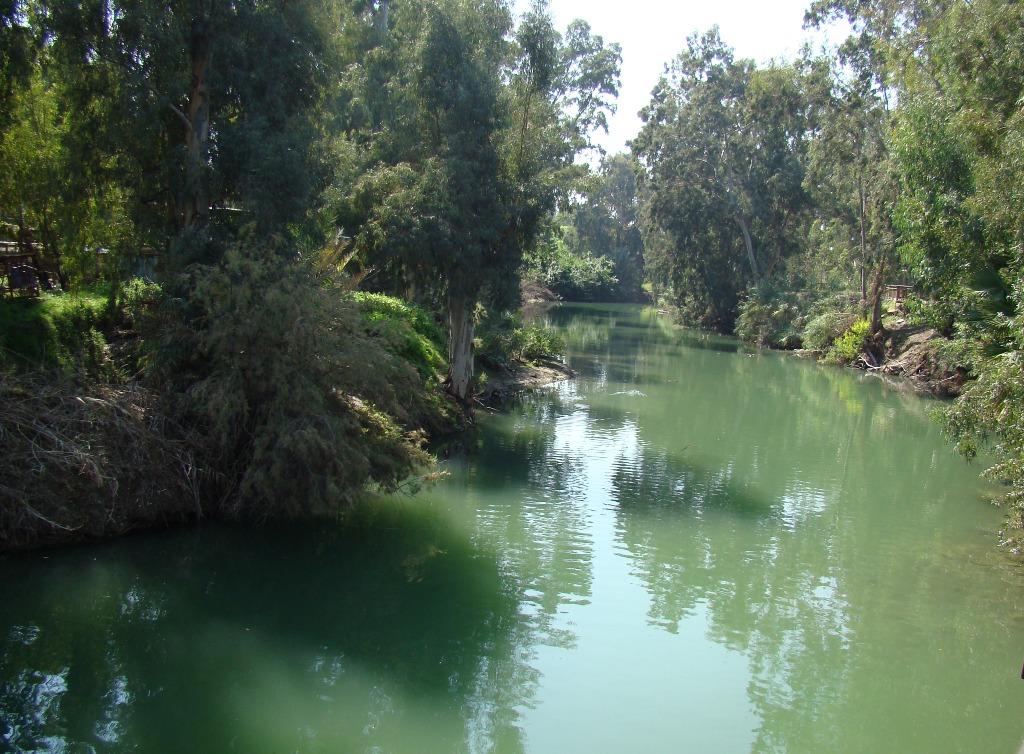
Jordan River, most famous river in the world. Photo by Leon Mauldin.

Today’s traveler to Israel is limited to very few sites from which to view the Jordan.  Most of its flow is on the Palestinian side of the border. Our photo above was taken March, 2011.

Two nights remain of our Gospel Meeting in Chipley, FL. Yesterday I took a photo of the local preacher and his family after we had enjoyed a bite of lunch, Mexican style.

Wes & family, local preacher at Chipley, FL.

My wife & I enjoyed taking a few minutes to view the historic district of Chipley.

House in the historic district of Chipley, FL. Photo by Leon Mauldin.


Megiddo, Another Key Site Not Taken During the Conquest

May 24, 2011

A text we have referenced in the past few posts is Joshua 17:11-12, in a context giving the borders of some of the tribes, especially Manasseh:

In Issachar and in Asher, Manasseh had Beth-shean and its towns and Ibleam and its towns, and the inhabitants of Dor and its towns, and the inhabitants of En-dor and its towns, and the inhabitants of Taanach and its towns, and the inhabitants of Megiddo and its towns, the third is Napheth.

But the sons of Manasseh could not take possession of these cities, because the Canaanites persisted in living in that land (NASB).

We are not at all wanting to downplay the significance of the Conquest led by Joshua, as God fulfilled His promise to give Israel possession of the land of Canaan. Our purpose in recent posts has been to highlight the significance of those sites NOT captured or retained, so that the discerning reader does not merely read over such text without realizing their import.

Note that among the cities not taken was Megiddo.

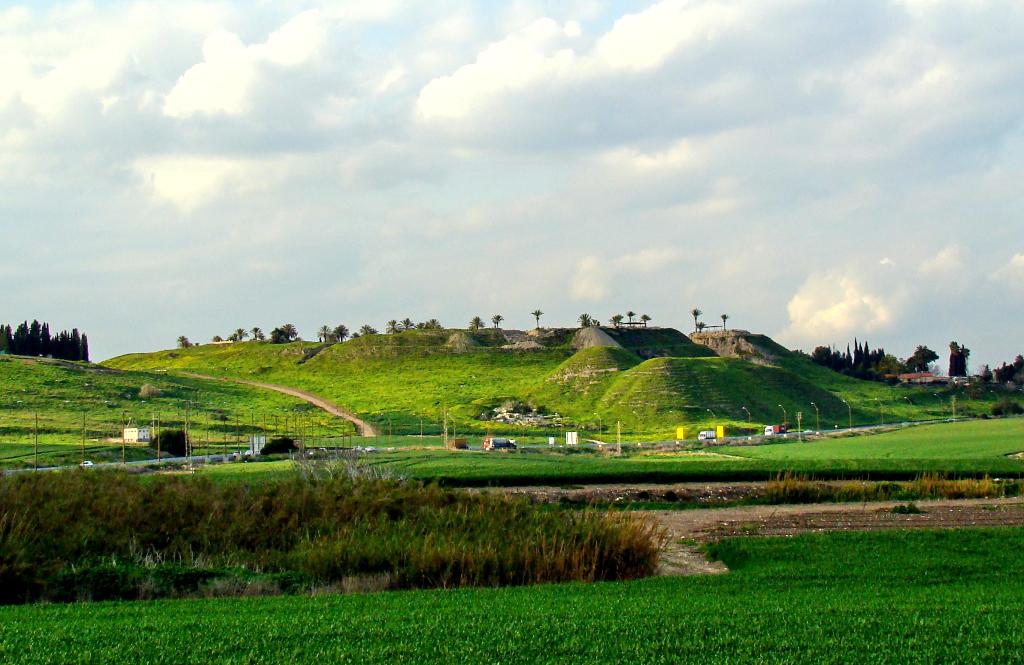
Megiddo, Strategic Site Not Taken During Conquest. Photo by Leon Mauldin.

Recent posts on Megiddo have appeared on our blog here and here and here as well as here.

In an article entitled The Case of Megiddo: Understanding the Importance of Geography in Biblical Study, Colonel David Hanson wrote:

Since earliest times, people with mutual commercial or agricultural interests have searched for naturally occurring defensive locations where they could safely pursue their enterprises. Towns were constructed to protect the inhabitants from unfriendly neighbors and marauding armies. Considerations which prompted the early settlers to select town sites have not changed over the centuries and many of the most favorable locations grew to great size. Megiddo is one such place and it attests that “What has been will be again, what has been done will be done again; there is nothing new under the sun.” [Eccl 1:9 (NIV)…

What made Megiddo so important that it has been the focus of military activities for millennia? Yohanan Aharoni provides a framework for investigating this question. In his comprehensive historical geography of the Holy Land, he lists four reasons early settlers chose a particular piece of terrain.

They are:
•       Thoroughfares: Important towns flourished along the main lines of travel and their principal intersections.
•       Strategic locations: Hills or other geographic features which would provide protection to the settlers and could be fortified.
•       Water sources: Accessibility of, or to, a water supply.
•       Agricultural lands: Economies from earliest times have been based upon agriculture; thus, the nearness of fertile fields has been important (Bible and Spade, Vol. 4. No. 3, P. 89).

In his article Hanson goes on to show how Megiddo meets each of the above requirements.

Megiddo later came to be under the control of Israel. Solomon made it one of his fortified cities (1 Kings 9:15-19).

Nelson’s New Illustrated Bible Dictionary says, “Megiddo was one of the most strategic cities in Palestine. All major traffic through northern Palestine traveled past Megiddo, making it a strategic military strong-hold.”

Click on image for larger view.


Cities Not Taken in the Conquest, cont’d., Dor

May 23, 2011

Joshua is the biblical book of the conquest of Canaan, and the fulfilling of the land promise given to Abraham (Gen. 12:7). But Israel failed to follow through as they were commanded, thus leaving the seeds of idolatry in their midst, but also leaving themselves politically and economically thwarted. As we have noted in the last couple of posts, it turns out that those cities mentioned as not being taken or retained were in many, if not most, cases strategic sites, needed for defense or commerce.

Joshua 17:11-12 mentions Dor in this connection (see also Judges 1:27).
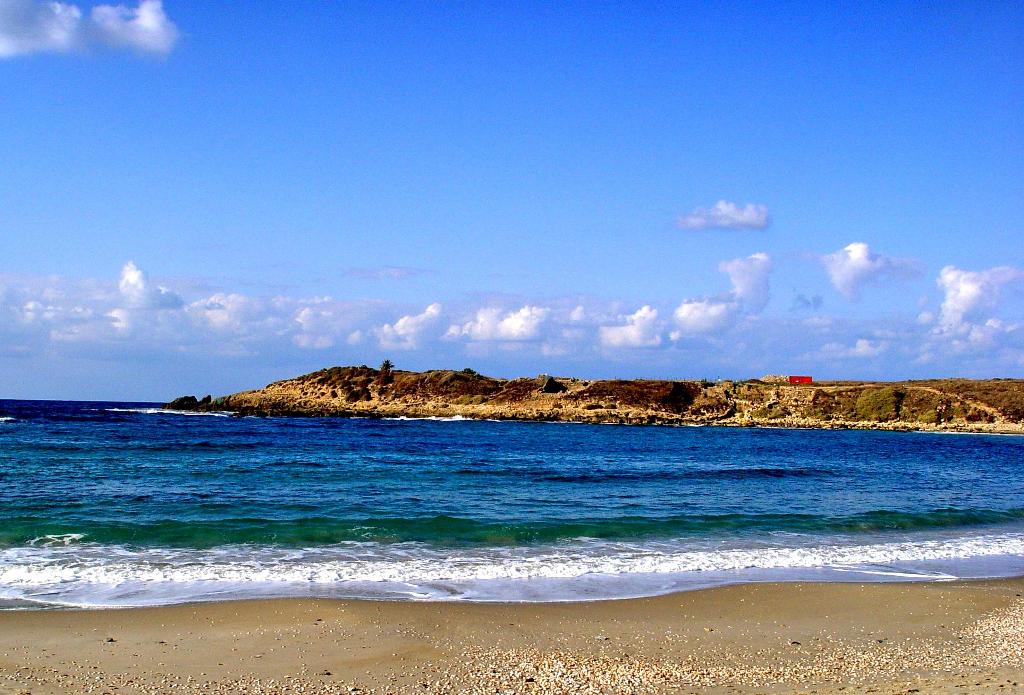
Dor, important harbor not taken during the Conquest. Photo by Leon Mauldin.

In an interesting article in Bible and Spade, author Hela Crown-Tamir writes,

Thirteen miles north of Caesarea. and almost equadistant from Haifa, Dor was a flourishing port and international commercial center throughout the Biblical period. The excavators note four distinct civilizations at Dor: the Canaanites, the Sikil Tribe of Sea Peoples, the Phoenicians, and the Hellenistic-Roman culture. With artifacts from Old Testament Egypt to Napoleon’s cannons found here and displayed at the Dor Museum, the site was inhabited throughout the Biblical period. This coastal city is a perfect illustration of treasures hidden in the sand.

Canaanites first settled Dor during the Middle Bronze Age (2000 BC). While the city was part of Manasseh’s tribal inheritance, the Sikils of the Sea Peoples settled here during the Iron Age (1150–1050 BC). They were followed by the Phoenicians, descendants of the Canaanites, from the 11th century BC on. They inhabited Dor during the Israelite, Assyrian. Babylonian. Persian, and much of the Hellenistic periods.

Finds from the late Bronze Age (1500–1200 BC) at Dor indicate it was exceedingly rich with far-flung international connections. Throughout most of the Old Testament, Dor was one of the important harbor towns along the country’s Mediterranean coastline.

It was from the west, by sea. that the Sikils came to Dor. Possibly coming from as far away as the island of Sicily, this tribe of Sea Peoples made the port city of Dor their home. During the Phoenician occupation, masters of the eastern Mediterranean, the port city rivaled the four major Phoenician cities in size and importance. The excavators are correct in calling Dor “Ruler of the Seas.” ( 2001, Vol. 14, No. 1, P. 12).

Note the portions in the above text with bold print (emp. mine): Reference to the Bronze Age of 1500-1200 BC fits the time period referenced in Joshua, with the conquest occurring about 1406 BC.  Note that Dor is described as having “far-flung international” connections. Also, the “Ruler of the Seas.” Again it would seem that an understand of these facts regarding Dor would be helpful in appreciating the significance of those verses which inform us that Israel did not possess this very important location.

That would change by the time of Solomon. King Solomon divided the land into twelve districts with twelve governors “who provided food for the king and his household: each one made provision for one month of the year” (1 Kings 4:7). v. 11 goes on to list “Ben-Abinadab, in all the regions of Dor; he had Taphath the daughter of Solomon as wife. Thus Dor became the capital of one of Solomon’s administrative districts.

By the way, I am currently in Chipley, FL., conducting a 6-day Gospel Meeting. Wesley Webb is the local preacher here. It always great to see old friends. Waltina Shoraga is our host this week. She was living in Waycross, Ga., and I was preaching in Blackshear when I first met her, in 1973.