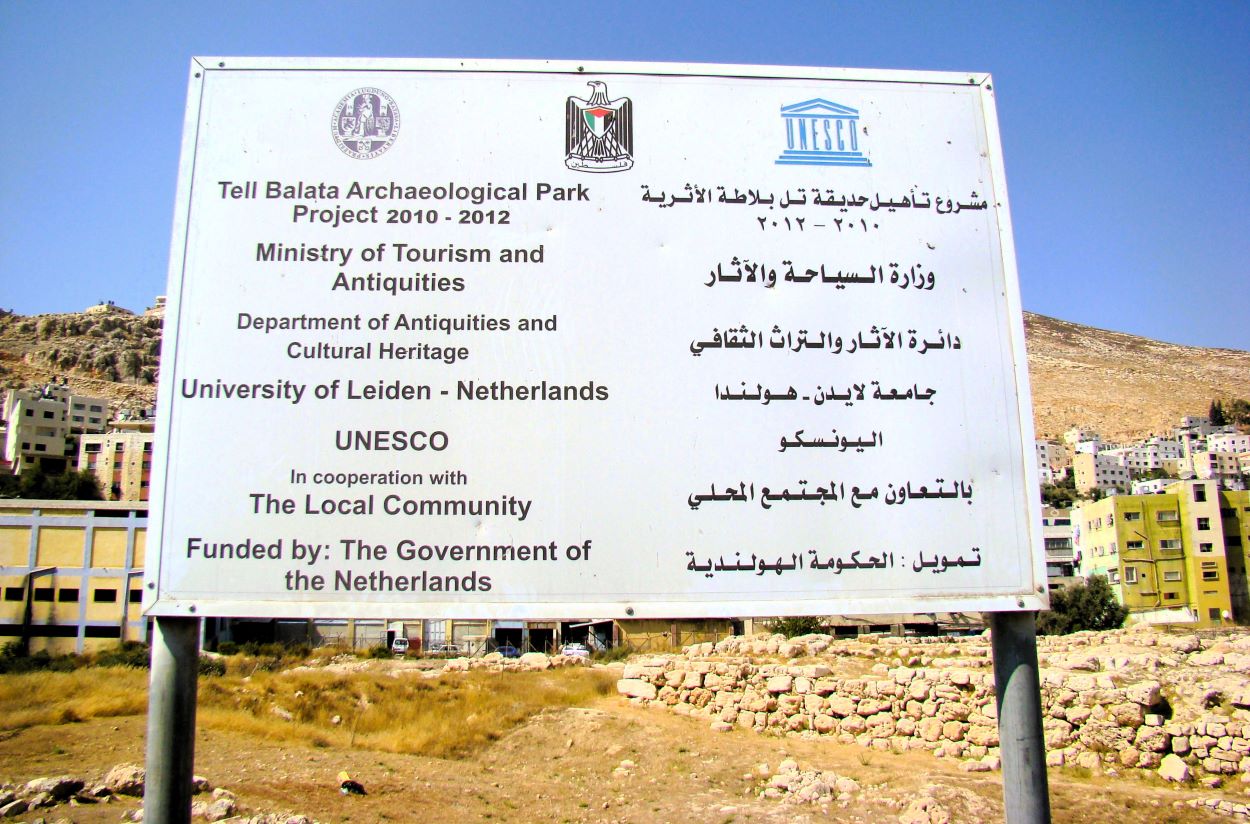
“Rehoboam went to Shechem, for all Israel had come to Shechem to make him king” (2 Chron. 10:1, ESV). Biblical Shechem is modern Tell Balata, near Nablus, in today’s West Bank. Though our text does not specify why Rehoboam went to Shechem, it was a city of great historical significance to God’s people, especially prior to the monarchy. We will briefly summarize what happened to Rehoboam at Shechem, but first let’s consider some of the biblical events that transpired at this location.

Having first entered the land of Canaan, Abraham was standing here at Shechem, with Mt. Ebal and Mt. Gerizim looming on either side, when God gave him the land promise (Gen. 12:6-7). Sadly, it was also here that Jacob’s daughter Dinah was defiled, and where Levi and Simeon savagely destroyed much of the populace in retaliation (Gen. 34).
In Joshua 8:30-35, in the early days of the Conquest of Canaan, all Israel assembled at Shechem, with six tribes on Mt. Gerizim (mount of “blessing”) and six tribes on Mt. Ebal (mount of “cursing”). At that time Joshua “read all the words of the law, the blessing and the cursings, according to all that is written in the Book of the Law” (v.34, NKJV). This was in obedience to prior instructions given by Moses in his final days (Deut. 27:11-26). In our Joshua text, that great nation who had descended from that childless couple (at the time of the promise), Abraham and Sarah, was there to lay claim to the promise. But they weren’t just there to receive the land; their reception of Canaan was grounded upon their pledge to keep the covenant of Yahweh.
Then later as Joshua’s death approached, Shechem was the location for Joshua’s last words and for Israel’s covenant renewal (Josh. 24:1-28). Shechem was also where Joseph was buried (Josh. 24:32).
In addition to its great historical significance, the site of Shechem was also a central location and thus a logical meeting place for the matter at hand, Rehoboam’s coronation. On the other hand, Maier suggests that perhaps Rehoboam sensed a bit of discontent among the northern tribes. “One clue was that they did not come to Jerusalem but wanted the meeting at another place, in Shechem, on their own turf, so to speak” (A Theological Exposition of Sacred Scripture, pub. Concordia, 1K12-22, p. 1052).
The outcome of the meeting at Shechem: The northern tribes rejected Rehoboam, with the result that the kingdom divided into Israel (north) and Judah (south). This was punitive, as a result of Solomon’s apostasy, and foretold by the prophet Ahijah (1 Kings 11; 2 Chron. 10:15; 11:1-5). The dynasty would change several times in Israel to the north, but the southern kingdom of Judah would be ruled by the Davidic dynasty, from Rehoboam (Solomon’s son) down through Zedekiah. This covers the years 931-586 BC.
It was at Shechem that Israel met with Solomon’s son Rehoboam to make him king. Shechem is located between Mount Gerizim (left) and Mount Ebal (right).
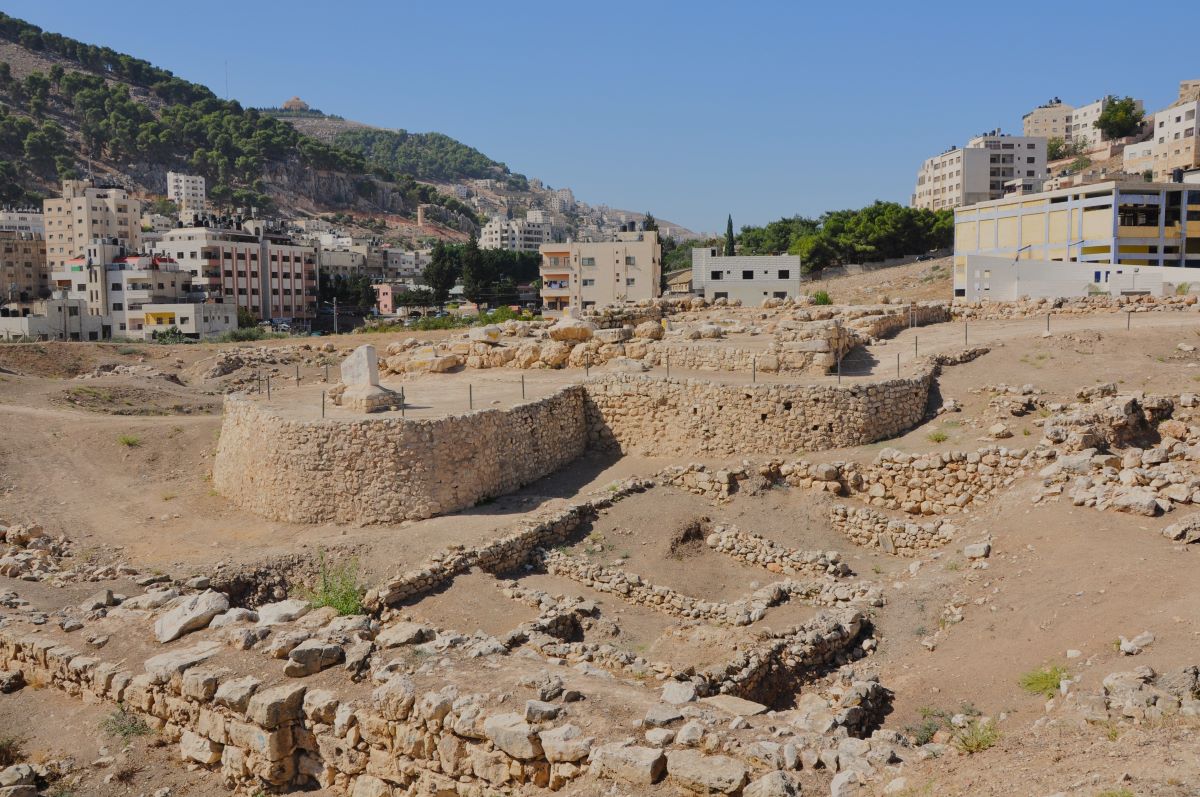
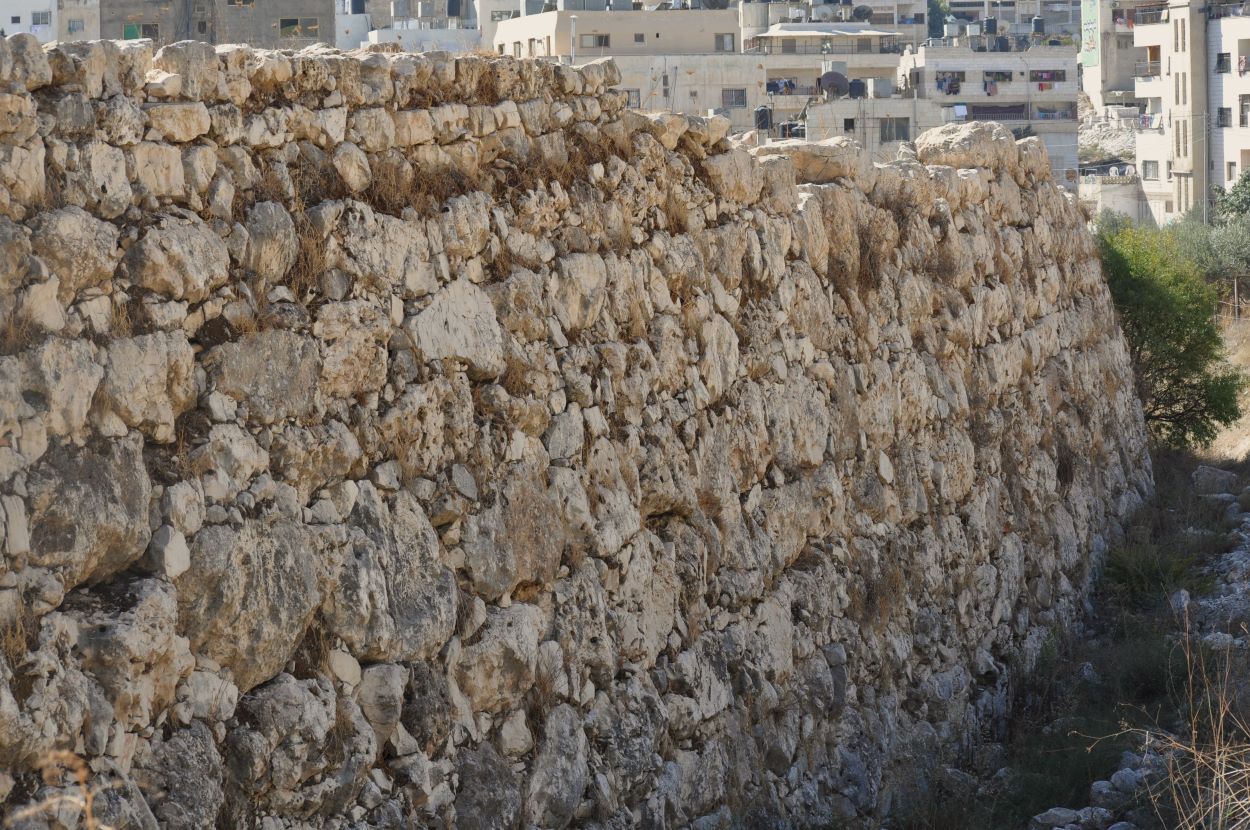
Some of the impressive fortress wall of Shechem can be seen.


 Posted by Leon Mauldin
 leonmauldin.blog