The golden gate is located in the middle of Jerusalem’s eastern wall. In photo below follow the wall to your right, and you will see the sealed gate.
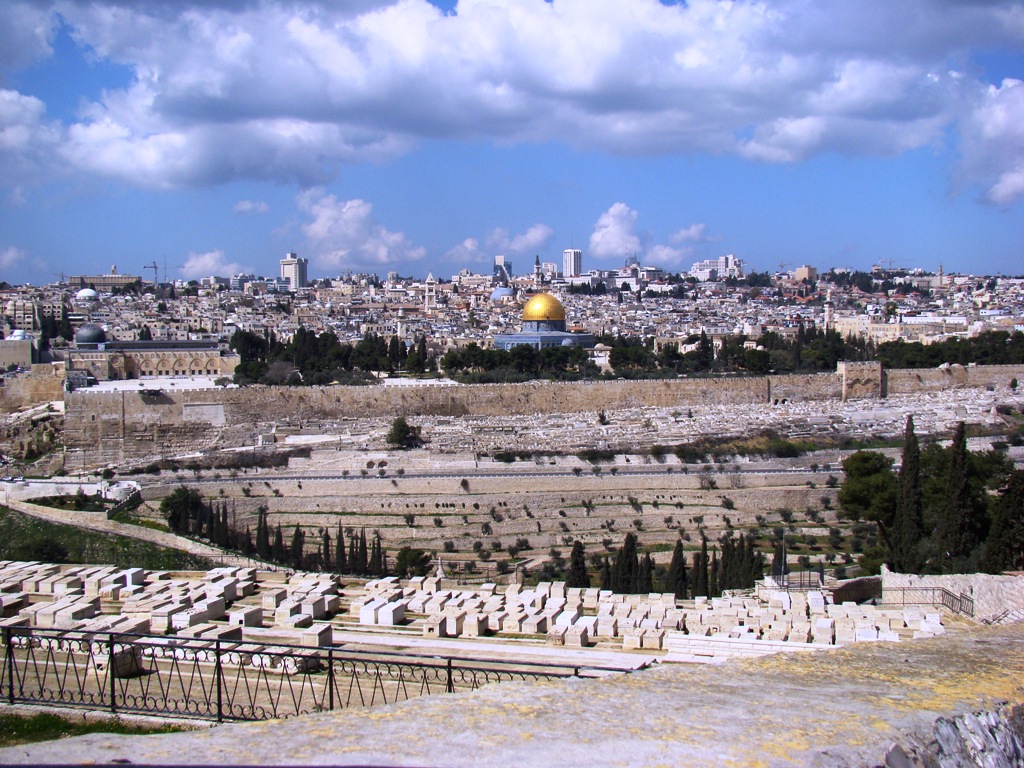
Jerusalem's Eastern Wall. Golden Gate is on your right. Photo ©Leon Mauldin.
The gate was built ca. AD 640, on top of the ruins of an older gate. Some of the nearby stones in this portion of the wall date back to Nehemiah’s day. Photo below shows the view from the Kidron Valley, with Gethsemane/Mt. of Olives to our back.
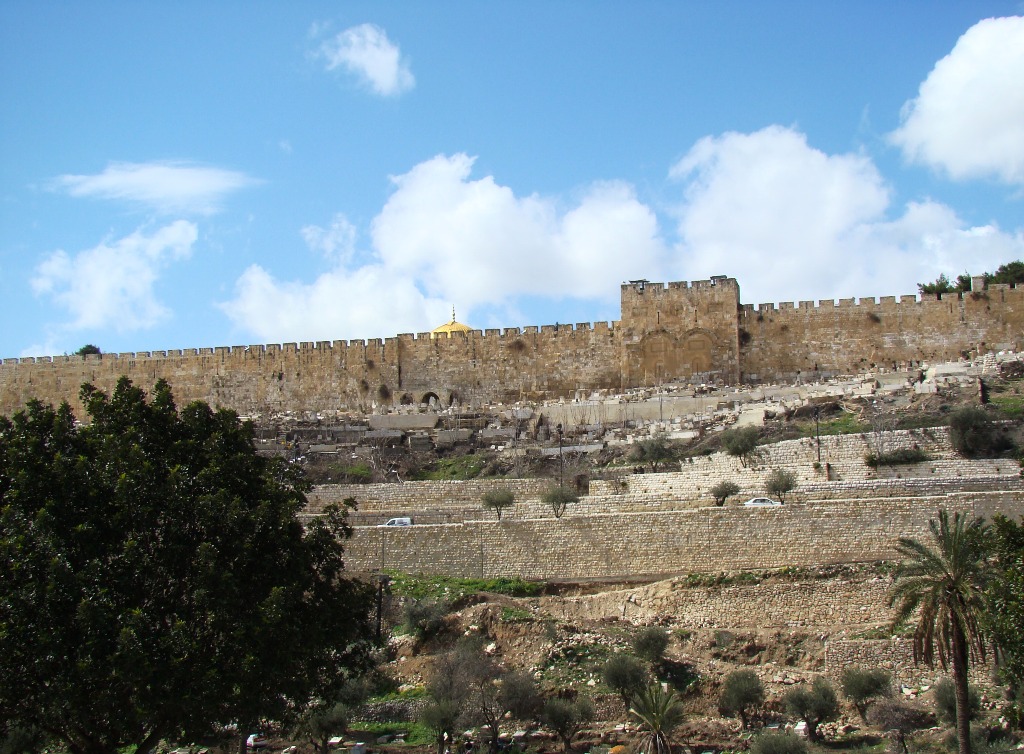
Golden Gate in Jerusalem. View looking up from Kidron Valley. Photo ©Leon Mauldin.
Finally, here is a close up view:
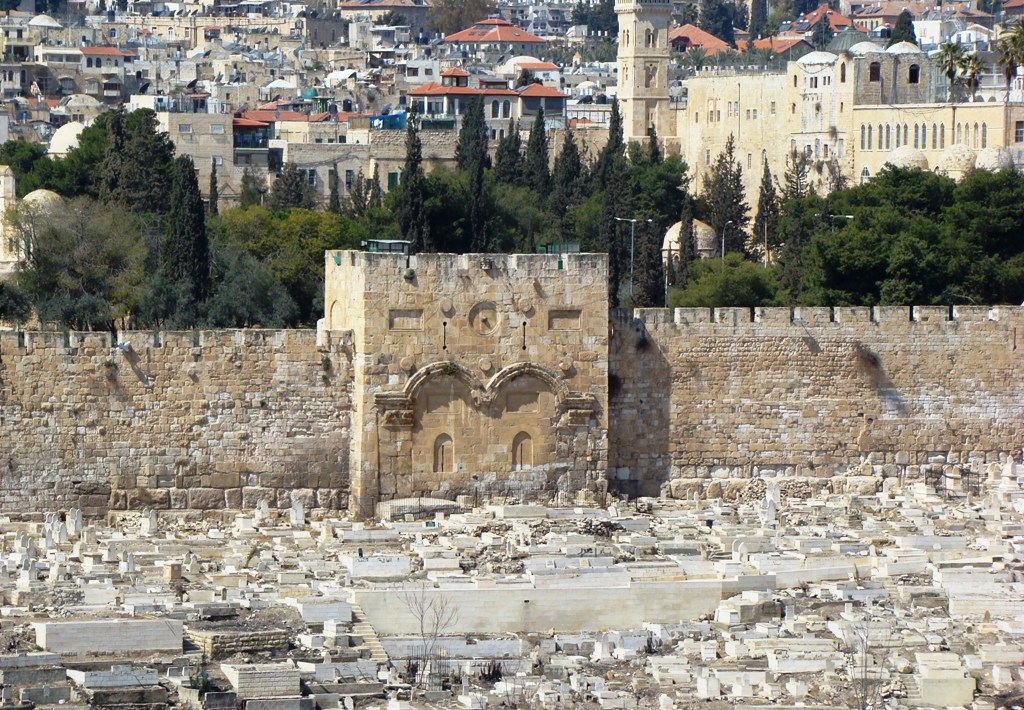
Golden Gate closeup. Photo ©Leon Mauldin
Why was the gate sealed? It was sealed in 1541 during the reign of Ottoman Sultan Suleiman I. The reasoning being that it was believed that the Messiah would enter Jerusalem through that gate; therefore it was sealed off to prevent His having access. Further, some Arabs have dug graves in the area immediately in front of the gate to desecrate the spot and thus render it as unholy for the Messiah’s approach.
Our observations:
1. If Jesus is Almighty God (and He is) there is no amount of bricks and mortar which can prevent His going anywhere that it is His will to go.
2. I believe the tradition that the Messiah will enter through the wall is based on misunderstanding of Scripture. When Jesus returns He will return as Judge. The earth and the works therein will be destroyed (2 Pet. 3). He will receive the saved into heaven, and the lost will be banished from His presence. He is presently reigning as King, and has done so since Pentecost of Acts 2 (see v. 36).
Click on images for higher resolution.


 Posted by Leon Mauldin

 leonmauldin.blog